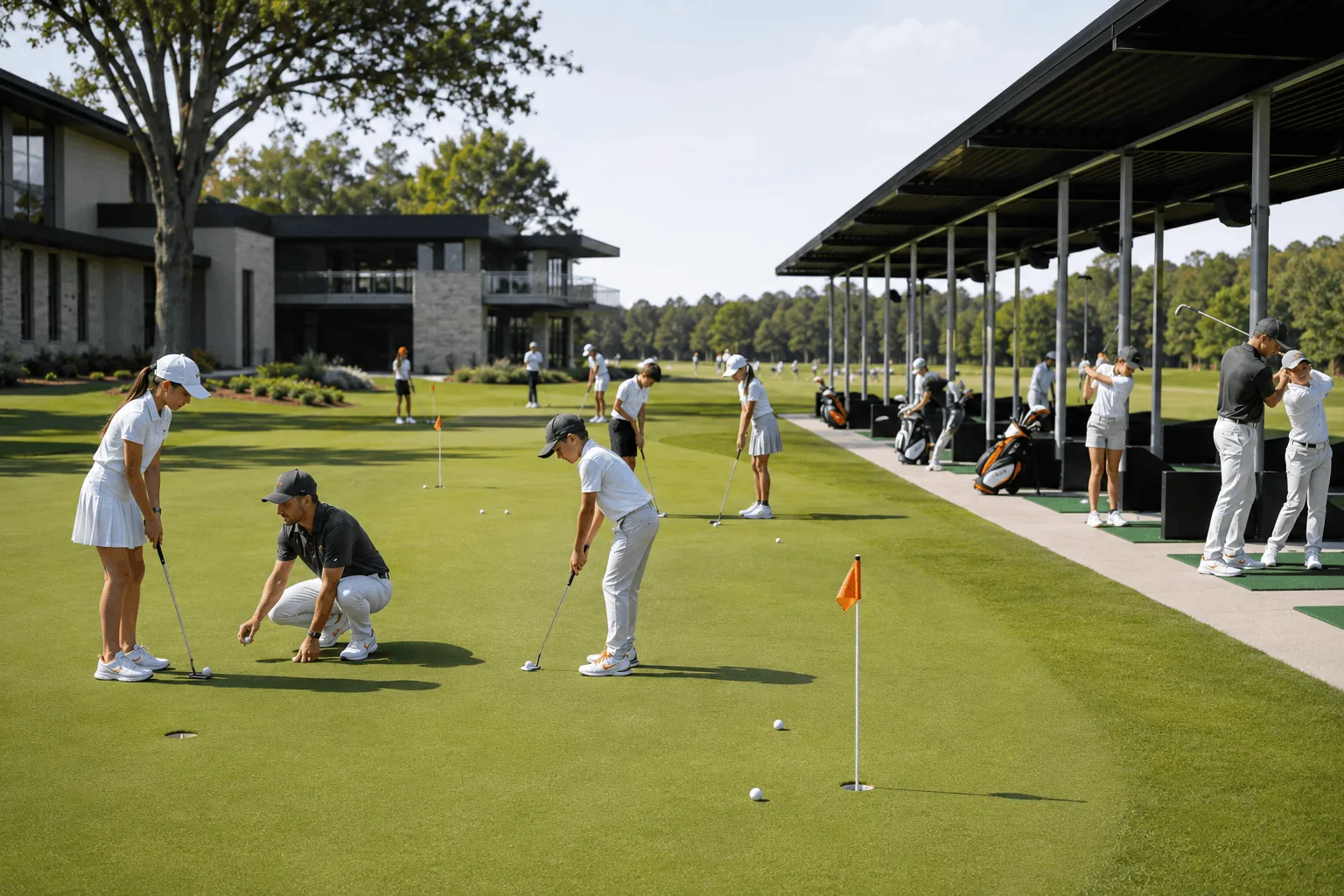

Why Junior Golfers Plateau During Competitive Development
Introduction
Almost every competitive junior golfer experiences it at some point: The plateau. Scores stop improving. Confidence drops. Tournament results feel stagnant. Practice no longer seems to translate into lower scores. And for many families, this phase becomes incredibly frustrating. One of the biggest misconceptions in junior golf is believing development should happen in a straight line. In reality, competitive growth is rarely smooth. Players often improve rapidly for a period of time before hitting stretches where progress feels slow or even nonexistent. That does not always mean something is wrong. In many cases, plateaus are a normal part of long-term athletic development. However, some junior golfers plateau because of:
- Poor practice habits
- Mental fatigue
- Overtraining
- Lack of structure
- Weak scoring skills
- Unrealistic expectations
- Technical overload
The key is identifying why progress has slowed. Because once players understand the real cause, improvement usually becomes much more manageable. For families navigating long-term player development through Campus Golf Academy, understanding why junior golfers plateau can help reduce frustration while creating smarter long-term improvement strategies. In this guide, we’ll break down:
- Why junior golfers plateau
- The most common causes of stalled improvement
- How mental performance impacts scoring
- Why tournament development often slows temporarily
- How players can break through performance stagnation
- What healthy long-term development actually looks like
TLDR – Quick Guide
- Plateaus are normal during junior golf development
- Mental fatigue often impacts performance more than mechanics
- Overtraining can slow improvement significantly
- Many players practice incorrectly instead of intentionally
- Scoring skills matter more than constant swing changes
- Confidence and emotional control heavily affect development
- Long-term growth is rarely linear
- Smart structure helps players break through stagnation
Detailed Breakdown
Why Plateaus Happen in Junior Golf
Junior golf development is not linear. Players rarely improve steadily month after month without setbacks. In reality, competitive development usually looks more like:
- Rapid improvement phases
- Flat periods
- Temporary regressions
- Confidence swings
- Performance breakthroughs
This happens because junior golfers are constantly adapting:
- Physically
- Mentally
- Emotionally
- Competitively
Growth spurts alone can temporarily affect:
- Timing
- Coordination
- Balance
- Swing consistency
At the same time, tournament pressure increases as players become more competitive. Many junior golfers plateau simply because the game becomes harder at higher levels. As competition improves, maintaining the same scoring average often requires significantly more skill development. That is normal. The long-term development philosophy outlined on the Campus Golf Academy Journey Page emphasizes that competitive growth takes time and often includes temporary plateaus before major breakthroughs happen.
Overtraining Is More Common Than People Realize
One of the biggest causes of stagnation is simply doing too much. Many junior golfers:
- Practice constantly
- Compete every weekend
- Train year-round
- Rarely recover mentally
At first, this may produce improvement. But eventually:
- Motivation drops
- Energy declines
- Frustration increases
- Confidence fades
Golf is mentally exhausting. Players who never step away from competition often lose:
- Creativity
- Enjoyment
- Emotional energy
- Competitive sharpness
Sometimes the solution is not more golf. Sometimes the solution is smarter recovery.
Constant Swing Changes Can Slow Development
Many players plateau because they spend years rebuilding swings instead of learning how to score. This is extremely common in competitive junior golf.
A player struggles for two tournaments…
Then immediately changes:
- Grip
- Posture
- Swing plane
- Transition
- Equipment
Again. And again. And again.
The result?
No consistency.
Technical development absolutely matters. But excessive mechanical focus often creates:
- Paralysis during competition
- Reduced confidence
- Overthinking
- Poor scoring instincts
The best competitive players eventually learn how to:
- Trust patterns
- Compete with imperfect swings
- Manage misses
- Score under pressure
College coaches recruit scorers — not perfect practice swings.
Mental Fatigue Heavily Impacts Performance
Many plateaus are mental before they are technical. Junior golfers often experience:
- Tournament anxiety
- Fear of failure
- Pressure from rankings
- Burnout
- Confidence loss
As competition increases, emotional management becomes critical. Players who struggle mentally often begin:
- Overthinking shots
- Playing defensively
- Focusing too much on results
- Losing emotional control after mistakes
This creates performance instability. Competitive golf rewards emotional resilience. Not perfection. The player development philosophy shared on the Campus Golf Academy About Page emphasizes long-term growth, discipline, and emotional maturity alongside technical skill development.
Many Junior Golfers Practice Incorrectly
More practice does not automatically create better players. Many junior golfers plateau because practice lacks:
- Structure
- Accountability
- Scoring pressure
- Purpose
For example:
Spending hours hitting drivers may feel productive…
But scoring usually improves faster through:
- Wedge practice
- Putting drills
- Competitive games
- Course management
- Pressure simulations
Players often confuse activity with improvement. The most effective practice sessions usually include:
- Clear goals
- Scoring accountability
- Tournament simulation
- Feedback loops
Intentional practice beats excessive practice every time.
Short Game Weaknesses Limit Scoring Progress
Many players plateau because their short game never develops alongside their ball striking. This is one of the biggest development gaps in junior golf. Tournament scoring depends heavily on:
- Putting
- Chipping
- Wedge play
- Lag putting
- Up-and-down percentage
Yet many players spend most practice time:
- Chasing swing speed
- Rebuilding mechanics
- Hitting full shots
Eventually, scoring stagnates. Because ball striking alone rarely separates elite players. Scoring skills do.
Confidence Swings Affect Development More Than Players Realize
Confidence impacts everything:
- Decision-making
- Tempo
- Aggression
- Emotional recovery
- Commitment
Junior golfers who lose confidence often:
- Play cautiously
- Fear mistakes
- Avoid aggressive targets
- Overanalyze mechanics
That creates hesitation. And hesitation hurts scoring. Sometimes plateaus are not physical at all. Sometimes players simply stop trusting themselves. Breaking through often requires rebuilding:
- Confidence
- Competitive routines
- Emotional stability
Not necessarily changing mechanics.
Physical Development Can Temporarily Disrupt Performance
Growth spurts affect junior golfers significantly. As players grow physically, they often temporarily lose:
- Coordination
- Timing
- Consistency
- Body awareness
This is especially common between:
- Ages 11–16
Parents sometimes panic during these phases. But temporary regression during physical growth is normal. Players simply need:
- Patience
- Adaptation time
- Structured coaching
- Athletic development support
Long-term improvement usually returns once players adjust physically.
Development Environment Matters
Junior golfers improve faster in strong development environments. Competitive coaching systems help players:
- Build accountability
- Improve practice quality
- Develop scoring habits
- Learn emotional control
- Manage competitive pressure
Programs like Scott Hause Academy in Houston often help competitive junior golfers develop structured improvement plans that focus on scoring consistency instead of constant technical rebuilding. Similarly, environments like Ogrin Golf Academy in New Braunfels often support long-term player development through competitive coaching, tournament preparation, and mental performance growth. Strong environments help players navigate plateaus more effectively.
Common Mistakes Players Make During Plateaus
Panicking Too Quickly
Many golfers assume every plateau means something is broken. Sometimes development simply needs time.
Comparing Development to Other Players
Every player develops differently physically, mentally, and competitively. Comparison often creates unnecessary pressure.
Obsessing Over Rankings
Rankings fluctuate constantly during junior golf. Long-term development matters more.
Ignoring Recovery Sleep, recovery, and emotional balance heavily affect performance. Burned-out players rarely improve consistently.
Focusing Only on Mechanics
Golf is not purely technical. Scoring, confidence, and emotional management matter just as much.
Key Takeaways
- Plateaus are normal during junior golf development
- Growth is rarely linear in competitive golf
- Mental fatigue often affects scoring heavily
- Overtraining can slow long-term improvement
- Constant swing changes frequently create inconsistency
- Scoring skills matter more than technical perfection
- Confidence strongly impacts tournament performance
- Physical growth can temporarily disrupt coordination
- Strong coaching environments help players navigate stagnation
- Patience and structure are critical for long-term growth
FAQs
- Why do junior golfers suddenly stop improving?
Junior golfers often plateau because development is rarely linear. Mental fatigue, growth spurts, overtraining, and inconsistent practice habits can all slow progress temporarily. Plateaus are normal and often part of long-term competitive growth.
- Can over-practicing hurt junior golf performance?
Yes, excessive practice and constant competition can lead to burnout and mental exhaustion. Junior golfers still need recovery, balance, and emotional resets to improve consistently. Smart practice is usually more effective than excessive practice volume.
- Should junior golfers change swings during plateaus?
Not always. Many players make too many technical changes too quickly during frustrating periods. Often, scoring issues relate more to confidence, short game, decision-making, or emotional management than major swing flaws.
- How important is mental performance during development?
Mental performance is extremely important in competitive junior golf. Emotional control, confidence, focus, and resilience heavily affect tournament scoring and long-term improvement. Players who manage pressure well usually develop more consistently over time.
- How long do junior golf plateaus usually last?
Plateaus vary for every player and can last weeks or even months depending on the cause. Physical growth, competitive transitions, and confidence swings all affect development timelines. With proper structure and patience, most players eventually break through stagnation successfully.