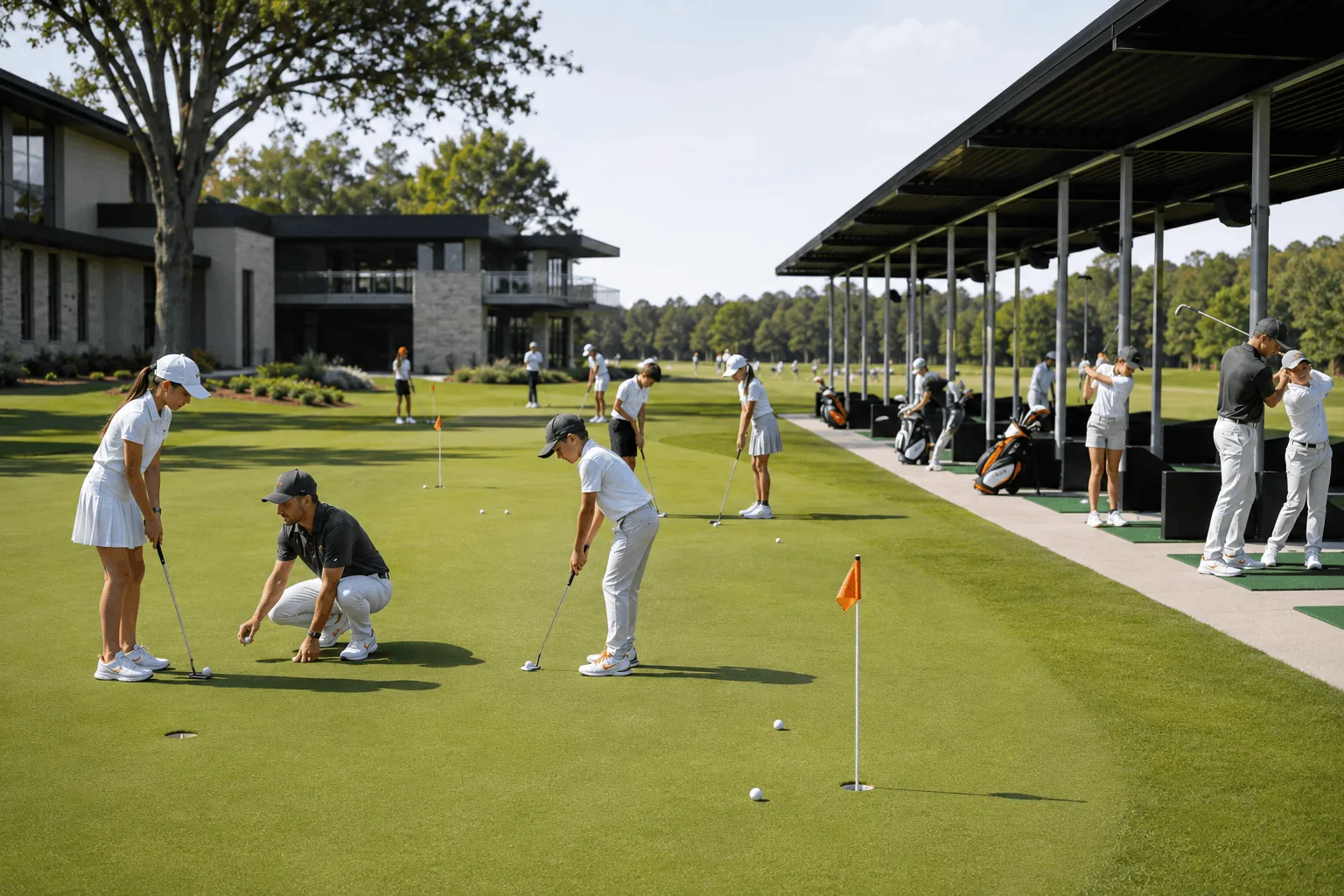

Setting Junior Golf Goals for Long-Term Competitive Development
Introduction
Every competitive junior golfer wants improvement. But improvement without direction often leads to frustration. One of the biggest differences between highly successful junior golfers and inconsistent players is goal structure. Competitive players usually train with purpose because they understand what they are working toward and why it matters. The challenge is that many junior golfers set goals incorrectly. They focus only on:
- winning tournaments
- rankings
- trophies
- scholarships
- scores
Those outcomes matter, but they are not fully controllable. The best junior golf goals focus on long-term development, daily habits, and measurable progress. Strong goals help players stay motivated, handle setbacks better, and improve more consistently over time. This guide explains how junior golfers can create smarter goals that support long-term competitive growth instead of short-term emotional swings.
TLDR – Quick Guide
Strong junior golf goals should:
- focus on long-term development
- include process and performance goals
- remain measurable and realistic
- support confidence and motivation
- adapt as players improve
- prioritize habits over outcomes
The best goals improve consistency, not just short-term results.
Detailed Breakdown
Understand the Difference Between Outcome and Process Goals
Many junior golfers build goals entirely around results. Examples include:
- winning tournaments
- lowering handicap quickly
- earning rankings
- getting scholarships
These are outcome goals. The problem is that outcome goals depend partly on factors outside the player’s control:
- competition strength
- weather
- course setup
- pressure situations
Process goals focus on controllable actions. Examples include:
- practicing short game four times weekly
- following pre-shot routines consistently
- improving emotional recovery
- tracking putting statistics
Process goals improve development because players can control them daily. Long-term competitive success usually comes from mastering process goals first.
Set Long-Term Goals Before Short-Term Goals
Junior golfers often focus only on immediate results. Strong development starts by defining long-term vision first. Examples of long-term goals:
- playing college golf
- becoming a more consistent tournament player
- improving competitive confidence
- reaching elite junior tournaments
- developing physically and mentally
Once long-term goals are clear, short-term goals become easier to organize. This creates structure and direction. Development-focused systems like the competitive player development philosophy often emphasize long-term progression because sustainable improvement takes years, not weeks.
Make Goals Specific and Measurable
Vague goals create vague progress. Instead of:
- “play better”
- “be more confident”
- “improve swing”
Junior golfers should use measurable goals like:
- improve fairways hit percentage
- reduce three-putts per round
- complete mobility training three times weekly
- improve scoring average by two shots over six months
Specific goals create:
- accountability
- clarity
- motivation
Clear measurement also helps players recognize progress more consistently.
Build Goals Around Development Areas
Junior golf improvement includes far more than swing mechanics. Strong goals should include multiple categories:
- technical development
- mental game
- physical fitness
- tournament preparation
- scoring skills
- emotional control
Examples:
- Improve wedge distance consistency
- Develop stronger recovery after mistakes
- Increase mobility and flexibility
- Improve tournament preparation routines
Balanced development creates stronger competitive players over time.
Focus on Habits Instead of Motivation
Motivation changes constantly. Habits create consistency. Junior golfers improve fastest when goals become tied to daily behaviors rather than emotional motivation. Helpful habit-based goals include:
- completing putting drills daily
- maintaining tournament journals
- stretching consistently
- following structured practice plans
Strong habits reduce emotional inconsistency during difficult periods. This is one reason many competitive players benefit from structured coaching systems and private junior golf lessons that help create accountability and organized development plans.
Keep Goals Realistic and Progressive
Unrealistic goals often damage confidence. Examples:
- expecting immediate tournament wins
- lowering scores too quickly
- chasing rankings too early
Competitive development happens gradually. The best goals challenge players without overwhelming them. Progressive goals build:
- confidence
- momentum
- emotional stability
Small improvements repeated consistently create major long-term growth.
Review Goals Regularly
Goals should evolve over time. Junior golfers change physically, mentally, and competitively throughout development. Monthly or quarterly goal reviews help players:
- track progress
- adjust priorities
- recognize improvement
- stay motivated
Questions to ask:
- What improved recently?
- What still needs work?
- Are goals still realistic?
- Has tournament experience changed priorities?
Flexible goal-setting improves long-term consistency.
Avoid Comparing Goals to Other Players
Comparison creates frustration quickly. Every junior golfer develops differently based on:
- athletic maturity
- experience
- coaching
- confidence
- physical development
Goals should reflect personal growth, not someone else’s timeline. Competitive players improve fastest when attention stays focused on:
- controllable progress
- personal development
- long-term consistency
Comparison often distracts from actual improvement.
Include Mental and Emotional Goals
Mental development is often ignored in junior golf goal-setting. Yet emotional control heavily impacts tournament performance. Strong mental goals may include:
- improving post-shot routines
- handling frustration better
- staying composed after mistakes
- improving focus under pressure
Competitive golf rewards emotional resilience. Junior golfers who develop mentally often improve more consistently than players focused only on mechanics. Programs like the junior golfer development journey increasingly integrate mental performance into long-term player development because tournament success depends heavily on emotional consistency.
Understand That Development Is Not Linear
Junior golfers often expect steady improvement every month. That is not realistic. Development usually includes:
- breakthroughs
- plateaus
- setbacks
- confidence swings
Temporary struggles do not mean failure. Strong goal systems help players stay patient during slower periods. Consistency matters more than perfection. Long-term players understand that growth compounds gradually over time.
Build Goals Around Tournament Readiness
Tournament golf requires different skills than casual practice. Junior golfers should include goals related to:
- preparation routines
- competitive confidence
- scoring consistency
- recovery after mistakes
- course management
Examples:
- Follow pre-round warm-up routine consistently
- Improve emotional recovery after bogeys
- Reduce penalty strokes during tournaments
Tournament-specific goals help bridge practice performance and competitive scoring. Competitive training environments like the San Jose junior golf academy often emphasize tournament readiness because performance habits matter just as much as technical skill under pressure.
Common Goal-Setting Mistakes Junior Golfers Make
Setting Only Outcome Goals
Results are not fully controllable. Process goals create more consistent development.
Expecting Fast Improvement
Competitive golf development takes time. Patience matters.
Ignoring Mental Development
Confidence, focus, and emotional control affect scoring heavily. Mental growth should remain part of goal-setting.
Changing Goals Constantly
Constantly changing priorities creates confusion and inconsistency. Stable development plans produce stronger long-term results.
Key Takeaways
Strong junior golf goals help players build structure, consistency, confidence, and long-term competitive development. The best goals:
- focus on controllable habits
- remain measurable
- support balanced development
- evolve gradually over time
Competitive success rarely comes from motivation alone. It comes from disciplined habits repeated consistently over months and years. Junior golfers who learn how to set smart goals early often develop stronger confidence, healthier expectations, and more sustainable long-term improvement.
FAQs
What are the best goals for junior golfers?
The best junior golf goals focus on long-term development, consistency, and controllable habits. Strong goals often include practice structure, mental performance, tournament preparation, and scoring improvement. Process-based goals usually create more sustainable growth than outcome-only goals.
Should junior golfers focus on rankings and trophies?
Rankings and trophies can be motivating, but they should not become the only focus. Long-term development matters more than short-term results during junior golf progression. Players improve most consistently when they prioritize habits, preparation, and skill development first.
How often should junior golfers review their goals?
Most junior golfers benefit from reviewing goals monthly or quarterly depending on tournament schedules and development stages. Regular reviews help players adjust priorities and recognize improvement over time. Goal reviews also help maintain motivation during slower development periods.
Why are process goals important in golf?
Process goals focus on controllable actions like practice habits, routines, and preparation. These goals improve consistency because players can execute them daily regardless of tournament results. Long-term performance usually improves naturally when strong processes become consistent habits.
How can parents help junior golfers with goal-setting?
Parents help most by encouraging realistic expectations and focusing on long-term growth rather than only scores or rankings. Supporting discipline, emotional development, and healthy routines creates stronger confidence patterns. Positive support during setbacks is especially important for long-term motivation.