
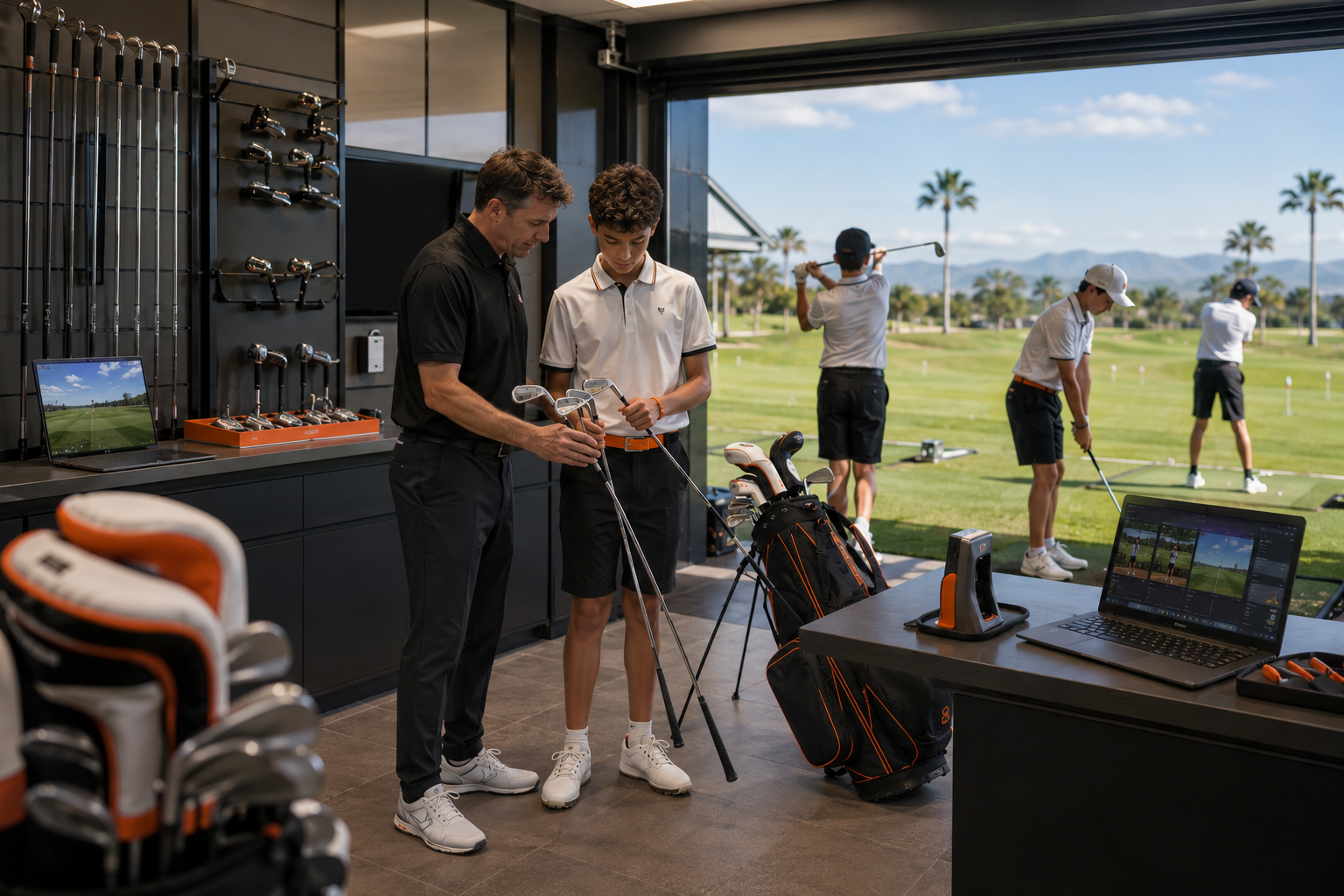
When Should Junior Golfers Upgrade Their Golf Clubs?
Introduction
As junior golfers grow and improve, their equipment needs change too. One of the most common questions parents ask is when should junior golfers upgrade golf clubs. While it can be tempting to buy the latest clubs every season, replacing equipment too early—or waiting too long—can both affect a player's development.
The right golf clubs help junior golfers develop sound swing mechanics, improve consistency, and gain confidence on the course. However, upgrading should be based on more than age or marketing claims. A player's height, strength, swing speed, skill level, and long-term goals all play important roles in determining the right time for new equipment.
Understanding when should junior golfers upgrade golf clubs can help families make smarter investments while supporting long-term player development.
To learn more about junior golf development and coaching opportunities, visit the CAMPUS Academy.
TLDR – Quick Guide
- There is no fixed age for upgrading golf clubs.
- Growth, swing changes, and skill development are the biggest indicators.
- Clubs that are too short or too long can affect performance.
- Club fitting is often more important than simply buying new equipment.
- Regular assessments help determine when an upgrade is necessary.
- Investing at the right time supports long-term improvement.
Detailed Breakdown
Why Golf Clubs Matter for Junior Players
Golf clubs are more than just equipment—they're tools that influence how junior golfers learn and perform.
Properly fitted clubs can help players:
- Develop consistent swing mechanics
- Improve ball striking
- Increase confidence
- Reduce poor swing habits
- Make practice more productive
On the other hand, clubs that no longer fit a player's body or swing can make improvement more difficult.
That's why understanding when should junior golfers upgrade golf clubs is an important part of long-term development.
Growth Is the Biggest Reason to Upgrade
Junior golfers grow quickly, especially during pre-teen and teenage years.
As players get taller and stronger, clubs that once fit properly may become:
- Too short
- Too light
- Too flexible
- Difficult to control
If a golfer appears uncomfortable at address or has significantly changed in height, it may be time to evaluate their equipment.
Rather than replacing clubs on a schedule, parents should monitor physical growth and overall comfort.
Skill Development Can Outgrow Equipment
Improvement isn't limited to physical growth.
As junior golfers become more skilled, they often generate:
- Faster swing speeds
- Better ball striking
- Improved consistency
Equipment that worked well for beginners may no longer support advanced performance.
For example, players may benefit from shafts with different flex profiles or clubheads designed for greater control as their skills develop.
Performance Changes Can Signal It's Time
Equipment doesn't always need replacing simply because it's older.
Instead, watch for signs such as:
- Inconsistent ball flight
- Difficulty making solid contact
- Reduced distance
- Poor trajectory
- Loss of confidence
While swing mechanics are often the primary cause of these issues, equipment should also be evaluated as part of the process.
Tracking performance trends helps determine whether clubs may be limiting progress.
Families can learn more by reading Golf Performance Tracking for Junior Golfers.
Objective performance data often provides valuable insight before investing in new equipment.
Don't Upgrade Based on Age Alone
Many parents assume junior golfers need new clubs every year.
In reality, age alone isn't the best indicator.
Two golfers of the same age may have completely different:
- Heights
- Strength levels
- Swing speeds
- Skill development
The decision should always be based on the individual player rather than an arbitrary timeline.
A Professional Assessment Can Help
Before purchasing new clubs, consider having your child's game evaluated by an experienced coach.
A comprehensive assessment can determine whether performance issues stem from:
- Swing mechanics
- Physical development
- Practice habits
- Equipment fit
The Junior Golf Assessment Guide explains how coaches evaluate players and identify opportunities for improvement.
An assessment often prevents unnecessary equipment purchases while ensuring golfers receive the support they actually need.
Club Fitting Is Often More Important Than Brand
One of the biggest misconceptions is that newer or more expensive clubs automatically produce better results.
In reality, proper fit matters far more than brand name.
A club fitting considers factors such as:
- Height
- Wrist-to-floor measurement
- Swing speed
- Shaft flex
- Club length
- Lie angle
Well-fitted clubs help players swing naturally and develop consistent fundamentals.
Avoid Upgrading Too Frequently
Buying new clubs every time a player has a poor tournament usually isn't the answer.
Frequent equipment changes can:
- Disrupt confidence
- Create unnecessary expense
- Make swing adjustments more difficult
Unless clubs no longer fit properly or performance data suggests a need, consistency often supports better long-term development.
When Competitive Golfers May Need More Advanced Equipment
As tournament players continue improving, equipment needs may become more specialized.
Competitive golfers sometimes benefit from:
- Custom-fitted irons
- Performance wedges
- Driver shaft adjustments
- Updated grip sizes
These changes should be based on measurable performance improvements rather than simply trying to gain extra distance.
Working with a qualified coach can help determine when equipment upgrades are appropriate.
For families in Northern California, Roger Pineda Golf (Palo Alto, CA) offers player development programs that help junior golfers evaluate both their skills and equipment needs as they progress.
Focus on Long-Term Development
The goal isn't to own the newest clubs.
The goal is to ensure equipment supports healthy development and allows players to perform at their best.
Parents should remember that coaching, purposeful practice, and consistent development almost always have a greater impact than equipment alone.
When clubs fit properly, players can focus on building skills instead of compensating for equipment limitations.
Signs It May Be Time to Upgrade Golf Clubs
Consider evaluating your child's clubs if they:
- Have experienced a significant growth spurt
- Consistently appear uncomfortable at address
- Have noticeably increased swing speed
- Are making consistent solid contact but losing distance
- Have outgrown junior club specifications
- Receive a recommendation from their coach after an assessment
Using these indicators helps families make informed equipment decisions rather than replacing clubs unnecessarily.
Key Takeaways
Understanding when should junior golfers upgrade golf clubs helps families balance player development with smart equipment investments. Growth, skill progression, swing speed, and overall performance are all more important indicators than age alone.
Before purchasing new clubs, players should consider a professional assessment and, when appropriate, a club fitting to ensure their equipment matches their current abilities. Combined with quality coaching and consistent practice, properly fitted clubs can help junior golfers continue improving with confidence throughout their competitive journey.
Frequently Asked Questions
When should junior golfers upgrade golf clubs?
Junior golfers should consider upgrading when they outgrow their current clubs physically or when their skills and swing speed have significantly improved. Equipment should match the player's size and ability rather than simply their age. A coach or club fitter can help determine the right timing.
How do I know if my child's golf clubs are too small?
Clubs that are too short may cause poor posture, inconsistent contact, and uncomfortable setup positions. If your child has recently grown taller or appears cramped during their swing, it's worth having their equipment evaluated. Properly fitted clubs promote better mechanics and comfort.
Do beginner junior golfers need custom-fitted clubs?
Not always. Many beginners perform well with appropriately sized off-the-shelf junior clubs. As players become more competitive and their swings become more consistent, custom fitting often provides greater benefits.
How often should junior golf clubs be evaluated?
It's a good idea to review equipment at least once a year or after a noticeable growth spurt. Coaches may also recommend an evaluation if performance changes unexpectedly. Regular assessments help ensure clubs continue to support player development.
Are expensive golf clubs better for junior golfers?
Not necessarily. Clubs that fit properly are generally more beneficial than the most expensive models. The right length, shaft flex, and overall fit contribute much more to long-term improvement than brand name alone.