
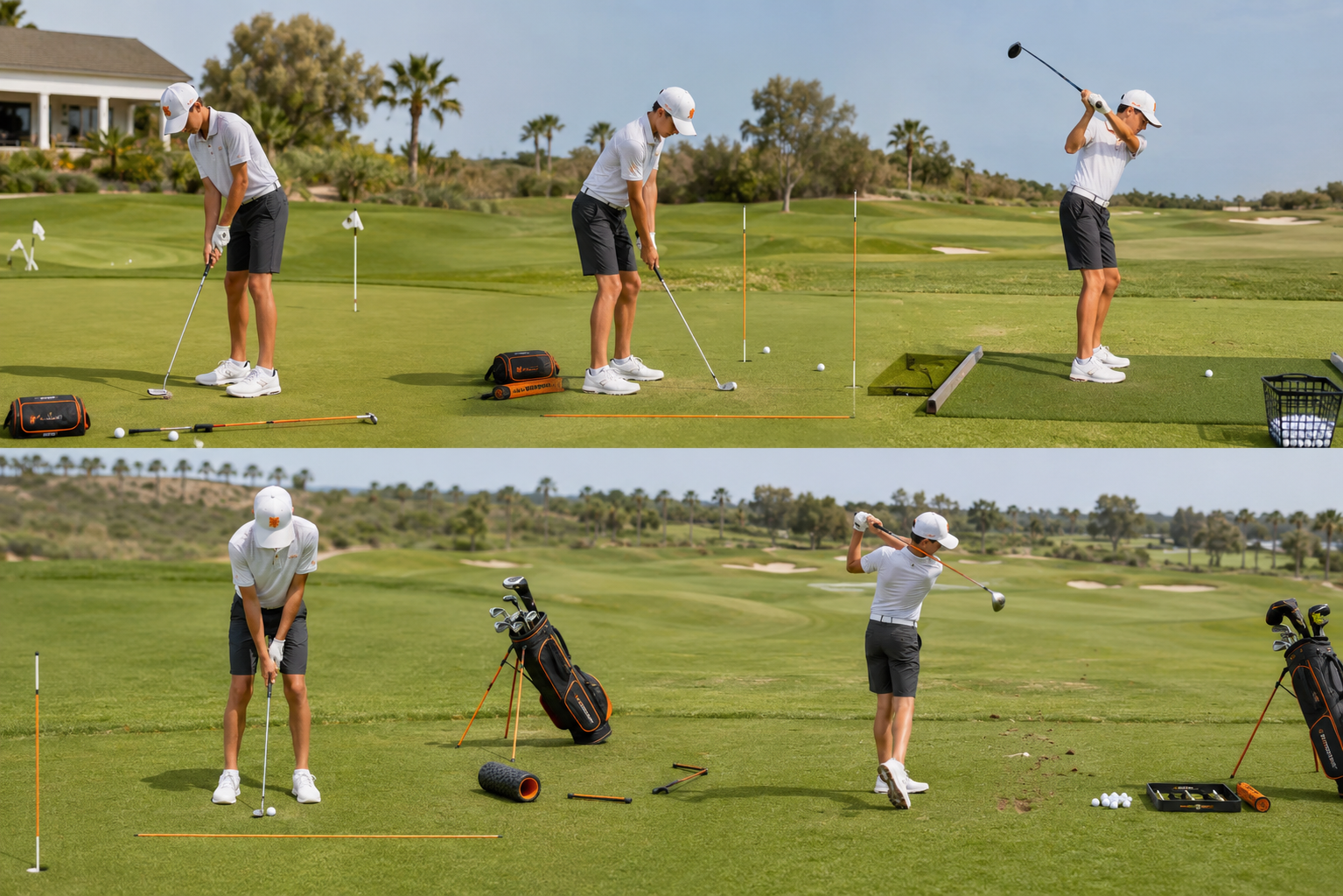
What to Practice Between Golf Lessons to Improve Faster
Taking regular golf lessons is an important part of becoming a better player, but lessons alone won't lead to lasting improvement. What junior golfers do between coaching sessions often has a much bigger impact on their long-term success.
If you're wondering what to practice between golf lessons, the answer isn't simply hitting hundreds of golf balls. The most successful junior golfers use the time between lessons to reinforce what they've learned, develop good habits, and practice with a clear purpose.
Whether you're preparing for tournaments or working toward college golf, productive practice bridges the gap between instruction and performance. The goal is to arrive at your next lesson having made progress—not starting over.
Families looking to build a structured development pathway can learn more by visiting the CAMPUS Academy website.
TLDR – Quick Guide
- Knowing what to practice between golf lessons helps accelerate improvement.
- Focus on your coach's priorities instead of trying to fix everything.
- Balance full swing, short game, putting, and on-course practice.
- Track progress to measure improvement over time.
- Practice with purpose instead of simply hitting balls.
- Consistency between lessons leads to faster development.
Detailed Breakdown
Follow Your Coach's Practice Plan
The first priority between lessons should always be reinforcing what your coach taught you.
Many junior golfers make the mistake of searching for additional swing tips online or experimenting with new techniques before mastering the fundamentals they've already been given.
Instead, focus on:
- Assigned drills
- Swing checkpoints
- Practice routines
- Movement patterns
- Coach's feedback
Staying consistent with one development plan helps prevent confusion and allows improvements to become permanent.
Prioritize Quality Over Quantity
More practice isn't always better.
One focused hour is often more valuable than three hours of mindless repetition.
When deciding what to practice between golf lessons, concentrate on:
- Slow, deliberate repetitions
- Clear objectives
- Feedback after each shot
- Maintaining good fundamentals
Every swing should have a purpose.
Instead of simply trying to hit as many balls as possible, aim to improve something specific during every practice session.
Spend More Time on the Short Game
One of the biggest mistakes junior golfers make is spending nearly all of their practice time on the driving range.
Lower scores usually come from improving:
- Chipping
- Pitching
- Putting
- Distance control
- Wedge play
Many coaches recommend spending at least half of your practice time on scoring shots.
Improving your short game often produces faster scoring improvements than increasing driving distance.
Practice Putting Every Week
Putting is one of the easiest skills to practice consistently.
Between lessons, work on:
- Speed control
- Short putts
- Green reading
- Stroke consistency
- Pressure drills
Simple games, such as making 25 consecutive three-foot putts, can build confidence while improving performance under pressure.
Because putting requires limited space and equipment, it's an excellent skill to practice regularly.
Reinforce Course Management Skills
Practice doesn't always happen on the range.
Whenever possible, spend time on the golf course developing:
- Club selection
- Shot planning
- Decision-making
- Risk management
- Pre-shot routines
Learning to make smart decisions often lowers scores faster than making major swing changes.
Competitive golfers who think strategically gain an advantage over players who rely only on technical ability.
Build Athletic Skills
Golf performance depends on more than swing mechanics.
Between lessons, include activities that improve:
- Mobility
- Flexibility
- Balance
- Stability
- Coordination
Athletic development supports more efficient movement and reduces injury risk throughout the season.
It also helps players adapt more easily as coaches introduce advanced swing techniques.
Practice With a Purpose
One of the best ways to improve faster is to create a plan before every session.
Ask yourself:
- What is today's objective?
- Which drill am I reinforcing?
- How will I measure success?
Practicing with intention keeps sessions productive and prevents wasted time.
Families looking for guidance on building consistent training habits can explore Year-Round Junior Golf Training, which explains how structured practice supports long-term improvement.
Track Your Progress
Understanding what to practice between golf lessons also means knowing whether your practice is working.
Track areas such as:
- Fairways hit
- Greens in regulation
- Putting statistics
- Up-and-down percentage
- Practice completion
- Tournament scores
Reviewing performance regularly helps players identify strengths and areas that need additional attention.
For more ideas on measuring improvement, read Golf Performance Tracking for Junior Golfers.
Performance tracking helps ensure your practice leads to measurable results.
Avoid Making Too Many Swing Changes
It's tempting to watch instructional videos or copy techniques from professional golfers.
However, changing multiple parts of your swing between lessons can slow development.
Instead:
- Trust your coach's process.
- Focus on one improvement at a time.
- Allow changes to become natural through repetition.
Consistency creates lasting improvement.
Prepare Questions for Your Next Lesson
Every practice session provides valuable feedback.
Keep notes about:
- Drills that felt comfortable
- Areas that remain challenging
- Questions about technique
- Tournament experiences
Arriving prepared helps coaches make each lesson more productive and allows them to adjust your development plan based on real experiences.
Learn in the Right Training Environment
Practicing independently is important, but training in a structured environment can accelerate progress.
For example, The Golf Garage (San Jose, CA) provides junior golfers with coaching, performance feedback, and development programs designed to complement practice between lessons.
Working within a supportive coaching environment helps players stay accountable while building confidence.
Stay Focused on the Long-Term Journey
Improvement doesn't happen overnight.
Every lesson builds on previous work, and every practice session contributes to future performance.
The CAMPUS Academy Journey demonstrates how consistent coaching, purposeful practice, and competitive experience work together to support long-term player development.
Small improvements made between lessons often lead to significant results over time.
Common Mistakes Between Golf Lessons
Many junior golfers unintentionally slow their progress by:
- Practicing without a plan
- Ignoring their coach's drills
- Focusing only on full swings
- Neglecting putting and short game
- Making unnecessary swing changes
- Failing to track improvement
Avoiding these mistakes helps every lesson build on the previous one instead of starting from scratch.
Key Takeaways
Knowing what to practice between golf lessons can make every coaching session more valuable. Rather than simply spending more time on the range, competitive junior golfers should focus on purposeful practice that reinforces coaching, develops scoring skills, and measures progress.
By following a structured practice plan, tracking performance, and maintaining consistency, players can improve more efficiently and build the habits needed for long-term success. The golfers who improve the fastest aren't always the ones who practice the most—they're the ones who practice with intention.
Frequently Asked Questions
What should I practice between golf lessons?
Focus on the drills and priorities your coach assigns during each lesson. Reinforcing those skills helps build consistency and prevents conflicting swing changes. A structured practice plan is more effective than random repetition.
How often should junior golfers practice between lessons?
The ideal schedule depends on age, goals, and competition level, but most competitive players benefit from practicing several times each week. Sessions should include full swing, short game, and putting. Consistency is more important than occasional marathon practice sessions.
Should I practice full swing every day?
Not necessarily. While full-swing practice is important, short-game and putting often have a greater impact on scoring. A balanced practice routine helps develop every part of your game.
Is it okay to watch golf instruction videos between lessons?
Watching instructional content can be helpful, but players should avoid making major swing changes without discussing them with their coach. Mixing different coaching philosophies often creates confusion. It's usually best to trust your coach's long-term development plan.
How do I know if my practice is working?
Track your performance during practice and tournaments to measure progress over time. Improvements in scoring, consistency, and key statistics are strong indicators that your practice is effective. Regular feedback from your coach also helps confirm you're moving in the right direction.