
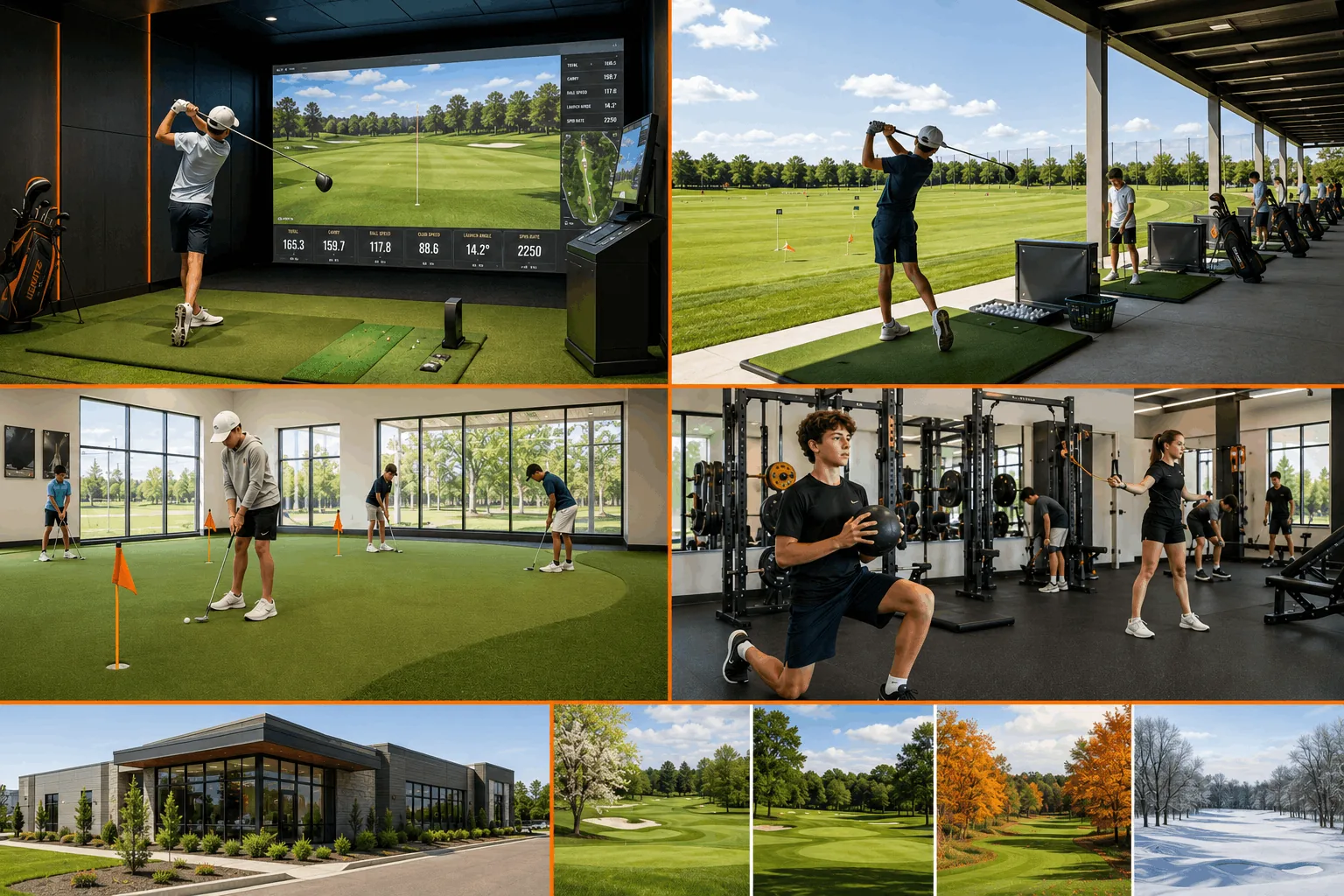
Year-Round Junior Golf Training Programs for Competitive Athletes
Introduction
Competitive junior golf is no longer seasonal. Today’s top junior golfers train year-round to improve:
- Scoring consistency
- Tournament readiness
- Physical development
- Mental performance
- Competitive confidence
The gap between casual junior golfers and highly competitive players often comes down to structure. Not talent. Many players practice hard during tournament season but lose momentum during slower periods of the year. Others compete constantly without a long-term development plan. Both approaches can slow progress significantly over time. That is why year-round junior golf training has become such an important part of modern player development. The best competitive players follow structured systems that adapt throughout the year based on:
- Tournament schedules
- Physical development
- Mental recovery
- Scoring weaknesses
- Long-term goals
The objective is not simply to play more golf. The objective is to create:
- Better habits
- Smarter preparation
- More sustainable development
- Long-term competitive growth
For junior golfers pursuing higher-level tournament and collegiate opportunities, year-round development creates consistency that short-term training cannot replicate. In this guide, we’ll break down:
- Why year-round junior golf training matters
- What strong annual development plans look like
- How training priorities shift throughout the year
- Common mistakes junior golfers make
- How competitive environments accelerate growth
TLDR – Quick Guide
- Year-round training builds long-term scoring consistency
- Structured development improves tournament readiness
- Training priorities should shift throughout the year
- Recovery and mental balance are critical for improvement
- Short game and scoring skills require constant attention
- Physical development matters more in modern junior golf
- Competitive environments accelerate player growth
- Smart structure prevents burnout and stagnation
Detailed Breakdown
Why Year-Round Training Matters
Junior golf development is highly cumulative. Players who improve consistently over several years usually build:
- Better habits
- Stronger routines
- Greater emotional resilience
- More reliable scoring skills
This rarely happens through seasonal training alone. Competitive golf requires continuous development because players constantly need to improve:
- Mechanics
- Short game
- Decision-making
- Mental performance
- Athleticism
At higher levels, standing still often means falling behind. This does not mean junior golfers should practice endlessly year-round without breaks. It means development should remain structured and intentional throughout the calendar year. The long-term progression outlined on the Campus Golf Academy Journey Page emphasizes how gradual, year-round development helps players improve sustainably instead of chasing short-term results.
Off-Season Training Is Often Where Major Growth Happens
Many families underestimate the value of off-season development. Tournament season focuses heavily on:
- Performance
- Scoring
- Competition
- Travel
- Mental pressure
Off-season periods create opportunities for:
- Technical improvement
- Physical development
- Recovery
- Skill rebuilding
- Mental resets
This is often where major breakthroughs happen. Without constant tournament pressure, players can:
- Improve mechanics carefully
- Build strength safely
- Develop mobility
- Increase swing speed
- Sharpen short-game fundamentals
The best junior golfers use slower competitive periods strategically rather than disappearing from training entirely.
Training Priorities Should Change Throughout the Year
One of the biggest mistakes in junior golf is training the exact same way every month. Strong year-round junior golf training programs adjust priorities depending on:
- Tournament schedules
- School demands
- Physical fatigue
- Competitive goals
- Development needs
During Tournament Season
Players often prioritize:
- Scoring
- Mental preparation
- Course management
- Tournament routines
- Short-game sharpness
Technical changes are usually minimized during heavy competition periods.
During Development Phases
Training may focus more heavily on:
- Swing improvement
- Strength development
- Speed training
- Movement quality
- Practice structure
This creates healthier long-term progress.
Short Game Requires Constant Maintenance
One of the biggest mistakes junior golfers make is focusing too heavily on full swings year-round. Short game development should never disappear from training plans. Competitive players consistently dedicate time toward:
- Putting
- Wedge distances
- Chipping
- Bunker play
- Lag putting
- Scoring drills
Why?
Because scoring separates competitive players far more than swing aesthetics.
Players who neglect short game often plateau despite improving technically. Most tournament strokes are lost:
- Around the greens
- Through poor distance control
- Through avoidable mistakes
Not from swing mechanics alone.
Physical Development Matters More Than Ever
Modern junior golf is increasingly athletic. Many competitive players now follow structured physical training programs that improve:
- Mobility
- Stability
- Rotational strength
- Swing speed
- Endurance
- Recovery
However, physical training must remain age-appropriate. Younger players should prioritize:
- Coordination
- Movement quality
- Athleticism
Older competitive players may gradually increase:
- Strength work
- Speed training
- Recovery routines
- Nutrition planning
Year-round athletic development often creates major long-term competitive advantages.
Mental Development Cannot Be Ignored
Golf is mentally demanding. Year-round training should also include:
- Emotional management
- Confidence building
- Focus routines
- Competitive preparation
- Recovery habits
Many junior golfers train physically year-round while neglecting mental performance completely. That becomes a problem during:
- Pressure situations
- Slumps
- Recruiting periods
- Difficult tournament stretches
Players who manage emotions effectively usually improve more consistently over time. Confidence is trainable. So is emotional resilience.
Recovery Is Part of Development
Many families assume more golf automatically creates faster improvement. Not always. Without recovery, players often experience:
- Burnout
- Mental fatigue
- Injury risk
- Emotional exhaustion
- Reduced motivation
Recovery should remain part of every year-round development plan. That includes:
- Sleep
- Rest days
- Mental breaks
- Physical recovery
- Time away from competition
The best competitive athletes train hard and recover intelligently. Long-term consistency matters more than nonstop volume.
Competitive Environments Accelerate Growth
Junior golfers improve faster in strong development environments. Competitive systems help players:
- Build accountability
- Practice with purpose
- Develop scoring habits
- Learn emotional discipline
- Improve tournament preparation
Programs like The Golf Garage in San Jose often help junior golfers develop year-round structure through competitive coaching, skill development, and tournament-focused preparation. Similarly, training environments like Roger Pineda Golf in Palo Alto can help players improve both technically and competitively through long-term player development systems. Environment matters tremendously in junior golf growth.
Why Structure Matters More Than Motivation
Motivation changes constantly. Structure creates consistency. Many junior golfers improve rapidly when they develop:
- Weekly practice schedules
- Scoring goals
- Recovery routines
- Competitive plans
- Accountability systems
Without structure, development often becomes random. And random development usually creates inconsistent results. The development philosophy highlighted throughout the Campus Golf Academy homepage emphasizes long-term growth through structure, consistency, and progressive competitive development.
Common Mistakes in Year-Round Training
Practicing Without Clear Goals
Random practice often creates limited improvement. Strong training plans should include measurable priorities.
Overcompeting Too many tournaments can reduce:
- Skill development
- Recovery
- Practice quality
Balance matters.
Ignoring Physical Development
Athletic preparation now plays a major role in competitive golf progression.
Focusing Only on Mechanics
Golf improvement also depends heavily on:
- Scoring habits
- Emotional control
- Decision-making
- Competitive experience
Training Without Recovery
Fatigued players rarely improve consistently long term. Recovery supports development.
Key Takeaways
- Year-round junior golf training improves long-term consistency
- Training priorities should change throughout the calendar year
- Off-season development often creates major improvement
- Short game requires constant attention
- Physical development matters in modern competitive golf
- Mental performance training supports scoring consistency
- Recovery is critical for sustainable improvement
- Strong development environments accelerate growth
- Structure matters more than temporary motivation
- Long-term development always outweighs short-term results
FAQs
- Why is year-round junior golf training important?
Year-round training helps junior golfers develop consistency, scoring habits, and long-term competitive growth. Continuous development allows players to improve technically, mentally, and physically throughout the year. Structured training also helps players stay prepared for tournament competition.
- Should junior golfers train every day year-round?
Not necessarily. Junior golfers still need recovery, rest days, and balance throughout development. Smart training plans include both structured practice and proper recovery to prevent burnout and fatigue.
- What should junior golfers focus on during the off-season?
Off-season periods are ideal for technical improvement, strength development, mobility training, and rebuilding scoring fundamentals. Players can make swing changes more effectively when tournament pressure is lower. Mental recovery and confidence rebuilding also become important during slower competitive periods.
- How important is fitness in modern junior golf?
Fitness is increasingly important in competitive junior golf. Athletic development helps improve swing speed, endurance, mobility, and recovery. However, physical training should remain age-appropriate and support long-term development goals.
- Can too many tournaments hurt junior golf development?
Yes, excessive tournament schedules can reduce recovery, increase emotional fatigue, and limit practice quality. Junior golfers still need time for skill development and mental resets. Balanced schedules usually support healthier long-term improvement.