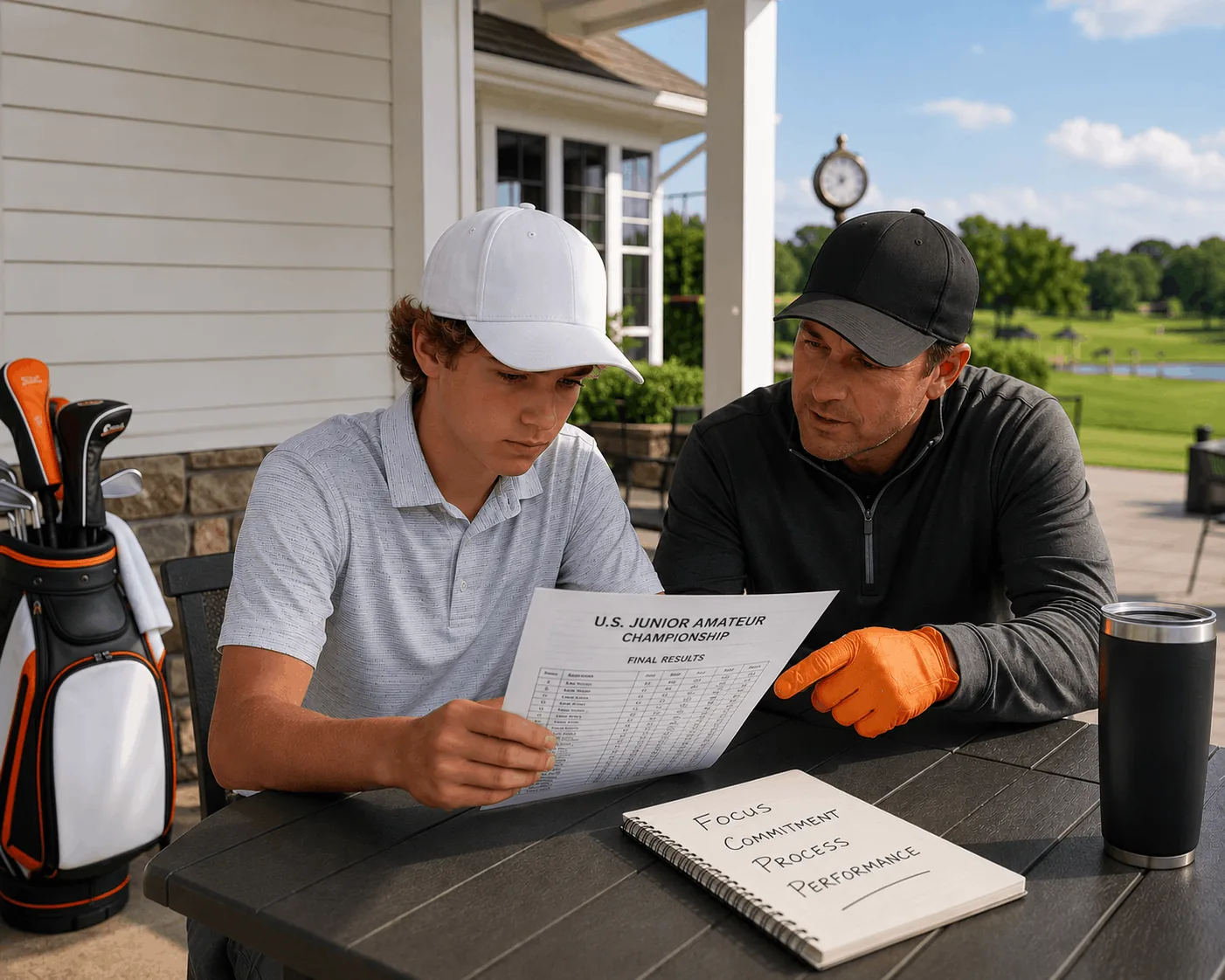

What Tournament Scores for D1 Golf Do College Coaches Expect?
Introduction
One of the most common questions in junior golf recruiting is: “What tournament scores for D1 golf are actually good enough?” The answer is not as simple as one number. College coaches evaluate:
- Tournament scoring averages
- Strength of competition
- Course difficulty
- National rankings
- Scoring consistency
- Mental toughness
- Long-term development potential
A player shooting 74 in a difficult AJGA tournament may attract more recruiting attention than someone shooting 68 in a weak local field. Coaches care deeply about context. They want to see how players perform under pressure against strong competition. Modern Division 1 golf is incredibly competitive. Coaches are no longer recruiting golfers based only on swing aesthetics or occasional low rounds. They are looking for complete athletes who can:
- Compete consistently
- Handle pressure
- Recover from mistakes
- Improve over time
- Contribute to team culture
And perhaps most importantly: They recruit players who can score when it matters most. For families pursuing the College Golf Pathway, understanding realistic scoring expectations early can help create smarter tournament schedules, training plans, and recruiting strategies. In this guide, we’ll break down:
- Realistic tournament scores for D1 golf recruiting
- What coaches evaluate beyond scorecards
- The difference between elite and mid-major programs
- Which tournaments matter most
- Common recruiting mistakes junior golfers make
- How players can improve tournament scoring consistency
TLDR – Quick Guide
- Elite D1 programs often recruit players averaging 70–73
- Mid-major D1 programs commonly recruit players averaging 72–75
- Lower-level D1 programs often recruit players averaging 74–78
- Tournament strength matters as much as scoring average
- Coaches prioritize consistency over occasional low rounds
- AJGA and national events carry more recruiting value
- Mental toughness and player development heavily impact recruiting decisions
- Scoring ability under pressure matters more than perfect swing mechanics
Detailed Breakdown
Why Tournament Scores Matter So Much
College golf coaches recruit tournament players — not driving range players. Tournament golf exposes everything:
- Emotional control
- Decision-making
- Competitive discipline
- Mental toughness
- Recovery after mistakes
- Focus under pressure
Anybody can shoot a low score during a casual practice round. Very few players can consistently perform when tournament pressure, difficult course setups, and elite competition are involved. That is why serious junior golfers pursuing college golf opportunities must prioritize competitive tournament experience early in development. Coaches want evidence that players can:
- Handle pressure situations
- Stay composed after bad holes
- Compete over multiple rounds
- Maintain scoring consistency
- Respond well to adversity
This is also why structured player development matters so much. The process outlined on the Campus Golf Academy Journey Page helps many families better understand how long-term development shapes college recruiting outcomes.
What Elite D1 Programs Expect
Top NCAA Division 1 golf programs recruit at an extremely high level. Schools like:
- Stanford
- Texas
- Vanderbilt
- Oklahoma State
- Auburn
…typically recruit players averaging:
- 70–72 in major tournaments
- Consistent par-or-better scoring
- Strong finishes in elite national events
Many recruits at this level are:
- AJGA standouts
- State champions
- Nationally ranked juniors
- International competitors
These coaches are not looking for occasional flashes of talent. They want:
- Repeated strong performances
- Competitive maturity
- Emotional stability
- Elite scoring habits
- Proven tournament experience
Consistency is what separates highly recruited players from everyone else. A single hot tournament rarely changes recruiting outcomes. Sustained performance over time does.
Mid-Major D1 Programs Have Different Expectations
Not every Division 1 recruit needs to average under par every week. Many mid-major D1 programs recruit golfers averaging:
- 72–75 in tournament play
- Competitive regional scoring
- Strong improvement trends over time
This is where many highly recruitable junior golfers fit. Coaches at this level still heavily prioritize:
- Work ethic
- Coachability
- Athletic development
- Competitive mindset
- Long-term upside
Many coaches are willing to recruit players who are still improving rapidly rather than golfers who may have already plateaued. This is why development trajectory matters so much in recruiting conversations.
Lower-Level D1 Golf Is Still Extremely Competitive
There is a misconception that lower-ranked D1 programs are easy to reach. They are not. Most lower-level Division 1 programs still expect:
- Tournament averages around 74–78
- Competitive tournament experience
- Reliable scoring habits
- Mental composure
- Strong fundamentals
Remember: Men’s Division 1 golf programs only receive 4.5 scholarships per team. That creates intense competition nationwide. Even lower-level programs receive interest from highly accomplished junior golfers with strong tournament resumes.
Tournament Strength Matters More Than Most Players Realize
Not all tournaments carry equal recruiting value. This is one of the biggest misunderstandings in junior golf recruiting.
High-Value Recruiting Events
College coaches heavily recruit from:
- AJGA tournaments
- USGA junior events
- State amateur championships
- Elite regional tours
- National invitationals
These tournaments provide:
- Stronger competition
- Difficult setups
- Verified scoring environments
- Better recruiting visibility
A 75 in a stacked AJGA field may impress coaches far more than a 69 in a weak local event. The context behind the score matters tremendously.
Local Tournaments Still Matter
Early in development, local tournaments remain extremely valuable. They help junior golfers:
- Learn pressure management
- Develop tournament routines
- Build confidence
- Improve emotional control
- Gain scoring experience
Players looking to improve tournament performance can use the Find Lessons page to locate structured coaching opportunities that align with long-term recruiting goals. The earlier junior golfers build competitive habits, the faster long-term improvement usually happens.
What Coaches Evaluate Beyond Scores
Mental Toughness College coaches constantly watch:
- Body language
- Emotional reactions
- Pace of play
- Focus after mistakes
- Competitive attitude
Why?
Because college golf is mentally demanding.
A talented player with poor emotional discipline can quickly fall down recruiting lists. Coaches recruit players they trust in difficult situations. Players who recover quickly after mistakes often outperform more talented golfers who struggle emotionally under pressure.
Scoring Trends Improvement trajectory matters heavily during recruiting. For example:
- A sophomore improving from 79 to 73 gains attention quickly
- A player stuck at the same scoring level for years may plateau recruiting-wise
Coaches value golfers who continue developing physically, mentally, and competitively over time. Long-term improvement signals coachability and commitment.
Athleticism Modern college golf is more athletic than ever. Many D1 recruits now:
- Train in the gym regularly
- Prioritize mobility
- Build swing speed intentionally
- Focus on recovery and nutrition
- Develop rotational strength
Distance matters in modern recruiting. But complete scoring ability matters even more. Competitive environments like Future Champions Golf in San Diego often help junior golfers gain exposure to elite tournament preparation and advanced player development systems.
How Junior Golfers Can Improve Tournament Scores
Play More Competitive Golf
Tournament reps matter. Pressure creates development opportunities that practice alone cannot replicate. Regular competition improves:
- Emotional resilience
- Decision-making
- Competitive confidence
- Scoring consistency
Players who compete frequently usually adapt faster to pressure situations.
Prioritize Scoring Skills
Elite players separate themselves around:
- Wedge play
- Putting
- Course management
- Avoiding penalty strokes
- Short-game consistency
Most tournament strokes are lost around the greens — not from full swings. Junior golfers who obsess only over swing mechanics often overlook the areas that actually lower scores.
Build a Smarter Tournament Schedule
Playing stronger events improves:
- Exposure
- Development
- Recruiting opportunities
- Competitive maturity
Quality matters more than quantity. A smart tournament schedule should gradually increase competitive difficulty over time.
Train Like a Collegiate Athlete
Modern recruits focus heavily on:
- Strength training
- Mobility
- Recovery
- Nutrition
- Mental performance
Golf performance increasingly depends on athletic preparation. Competitive training environments like Crown Golf Academy in Arlington often help junior golfers develop the structure, discipline, and consistency required for collegiate golf.
Common Recruiting Mistakes
Playing Weak Tournament Fields
Low scores against weak competition have limited recruiting value. Strong fields provide better recruiting context.
Starting Recruiting Too Late
Many players wait until junior year to begin recruiting preparation. That often creates unnecessary pressure and missed opportunities.
Focusing Only on Swing Mechanics
Some golfers constantly rebuild swings instead of learning how to score. College coaches recruit scorers. Not perfect-looking swings.
Ignoring Academics Strong grades improve:
- Recruiting flexibility
- Scholarship opportunities
- Coach interest
Academics still matter significantly in college golf recruiting.
Key Takeaways
- Elite D1 recruits often average 70–73 in tournaments
- Mid-major recruits commonly average 72–75
- Lower-level D1 recruits often average 74–78
- Tournament strength matters heavily during recruiting
- Coaches prioritize consistency over occasional low rounds
- Mental toughness strongly impacts recruiting evaluations
- Development trends matter as much as current scores
- Strong tournament habits improve long-term recruiting opportunities
- Scoring ability under pressure matters more than swing aesthetics
FAQs
- What tournament scores for D1 golf are considered recruitable?
Most recruitable Division 1 golfers average between 70 and 75 in tournament play depending on the program level. Elite schools usually expect under-par scoring in major national events. Mid-major and lower-level D1 programs may recruit players with slightly higher scoring averages if they show strong long-term development potential.
- Do college golf coaches care more about scores or rankings?
College coaches evaluate both scores and rankings together during recruiting. Rankings help validate performance against strong competition, while scoring averages reveal consistency and competitive ability. Coaches also consider tournament strength, development trajectory, and mental toughness during evaluations.
- Are AJGA tournaments necessary for D1 recruiting?
AJGA events are not mandatory, but they significantly improve recruiting exposure. Coaches trust AJGA tournaments because they feature elite competition and difficult course setups. Strong performances in regional tours, state championships, and national junior events can also attract recruiting attention.
- How far do Division 1 golfers typically hit the ball?
Most Division 1 golfers average between 285 and 310 yards off the tee. However, distance alone is not enough for recruitment opportunities. Coaches also prioritize scoring consistency, short-game performance, decision-making, and emotional control during tournament play.
- When should junior golfers start preparing for D1 recruiting?
Most serious junior golfers should begin preparing during middle school or early high school. Early preparation allows players to improve tournament scoring, gain competitive experience, and build recruiting visibility over time. Starting early also helps families make smarter development and tournament scheduling decisions.