
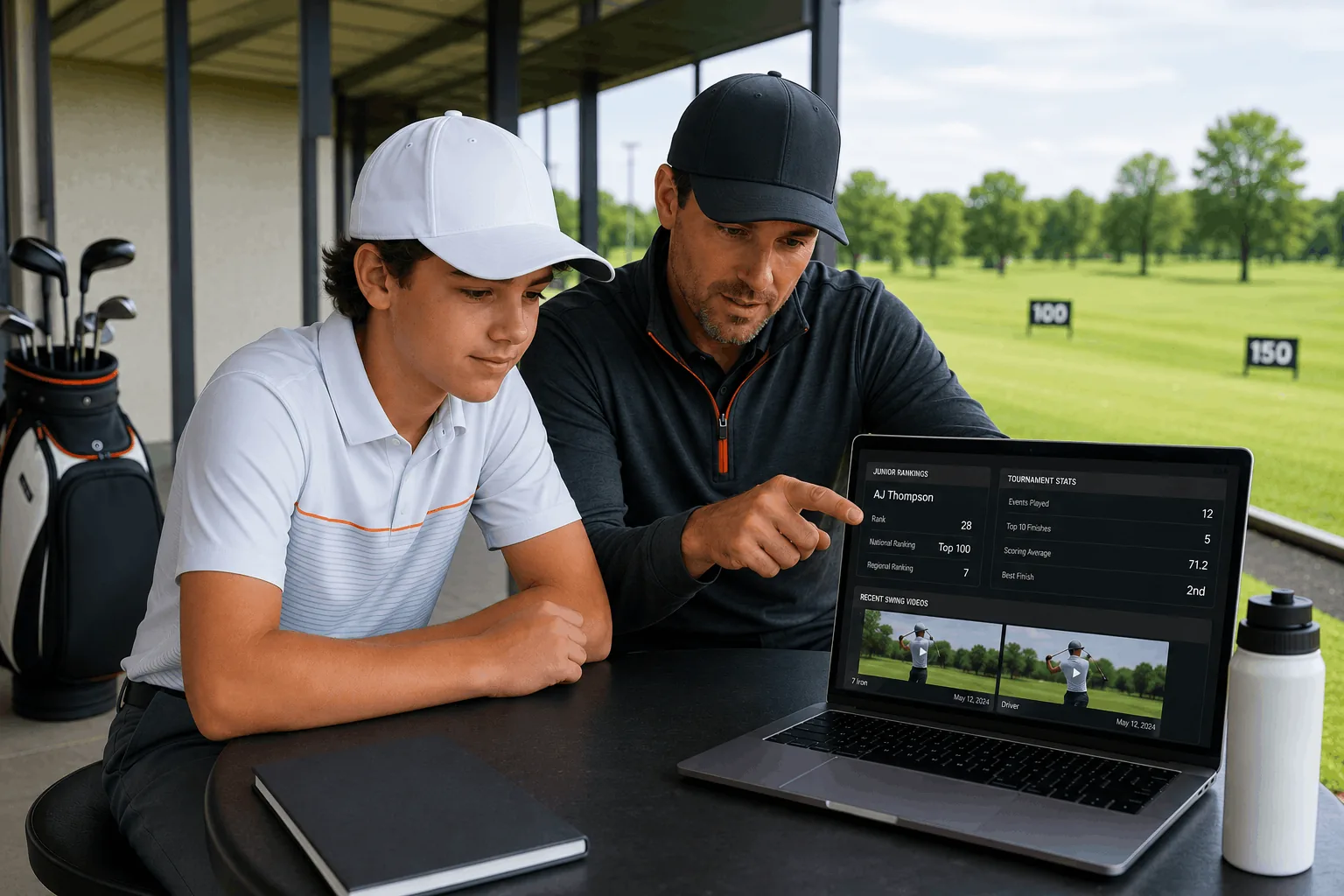
How to Build a Junior Golf Resume for College Coaches
Introduction
A strong junior golf resume can make a major difference during college recruiting. College coaches evaluate hundreds — sometimes thousands — of junior golfers every year. Coaches simply do not have time to search for every player’s tournament history, rankings, scoring averages, and academic information individually. That is why a well-organized junior golf resume matters. It helps coaches quickly understand:
- Who the player is
- How they score competitively
- What tournaments they play
- How they are developing
- Whether they fit the program
And contrary to what many families think: A junior golf resume is not only for elite nationally ranked players. Every serious junior golfer pursuing collegiate opportunities should have one. Even players still developing competitively benefit from learning how to present themselves professionally during recruiting. The key is creating a resume that is:
- Organized
- Honest
- Easy to evaluate
- Updated consistently
- Focused on relevant information
For players pursuing opportunities through the College Golf Pathway, a strong resume helps create better communication with coaches while improving recruiting visibility over time. In this guide, we’ll break down:
- What to include in a junior golf resume
- Common recruiting resume mistakes
- How coaches evaluate player information
- What matters most during recruiting
- How to organize tournament results effectively
TLDR – Quick Guide
- A junior golf resume helps coaches evaluate players quickly
- Include tournament scores, rankings, academics, and contact information
- Keep the resume organized and easy to read
- Accuracy and consistency matter more than flashy design
- Update tournament results regularly
- Coaches care more about scoring trends than isolated rounds
- Professional communication improves recruiting opportunities
- Every serious junior golfer should build a recruiting resume
Detailed Breakdown
What Is a Junior Golf Resume?
A junior golf resume is a recruiting document that summarizes:
- Tournament results
- Scoring averages
- Rankings
- Academic information
- Athletic development
- Contact details
Think of it as a snapshot of the player’s competitive profile. College coaches use these resumes to quickly evaluate:
- Skill level
- Competitive experience
- Development trends
- Recruiting potential
A strong resume saves coaches time. More importantly: It helps players present themselves professionally. Recruiting is highly competitive, and organization matters.
Why Junior Golf Resumes Matter
Many families assume coaches will automatically discover talented players. Sometimes that happens. But most recruiting opportunities require proactive communication. Coaches often receive:
- Emails
- Tournament updates
- Swing videos
- Player profiles
- Recruiting introductions
A junior golf resume helps organize all of that information clearly. Without structure, coaches may struggle to evaluate:
- Tournament quality
- Scoring consistency
- Long-term improvement
- Academic fit
The more clearly a player presents information, the easier it becomes for coaches to evaluate recruiting potential. The development philosophy shared on the Campus Golf Academy About Page emphasizes long-term player growth, organization, and professional development alongside competitive performance.
What to Include in a Junior Golf Resume
Basic Player Information
Start with:
- Full name
- Graduation year
- City and state
- Phone number
- Email address
This sounds simple, but many players forget important details. Make it easy for coaches to contact the player directly.
Academic Information Academics matter heavily during recruiting. Include:
- GPA
- Test scores (if available)
- Academic honors
- Graduation year
- Relevant coursework
Strong academics create more recruiting flexibility for coaches. They also open doors at:
- Academic D1 schools
- Ivy League programs
- Strong Division 3 programs
Tournament Results This is one of the most important sections. Include:
- Tournament names
- Dates
- Course names
- Yardages
- Scores
- Finishes
Focus on:
- Recent events
- Strong competition
- Consistent performance
Coaches care far more about:
- Scoring trends
- Competitive context
- Tournament strength
…than one isolated low round. Organized tournament data helps coaches evaluate development much faster.
Rankings and Scoring Averages
If applicable, include:
- AJGA rankings
- Junior Golf Scoreboard rankings
- State rankings
- Scoring averages
However: Do not panic if rankings are still developing. Many coaches still recruit players based heavily on:
- Improvement trends
- Tournament schedules
- Long-term upside
Development matters.
Swing Video Links
Short swing videos can help coaches evaluate:
- Athleticism
- Mechanics
- Tempo
- Physical development
Keep videos:
- Simple
- Clear
- Easy to access
Overproduced recruiting videos are unnecessary. Coaches primarily care about seeing the player swing naturally.
Keep the Resume Clean and Simple
One major mistake junior golfers make is overcomplicating recruiting resumes. Coaches do not want:
- Fancy graphics
- Overdesigned layouts
- Huge paragraphs
- Excessive personal stories
They want information quickly. A strong junior golf resume should feel:
- Organized
- Professional
- Easy to skim
- Consistently updated
Simple formatting usually works best.
Coaches Care More About Trends Than Perfection
One important reality: College coaches do not expect perfection. They understand junior golfers are still developing. What they evaluate heavily is:
- Improvement trajectory
- Competitive maturity
- Scoring consistency
- Tournament scheduling
- Development habits
For example: A player improving steadily from 79 to 73 often attracts significant recruiting attention. Development trends matter enormously.
Tournament Scheduling Matters
The tournaments included on a resume matter significantly. College coaches pay close attention to:
- AJGA events
- National tournaments
- State championships
- Elite regional tours
Why?
Because strong fields provide better recruiting context.
A player shooting 74 in elite competition may impress coaches more than someone shooting 68 against weak fields. Competitive environments matter.
Communication Matters Too
A great resume alone does not secure recruiting opportunities. Players also need:
- Professional communication
- Consistent updates
- Maturity
- Realistic expectations
Coaches appreciate players who:
- Respond professionally
- Communicate clearly
- Show accountability
- Understand recruiting timelines
Recruiting relationships matter. Organization helps build trust.
Development Environment Plays a Major Role
Junior golfers improve faster in strong development environments. Competitive coaching systems help players:
- Track progress
- Build structure
- Improve scoring habits
- Develop tournament discipline
- Create long-term recruiting plans
Programs like Future Champions Golf in San Diego often help junior golfers prepare for higher-level recruiting through structured tournament development and competitive coaching systems. Strong environments create stronger recruiting preparation.
Keep Updating the Resume
One of the biggest recruiting mistakes players make is allowing resumes to become outdated. A strong junior golf resume should be updated regularly with:
- Tournament results
- Rankings
- Scoring averages
- Swing videos
- Academic updates
Recruiting is dynamic. Improvement should remain visible over time.
Common Junior Golf Resume Mistakes
Including Too Much Information
Coaches want clarity — not clutter. Keep the resume concise and organized.
Listing Weak or Irrelevant Tournaments
Tournament quality matters. Focus on competitive events that provide recruiting context.
Exaggerating Achievements Honesty matters enormously during recruiting. Coaches verify information.
Neglecting Academics Academics remain critical in recruiting evaluations. Do not overlook them.
Forgetting Contact Information
This happens more often than people realize. Always make player communication easy.
Recruiting Is About More Than Talent
One of the biggest misconceptions in junior golf is believing talent alone guarantees recruiting opportunities. College coaches also evaluate:
- Maturity
- Organization
- Communication
- Development trends
- Competitive behavior
Professionalism matters. A strong junior golf resume helps demonstrate that professionalism early in the recruiting process. Families looking to begin organizing recruiting communication can also use the Campus Golf Academy Contact Page to learn more about player development support and recruiting guidance.
Key Takeaways
- A junior golf resume helps coaches evaluate players quickly
- Include tournament results, academics, rankings, and contact information
- Keep formatting simple and organized
- Coaches value scoring trends more than isolated low rounds
- Tournament strength matters during recruiting evaluations
- Academics remain important in recruiting opportunities
- Professional communication improves recruiting relationships
- Resumes should be updated consistently over time
- Strong development environments improve recruiting preparation
- Recruiting success depends on more than talent alone
FAQs
- What should a junior golf resume include?
A junior golf resume should include tournament results, scoring averages, rankings, academic information, graduation year, and contact details. Many players also include swing video links and athletic achievements. The goal is to help coaches evaluate the player quickly and clearly.
- How long should a junior golf resume be?
Most junior golf resumes should stay concise and easy to read. One to two pages is usually enough for most players. Coaches prefer organized information rather than long paragraphs or excessive graphics.
- Do college coaches care about academics on golf resumes?
Yes, academics matter significantly during recruiting. Strong grades help coaches with admissions flexibility and scholarship opportunities. Academic performance can also expand recruiting opportunities at highly respected schools.
- How often should junior golfers update recruiting resumes?
Players should update resumes regularly throughout tournament seasons. New scores, rankings, tournament finishes, and academic updates should stay current. Consistent updates help coaches evaluate recent development trends more accurately.
- Are swing videos important for college golf recruiting?
Yes, swing videos can help coaches evaluate athleticism, mechanics, and physical development. However, videos should remain simple and easy to access. Coaches care more about seeing natural swings than highly edited productions.