What a PGA Certified Junior Golf Coach Can Offer Competitive Players
Introduction
Competitive junior golf demands more than occasional swing tips. As players progress into tournaments and higher levels of competition, they need structured instruction, measurable goals, effective practice habits, and a development strategy that changes as their game evolves. Working with a PGA certified junior golf coach can provide that structure. Professional credentials alone don't guarantee that a coach will be the perfect fit for every junior golfer. However, PGA education and experience can provide a foundation in golf instruction, player development, coaching, and the broader demands of the game. For competitive players, the real value comes from finding a coach who can translate that knowledge into an individualized development process. Families exploring coaching options can learn more at Campus Golf Academy and review the organization's approach on About Campus Golf Academy.
TLDR – Quick Guide
- A PGA certified junior golf coach can provide structured technical instruction and long-term development guidance.
- Competitive players need more than swing fixes; practice, scoring, tournament preparation, and decision-making matter too.
- Player assessments help establish useful development priorities.
- Quality coaches adjust instruction based on age, ability, goals, and physical development.
- Credentials matter, but communication and experience with competitive juniors are equally important.
- Parents should evaluate the coach's development philosophy, not simply the letters after their name.
- The best coaching relationship gradually helps juniors become more independent players.
Detailed Breakdown
What Does PGA Certification Tell Parents?
When families encounter a PGA certified junior golf coach, certification can provide useful information about the instructor's professional background and commitment to golf education. But parents should still look deeper. Ask about:
- Experience coaching juniors
- Experience with tournament players
- Coaching philosophy
- Communication style
- Player assessment methods
- Long-term development planning
A credential is a starting point—not the entire evaluation. Competitive junior golfers have specific needs, so families should look for a coach whose experience matches the player's current level and future goals.
Technical Instruction With a Clear Purpose
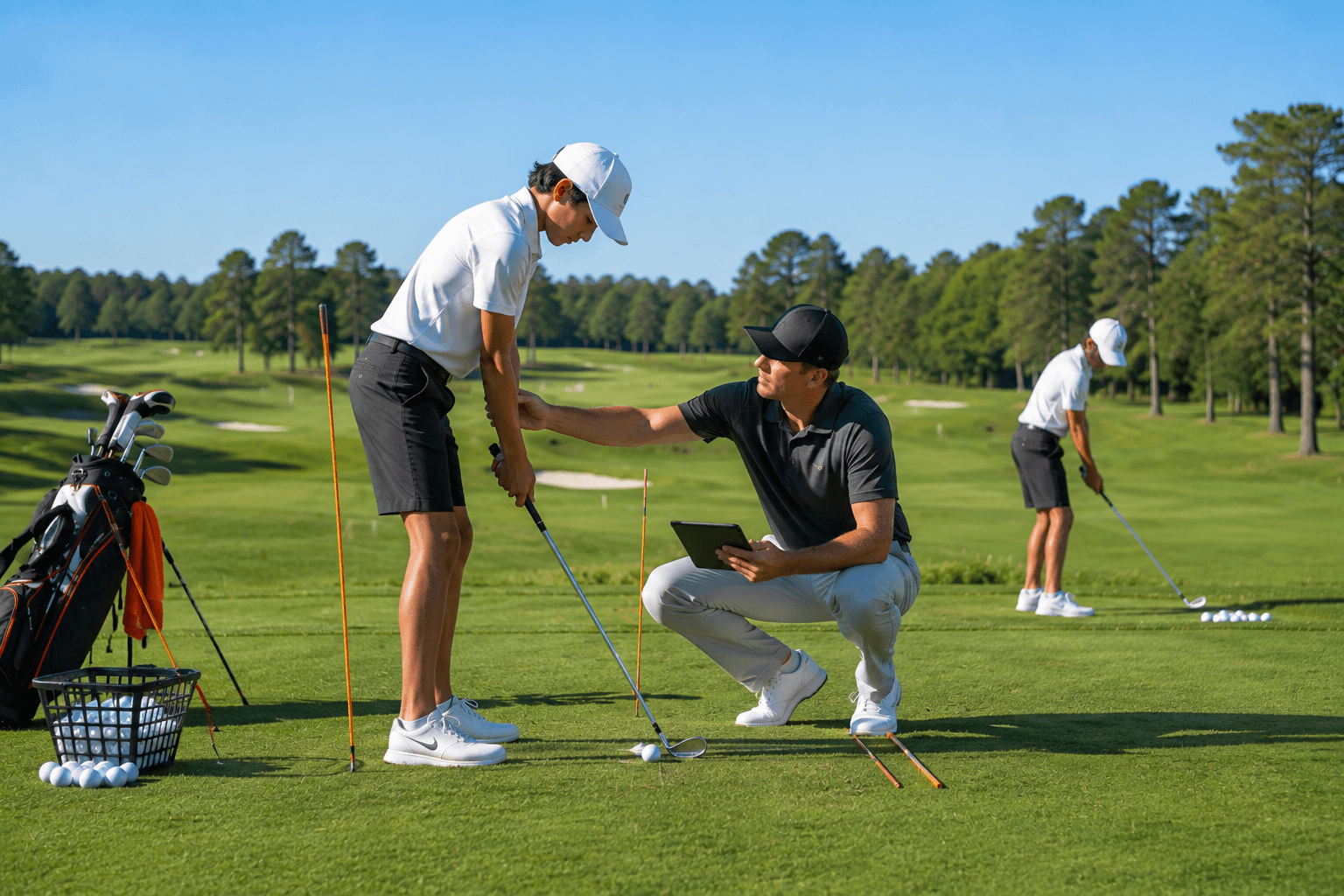
Swing development remains an important part of junior golf coaching. A qualified coach can evaluate areas such as:
- Setup
- Alignment
- Clubface control
- Swing path
- Contact
- Ball flight
- Distance control
However, good instruction shouldn't become a never-ending search for a visually perfect swing. A PGA certified junior golf coach should help players understand how technical changes connect to actual performance.
The question isn't simply, "Does the swing look better?"
It's, "Does this change help the player produce more predictable golf shots?"
That distinction matters enormously for competitive golfers.
Player Assessments Create a Starting Point
Before building a development plan, a coach needs to understand the player. An assessment may consider:
- Full-swing performance
- Putting
- Short game
- Wedge control
- Physical movement
- Practice habits
- Tournament performance
- Mental approach
This creates a baseline. Instead of randomly choosing what to work on, the coach and player can identify the skills most likely to improve performance. Families can explore the Junior Golf Assessment Guide for more detail on what coaches may evaluate and why assessments matter.
Competitive Players Need Individualized Development
Two junior golfers of the same age may need completely different coaching. One may be an excellent ball striker losing strokes around the greens. Another might have strong scoring instincts but inconsistent driver control. Giving both golfers identical training plans makes little sense. A PGA certified junior golf coach working with competitive players should be able to prioritize development according to:
- Current ability
- Strengths and weaknesses
- Tournament schedule
- Physical development
- Competitive goals
Individualization makes training more efficient because players spend more time addressing the areas that matter.
Better Practice Habits Can Be as Important as Better Technique
A weekly lesson lasts only so long. What happens during the remaining days of the week can determine whether the player actually improves. Good coaches teach juniors how to practice. That may include:
- Specific drills
- Performance games
- Practice goals
- Statistical tracking
- Pressure challenges
- Reflection after practice
Instead of simply telling a golfer to "work on putting," the coach can provide measurable objectives. That gives the player something concrete to accomplish between lessons.
Competitive Coaching Extends Beyond the Driving Range
Tournament golf introduces problems that can't be solved exclusively with swing mechanics. Competitive players need to learn:
- Course management
- Pre-shot routines
- Emotional control
- Pressure management
- Tournament preparation
- Post-round evaluation
A golfer may have an excellent swing on the range and still struggle to convert that ability into tournament scores. Effective coaching helps bridge that gap. This broader approach is one of the key distinctions explored in Elite Junior Golf Coaching vs. Traditional Lessons.
Coaches Can Help Juniors Understand Their Own Games
Long-term development shouldn't create dependence on the coach. It should gradually create independence. Competitive juniors need to learn how to recognize:
- Their typical shot patterns
- Their reliable distances
- Their common misses
- Productive practice methods
- Smart strategic decisions
A PGA certified junior golf coach can help players develop this awareness by asking questions rather than providing every answer immediately. Eventually, the junior golfer needs to compete without the coach standing beside every shot. Developing self-awareness is therefore a major part of becoming a stronger tournament player.
Coaching Should Change as the Player Grows
Junior golfers aren't miniature adults. Their bodies, coordination, strength, attention spans, and competitive goals change significantly throughout development. Coaching should evolve accordingly. A younger junior may need more emphasis on:
- Athletic movement
- Fundamentals
- Games
- Exploration
- Enjoyment
An older competitive player may need more detailed work involving:
- Ball-flight control
- Performance data
- Tournament strategy
- Physical development
- College golf preparation
The best coaches adapt the training environment instead of forcing every player through the same system.
Communication With Parents Matters
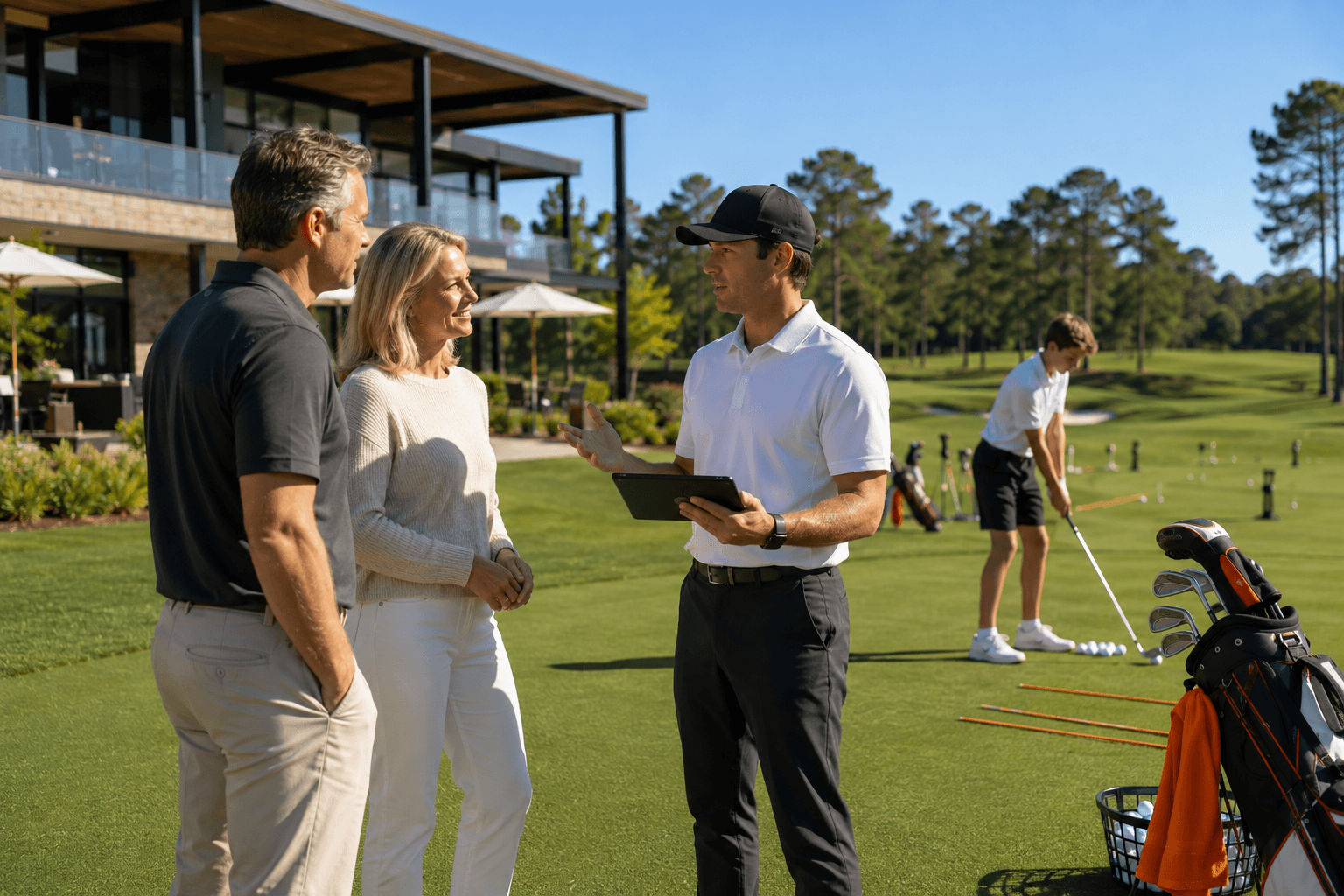
Parents are an important part of junior golf development. They manage schedules, transportation, tournament expenses, and much of the support surrounding the player. Clear communication helps parents understand:
- What the golfer is working on
- Why certain skills are priorities
- How much practice is appropriate
- How progress will be evaluated
- What realistic expectations look like
At the same time, a strong coaching relationship keeps the junior golfer at the center of the process. Parents support. Coaches coach. Players gradually take greater ownership.
Finding the Right Junior Golf Coach
Credentials are valuable, but families should evaluate the entire coaching relationship. Before choosing a PGA certified junior golf coach, consider asking:
- How do you assess new players?
- How do you create development goals?
- How do you measure progress?
- How do you prepare competitive juniors for tournaments?
- What should players practice between lessons?
- How do you communicate with parents?
- How does coaching change as a player advances?
Families ready to compare coaching opportunities can start with Find Junior Golf Lessons.
Consider the Training Environment Too
The coach isn't the only consideration. Competitive development can also be influenced by the environment surrounding the player. A strong program may provide opportunities for:
- Individual coaching
- Group training
- Competitive practice
- Performance assessment
- On-course development
Families in Southern California can explore San Diego Junior Golf Academy and Del Mar Junior Golf Academy for local development and coaching options. The goal isn't simply to find the nearest instructor. It's to find an environment that fits the golfer's current needs and long-term ambitions.
What a Competitive Junior Should Expect From Coaching
A strong coaching relationship should provide more than temporary fixes. Over time, players should develop:
- Better technical fundamentals
- Clearer practice habits
- Stronger scoring skills
- Greater competitive confidence
- Better decision-making
- Increased ownership of their game
Progress won't always happen in a straight line. Swing changes can take time. Tournament scores can fluctuate. Physical growth can temporarily affect coordination. An experienced coach helps the player interpret those periods as part of development rather than automatically responding with another major technical change.
Key Takeaways
- A PGA certified junior golf coach can provide competitive players with technical instruction, structured assessments, purposeful practice plans, tournament preparation, and long-term development guidance.
- However, certification should be one factor in choosing a coach—not the only factor.
- Parents should also consider experience with competitive juniors, communication style, development philosophy, and the coach's ability to personalize training.
- The strongest coaching relationships don't simply create better swings. They help juniors become smarter, more confident, and increasingly independent golfers who understand how to continue improving.
Frequently Asked Questions
What does a PGA certified junior golf coach do?
A PGA certified junior golf coach can provide technical instruction, player assessments, practice planning, and broader development guidance. Coaches working with competitive juniors may also address course management, tournament preparation, and performance habits. The exact approach should depend on the player's age, ability, and goals.
Is a PGA certified junior golf coach better than a non-PGA coach?
Certification can indicate professional education and experience, but it doesn't automatically make one coach the best fit for every golfer. Parents should also consider the instructor's experience with competitive juniors, communication style, and development philosophy. The quality of the coaching relationship matters alongside professional credentials.
How often should a competitive junior work with a golf coach?
There is no universal schedule because lesson frequency depends on the player's age, goals, tournament calendar, and ability to practice independently. Some competitive juniors benefit from weekly coaching, while others need more time between sessions to implement changes. A coach should recommend frequency based on the player's development plan rather than an arbitrary schedule.
Can a junior golf coach help with tournament performance?
Yes, competitive coaching can extend beyond swing mechanics to include course management, routines, preparation, and post-round evaluation. These skills help golfers translate practice performance into competition. Tournament experience remains essential because players must ultimately learn to make decisions and execute shots independently.
What should parents ask before choosing a junior golf coach?
Parents should ask how the coach evaluates players, measures progress, communicates with families, and develops competitive golfers over time. They should also discuss practice expectations and how instruction changes as the player improves. Clear answers can help families determine whether the coach's approach matches their junior golfer's needs.