
Junior Golf Coach Questions Parents Should Ask Before Choosing a Coach
Introduction
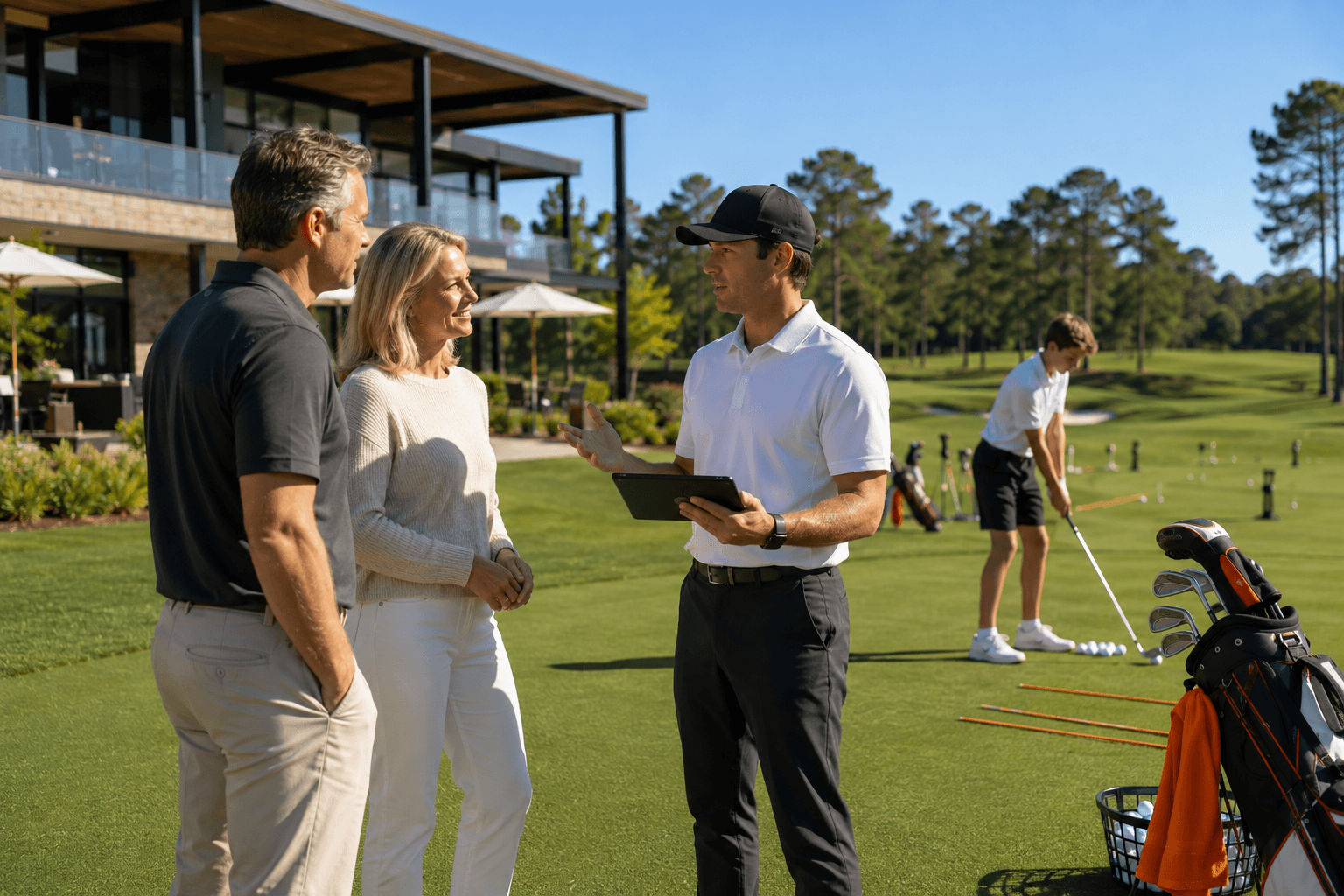
Choosing a junior golf coach can shape much more than a player's swing. The right coach can influence practice habits, confidence, tournament preparation, decision-making, and how a young golfer feels about the game over the long term. That makes asking the right junior golf coach questions essential. Parents shouldn't choose an instructor simply because the facility looks impressive, the coach has a strong playing résumé, or another family recommended them. Competitive junior golfers need coaching that matches their age, ability, personality, goals, and current stage of development. A productive first conversation can reveal whether a coach offers genuine long-term development or simply another weekly lesson. Families beginning their search can learn more at Campus Golf Academy, review the philosophy on About Campus Golf Academy, or explore available options through Find Junior Golf Lessons.
TLDR – Quick Guide
Before selecting an instructor, important junior golf coach questions should cover:
- Experience coaching junior golfers
- Competitive player development
- Player assessments
- Individual training plans
- Practice expectations
- Tournament preparation
- Progress measurement
- Parent communication
- Long-term goals
- Coaching philosophy
The best coach isn't necessarily the one with the longest résumé. It's the coach whose approach fits the individual player and provides a clear path forward.
Detailed Breakdown
- What Experience Do You Have Coaching Junior Golfers?
This should be one of the first junior golf coach questions parents ask. Teaching adults and coaching developing juniors aren't identical skills. Young golfers are still growing physically, mentally, and emotionally, and instruction needs to reflect those differences. Ask about experience with:
- Beginners
- Competitive juniors
- Different age groups
- Tournament players
- College-bound golfers
A coach who primarily works with adults may still be excellent, but parents should understand how the instructor adapts coaching for younger athletes.
- How Do You Assess a New Player?
Quality coaching should begin with understanding the golfer. Ask what happens before the coach starts changing the swing. A useful assessment might consider:
- Ball striking
- Putting
- Short game
- Club distances
- Shot patterns
- Physical movement
- Tournament performance
- Practice habits
- Goals
Parents should be cautious if an instructor identifies the "solution" after watching three swings without learning anything else about the player. Assessment creates context.
- How Do You Build an Individual Development Plan?
Junior golfers don't need identical training simply because they're the same age. One player may need better putting. Another may need improved driver control, physical development, tournament experience, or course management. Ask how the coach determines priorities and how those priorities change as the player improves. Strong answers should demonstrate that development is individualized rather than based on a fixed lesson template.
- How Do You Measure Progress?
"Your swing looks better" isn't enough. One of the most useful junior golf coach questions is how improvement will actually be measured. Depending on the player's level, coaches may monitor:
- Scoring averages
- Greens in regulation
- Fairways
- Putting
- Up-and-down performance
- Penalty shots
- Shot dispersion
- Practice tests
- Tournament results
Not every metric needs to improve simultaneously. The important point is that coach, player, and parent should understand what they're trying to improve and how they'll recognize progress.
- What Should My Child Practice Between Lessons?
The real work happens between coaching sessions. A strong coach should give the junior clear priorities rather than simply saying, "Practice more." That might include:
- Specific drills
- Putting challenges
- Short-game tests
- Swing exercises
- On-course objectives
- Performance games
Players should leave lessons knowing exactly what comes next. Otherwise, parents can spend considerable money on instruction while the golfer spends the rest of the week practicing without direction.
- How Do You Prepare Players for Competition?
Competitive junior golf isn't played on the driving range. Ask whether coaching addresses:
- Course management
- Pre-shot routines
- Tournament preparation
- Pressure
- Post-round reviews
- Mistake management
A player can hit beautiful range shots and still struggle to score when every stroke counts. Families entering competitive golf can also read the Parent's Guide to the First Year of Competitive Junior Golf to understand what the transition into tournament play can involve.
- How Do You Communicate With Parents?
This is one of the most overlooked junior golf coach questions. Parents need enough information to support development without becoming assistant swing coaches. Ask:
- How often do you provide updates?
- What should parents know after lessons?
- How should parents reinforce practice?
- How are concerns discussed?
- When should the player communicate directly with you?
Clear boundaries can prevent mixed messages. The Parent and Golf Coach Communication Guide explores how parents and coaches can work together without placing the junior in the middle.
- What Role Should Parents Play?
A good coach should have an answer. Parents are important, but their role generally isn't to provide technical corrections after every swing. Helpful parental support can include:
- Encouragement
- Transportation
- Scheduling
- Listening
- Supporting healthy routines
As juniors mature, they should gradually take greater ownership of practice and communication. A coaching system that depends entirely on parents managing every detail may struggle to develop independent competitors.
- How Often Should My Child Take Lessons?
More coaching isn't automatically better. Players need time to understand instruction, practice it, test it, and develop ownership. Ask the coach how lesson frequency changes based on:
- Age
- Ability
- Tournament schedule
- Current technical work
- Independent practice
Be wary of anyone suggesting that every junior needs exactly the same schedule. Frequency should serve development—not the calendar.
- How Do You Handle Growth and Swing Changes?
Junior golfers grow. Sometimes quickly. A growth spurt can temporarily affect:
- Balance
- Timing
- Coordination
- Posture
- Club delivery
Ask how the coach distinguishes between a technical problem and a player simply adapting to physical changes. Good junior coaching should evolve with the athlete instead of constantly rebuilding the swing whenever performance fluctuates.
- How Do You Use Technology?
Modern instruction may involve video, launch monitors, simulators, and performance-tracking systems. Those tools can be extremely useful. But parents should ask why they're being used. Technology should help answer meaningful questions about:
- Ball flight
- Contact
- Distance
- Dispersion
- Swing movement
- Progress
A launch monitor producing twenty numbers isn't helpful if nobody knows which two actually matter. Good coaches translate data into simple actions players can understand.
- How Do You Respond When a Player Plateaus?
Every competitive golfer eventually experiences a period when improvement slows. Ask the coach what happens then.
Do they immediately rebuild the swing?
Or do they investigate potential causes such as:
- Practice quality
- Short game
- Putting
- Course management
- Physical growth
- Tournament pressure
- Unrealistic expectations
The response can reveal a great deal about the coach's development philosophy.
- How Do You Help Players Become Independent?
This may be the most important long-term question. Competitive golfers eventually need to manage their own games. They should gradually learn to:
- Plan practice
- Understand shot patterns
- Manage mistakes
- Select targets
- Evaluate rounds
- Communicate with coaches
A great coach shouldn't create permanent dependence. The coach should gradually give the player tools to solve more problems independently.
- What Does Your Long-Term Development Path Look Like?
Ask what happens after the next lesson. Then ask what happens after the next year. If a junior hopes to progress from recreational golf into tournaments or eventually college golf, the coach should be able to explain how training evolves. That doesn't mean predicting exactly where a 10-year-old will be at 17. It means having a development philosophy rather than operating one lesson at a time.
- How Do I Know Your Coaching Environment Is the Right Fit?
Finally, ask about culture. Competitive development requires challenge, but juniors should also feel comfortable learning, asking questions, and making mistakes. Parents should observe whether the coach:
- Communicates respectfully
- Provides clear feedback
- Encourages accountability
- Adjusts instruction
- Keeps expectations realistic
- Creates a positive learning environment
Families can review Campus Golf Academy FAQs when researching programs and common questions before getting started. For families in Wisconsin, Madison Junior Golf Academy provides a local option for exploring junior golf development.
Red Flags Parents Should Watch For
Asking good junior golf coach questions is only useful if parents pay attention to the answers. Potential warning signs include:
- Promising guaranteed tournament results
- Making major swing changes immediately without assessment
- Giving every junior identical instruction
- Providing no clear practice plan
- Focusing exclusively on swing mechanics
- Dismissing parent questions
- Constantly changing technical priorities
- Creating dependence on frequent lessons
One red flag doesn't automatically make someone a poor coach. But patterns matter. Families comparing broader program options can also read How to Choose the Best Junior Golf Academy.
Key Takeaways
- The right junior golf coach questions help parents look beyond credentials, facilities, and first impressions.
- Ask how the coach assesses players, creates individual plans, measures progress, assigns practice, prepares juniors for tournaments, communicates with families, and adapts instruction as golfers grow.
- Most importantly, look for a coach who sees development as more than fixing a swing.
- Competitive juniors need technical skills, scoring ability, decision-making, resilience, independence, and a healthy relationship with the game.
- Choosing a coach is therefore less about finding someone with all the answers.
- It's about finding someone who knows which questions to ask about your junior golfer.
Frequently Asked Questions
What are the most important junior golf coach questions parents should ask?
Parents should ask about junior coaching experience, player assessments, development planning, practice expectations, tournament preparation, and progress measurement. They should also discuss communication and the role parents are expected to play. These questions reveal much more about a coach than credentials alone.
How can parents tell if a junior golf coach is a good fit?
Look at how the coach communicates with the player, explains instruction, and adapts training to individual needs. A strong fit should provide appropriate challenge without making the junior afraid to experiment or make mistakes. Parents should also understand the coach's long-term development philosophy.
Should a junior golf coach specialize in competitive players?
Competitive experience can be valuable when a junior is playing tournaments or pursuing higher levels of golf. These players need support with scoring, course management, tournament preparation, and practice planning in addition to swing instruction. Parents should choose experience that matches the golfer's current goals.
Should parents watch their child's golf lessons?
That depends on the player's age, coach, and program structure. Parents may benefit from understanding broad development goals, but older juniors should gradually learn to communicate directly with their coach and take ownership of training. Families should establish expectations with the coach from the beginning.
When should parents consider changing junior golf coaches?
A change may be worth considering when communication consistently breaks down, development lacks direction, or the player's needs have evolved beyond the current coaching relationship. Short-term scoring struggles alone aren't necessarily a reason to switch because development naturally includes plateaus. Parents should discuss concerns with the coach before making a decision.