How Junior Golf Clinics Help Competitive Players Develop Their Game
Introduction
Competitive junior golfers need more than a good swing. They need purposeful practice, scoring skills, confidence under pressure, athletic development, and opportunities to test themselves against other motivated players. That's where junior golf clinics can provide significant value. Unlike an individual lesson focused primarily on one player's immediate needs, a well-designed clinic creates a structured group environment where golfers can develop technical skills while competing, observing others, and learning how to perform under pressure. For developing competitive players, the right clinic isn't simply a place to hit golf balls for an hour. It should have clear objectives, qualified coaching, appropriate skill groupings, and exercises that connect practice to actual performance. Families looking for structured development opportunities can start at Campus Golf Academy or explore coaching through Find Junior Golf Lessons.
TLDR – Quick Guide
- Junior golf clinics combine professional instruction with structured group practice.
- Competitive drills can help players learn to execute skills under pressure.
- Training alongside peers creates opportunities for observation and healthy competition.
- Clinics can reinforce technical skills introduced during private coaching.
- The best programs group golfers appropriately by age, ability, or development stage.
- Clinics should complement independent practice, on-course experience, and individualized coaching.
- Consistent participation can support long-term development when clinics are part of a broader training plan.
Detailed Breakdown
What Are Junior Golf Clinics?
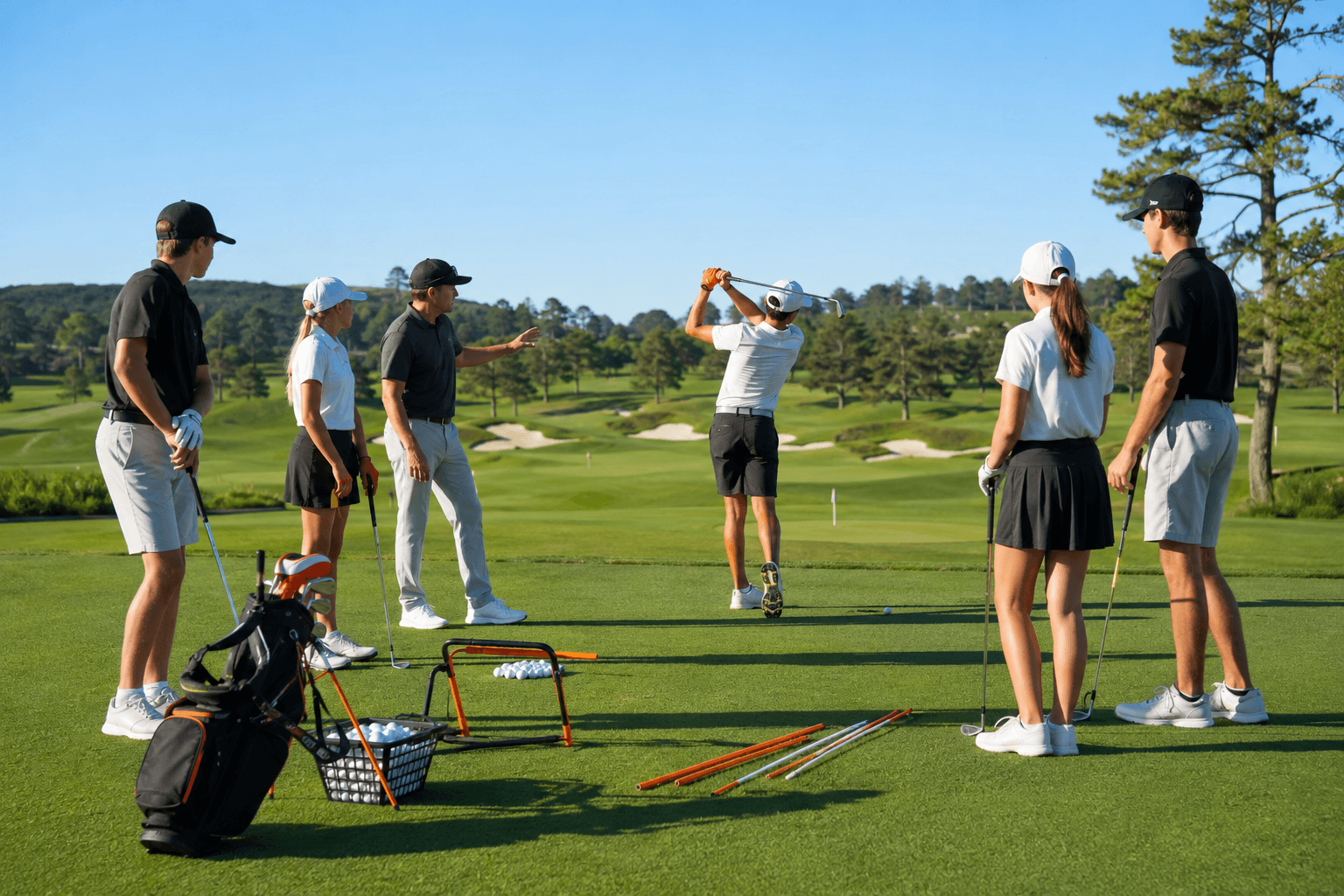
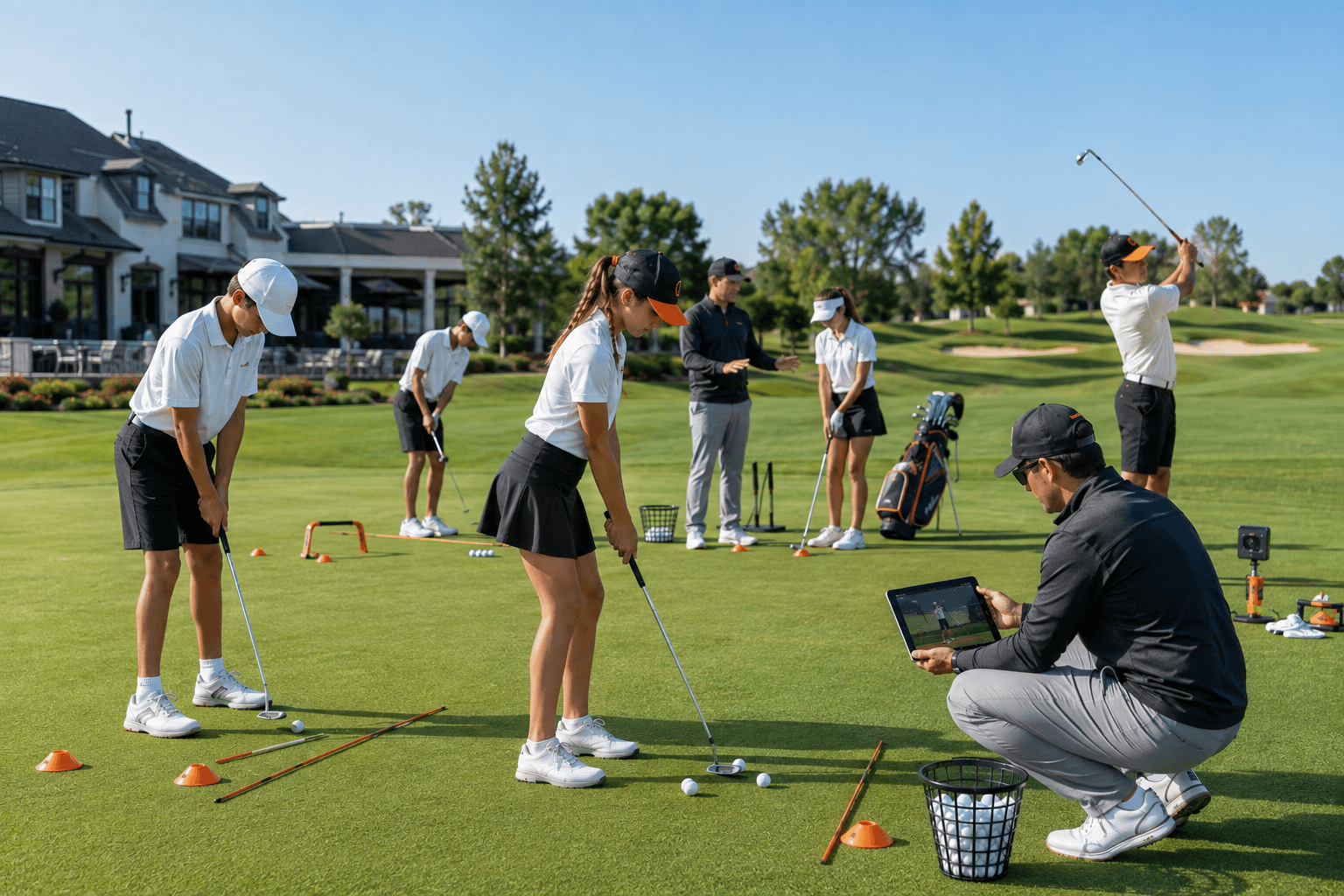
Junior golf clinics are structured group training sessions where coaches work with multiple young golfers around specific skills or development objectives. Depending on the program, a clinic might focus on:
- Full-swing fundamentals
- Putting
- Chipping and pitching
- Wedge distance control
- Course management
- Tournament preparation
- Competitive games
- Athletic movement
Some clinics are introductory. Others are designed specifically for experienced tournament players. That's why parents shouldn't assume every clinic provides the same experience. For competitive golfers, the important question is whether the program matches the player's current abilities and goals.
Clinics Create a Competitive Practice Environment
Practicing alone has value, but tournament golf doesn't happen in isolation. Competitive players need to become comfortable performing when results matter. Well-designed junior golf clinics can introduce that pressure through:
- Putting competitions
- Short-game challenges
- Accuracy contests
- Team games
- Scoring exercises
- Skills tests
Imagine a junior practicing six-foot putts alone. Missing one doesn't carry much consequence. Now imagine that same player needs to make the putt to win a clinic challenge. The physical skill is identical, but the emotional environment has changed. Learning to execute under mild pressure can help players develop routines and responses they can eventually use during tournaments.
Players Learn From Their Peers
A coach isn't the only person a junior can learn from during a clinic. Training alongside other golfers gives players opportunities to observe different approaches to practice and competition. They may notice how another golfer:
- Prepares for a shot
- Handles a mistake
- Controls trajectory
- Practices efficiently
- Responds to pressure
This peer learning can be particularly useful for competitive juniors. It also reminds players that everyone has strengths and weaknesses. Even the golfer who drives it 30 yards farther may struggle with something else.
Clinics Can Reinforce Private Coaching
Private instruction and junior golf clinics don't need to compete for a place in the development plan. They can serve different purposes. Individual lessons are particularly useful for:
- Assessments
- Technical changes
- Personalized feedback
- Specific performance problems
Clinics can then provide opportunities to reinforce those skills through repetition, games, and competitive exercises. Families comparing coaching approaches can read Elite Junior Golf Coaching vs. Traditional Lessons for additional context on building a more complete training environment.
Training Should Match the Player's Age
A seven-year-old and a 16-year-old competitive golfer shouldn't receive identical training. Younger players may benefit from clinics emphasizing:
- Coordination
- Fundamental movement
- Basic golf skills
- Games
- Exploration
- Enjoyment
More experienced juniors may need greater emphasis on:
- Advanced ball striking
- Distance control
- Scoring
- Tournament strategy
- Pressure performance
Junior Golf Training Plans by Age explores how training priorities can evolve throughout junior development. The best clinic is one designed for the golfer who is actually attending—not a generic version of adult instruction with smaller clubs.
Ability Level Matters Too
Age isn't the only consideration. Two 13-year-olds can have dramatically different golf backgrounds. One might be learning how to break 100, while another regularly competes in multi-day tournaments. Placing them in the same advanced clinic may not serve either player particularly well. Before enrolling, parents should ask:
- How are players grouped?
- What ability level is expected?
- Are competitive results required?
- How large is the group?
- How much individual feedback is provided?
Appropriate grouping allows coaches to create challenges that are difficult enough to encourage improvement without becoming unrealistic.
Junior Golf Clinics Can Build Better Practice Habits
Competitive players need to learn how to practice. That means moving beyond simply hitting bucket after bucket. Quality clinics can teach juniors to use:
- Specific targets
- Measurable goals
- Consequences
- Performance games
- Practice routines
- Reflection
For example, instead of hitting 30 random wedge shots, players might attempt to land five balls inside a defined scoring zone from three different distances. Now practice has an objective. Over time, juniors can take those methods into their independent training.
Clinics Support Long-Term Athlete Development
Competitive junior golf shouldn't be treated as a race to perfect the swing as early as possible. Players are developing physically, mentally, emotionally, and technically. A long-term approach can incorporate:
- Coordination
- Mobility
- Strength
- Speed
- Technical development
- Scoring skills
- Competitive experience
Long-Term Athlete Development for Junior Golfers explains why training priorities should evolve as young golfers mature. Junior golf clinics can support this approach when activities are designed around the player's developmental stage rather than short-term tournament results alone.
Consistency Matters More Than One Great Clinic
A single clinic can introduce useful ideas. Long-term improvement requires repetition. Players need opportunities to:
- Learn a skill.
- Practice it.
- Test it.
- Receive feedback.
- Refine it.
- Apply it on the course.
This is why clinics can be particularly useful when integrated into a consistent training schedule. Year-Round Junior Golf Training provides additional guidance on keeping development structured across changing seasons and tournament schedules.
Clinics Can Help Coaches Identify Development Needs
Group training gives coaches another perspective on a player's game. A golfer may perform beautifully during an individual technical lesson but struggle when asked to complete the same skill during a competitive challenge. That tells the coach something important. The issue might involve:
- Routine
- Confidence
- Decision-making
- Pressure response
- Skill transfer
Seeing players in different training environments can help coaches distinguish between simply possessing a skill and being able to use it when it counts.
Group Training Can Develop Independence
Competitive golfers eventually need to manage their own games. A coach cannot provide immediate feedback after every tournament shot. During junior golf clinics, players often have periods where the coach is helping someone else. That creates opportunities to evaluate their own shots, continue a drill independently, and solve simple problems without constant intervention. Over time, juniors can become better at asking:
- What happened?
- What pattern am I seeing?
- Did I follow my routine?
- What adjustment is appropriate?
- What should I practice next?
That independence becomes increasingly important as competition levels rise.
Clinics Shouldn't Replace On-Course Experience
A clinic can develop skills. It cannot completely recreate golf. Competitive juniors still need to experience:
- Uneven lies
- Wind
- Difficult course conditions
- Strategic decisions
- Tournament nerves
- Consequences for poor shots
The goal is to transfer skills developed in training onto the course. Families can explore the broader Junior Golf Development Journey to understand how instruction, practice, and competition can work together throughout a player's progression.
Finding the Right Junior Golf Clinic
Not every program marketed as a clinic will be appropriate for a serious competitive golfer. Parents should investigate:
- Coaching experience
- Coach-to-player ratio
- Skill grouping
- Session objectives
- Individual feedback
- Competitive drills
- Progress measurement
- Long-term pathway
A good clinic should be able to explain what players are developing and why. Families in Northern California can explore San Jose Junior Golf Academy for local junior development opportunities.
Signs of a High-Quality Junior Golf Clinic
Strong junior golf clinics usually have more structure than "show up and hit balls."
Look for sessions where:
- Players know the objective.
- Drills have measurable outcomes.
- Coaches provide individual feedback.
- Activities match player ability.
- Competition is challenging but constructive.
- Players spend more time doing than waiting.
- Skills connect to on-course performance.
Parents should also pay attention to the environment. Competitive doesn't need to mean miserable. Young golfers should be challenged while still feeling comfortable asking questions, experimenting, and making mistakes.
Key Takeaways
- Junior golf clinics can help competitive players develop much more than swing mechanics.
- The right clinic provides structured practice, professional feedback, peer learning, healthy competition, and opportunities to perform skills under pressure. It can also teach players better practice habits and gradually encourage greater independence.
- Clinics are most effective when they're part of a broader development plan that includes individual coaching, independent practice, physical development, on-course experience, and tournament competition.
- Parents should therefore look beyond schedules and prices when evaluating programs.
- Ask what the clinic is designed to develop.
- If the answer is clear—and the training matches the player's age, ability, and goals—a junior golf clinic can become a valuable part of long-term competitive development.
Frequently Asked Questions
Are junior golf clinics good for competitive players?
Yes, well-structured junior golf clinics can give competitive players opportunities to practice skills alongside peers and under added pressure. They can reinforce technical development while improving routines, resilience, and practice habits. The clinic should match the golfer's ability and competitive goals.
How are junior golf clinics different from private lessons?
Private lessons provide concentrated individual feedback and are useful for assessments or specific technical changes. Clinics create a group environment where players can practice, compete, and learn alongside other golfers. Many competitive juniors benefit from combining both formats.
How often should competitive golfers attend junior golf clinics?
The appropriate frequency depends on age, tournament schedule, goals, and the player's overall training plan. Some juniors benefit from regular weekly clinics, while others use clinics periodically alongside private coaching and independent practice. Training frequency should leave enough time for players to practice and apply what they learn.
What should parents look for in junior golf clinics?
Parents should evaluate coaching experience, group size, ability levels, session structure, individual feedback, and how progress is measured. Competitive players generally benefit from clinics with clear objectives and performance-based exercises rather than unstructured range time. The environment should also encourage learning and healthy competition.
Can junior golf clinics help with tournament preparation?
Yes, clinics can use scoring games, pressure drills, routines, and competitive challenges to help players prepare for tournament situations. These exercises give juniors opportunities to execute skills when an outcome matters. However, clinics should complement rather than replace actual on-course and tournament experience.