How Group Golf Lessons for Juniors Support Competitive Development
Introduction
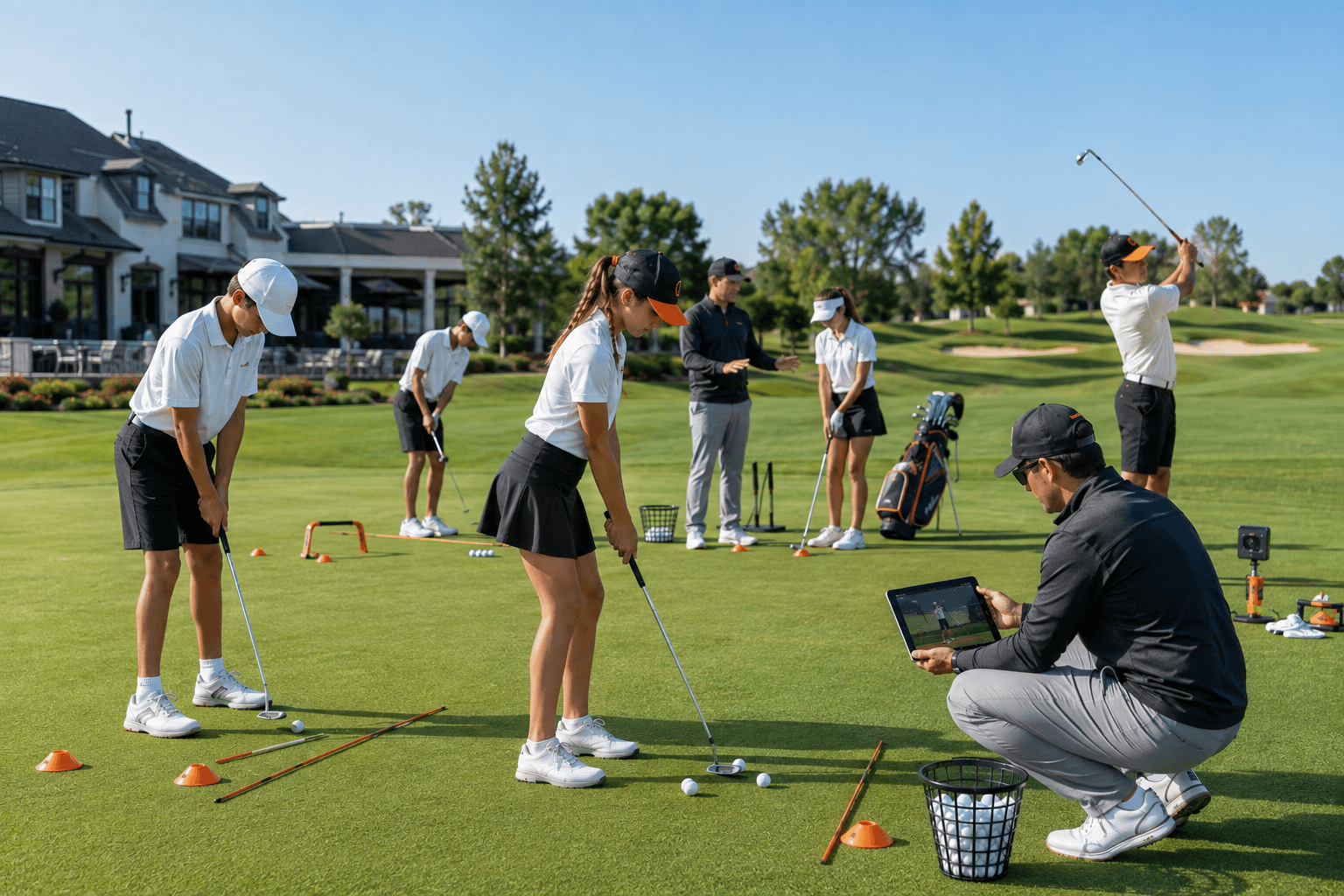
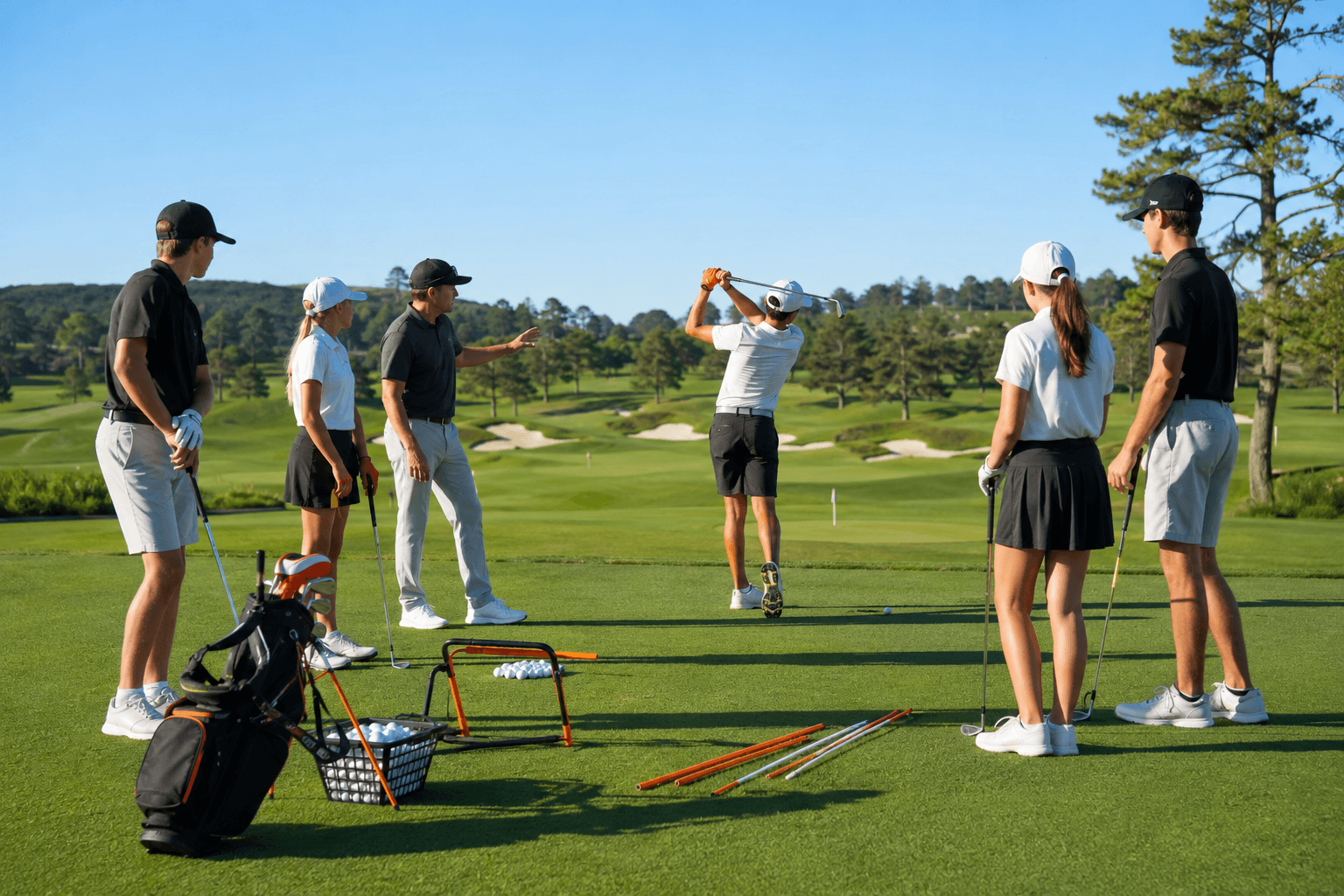
Competitive junior golfers need more than a technically sound swing. They need confidence, discipline, practice habits, decision-making skills, and experience performing alongside other motivated players. That is where group golf lessons for juniors can become a valuable part of development. Private instruction has an important place in competitive golf, especially when a player needs individualized technical work. But group training provides something private lessons cannot fully recreate: an environment where juniors learn, practice, compete, and solve problems alongside their peers. The best programs don't treat group lessons as generic instruction for a crowd. Instead, they use structured drills, appropriate competition, coaching feedback, and individual goals to help each golfer progress. Families exploring structured junior development can start with Campus Golf Academy and find coaching options through Find Junior Golf Lessons.
TLDR – Quick Guide
- Group golf lessons for juniors combine coaching with peer-based learning and competition.
- Juniors can develop technical skills while learning how to perform under pressure.
- Group environments can make practice more engaging and measurable.
- Players learn by observing how other golfers approach drills and challenges.
- Group coaching works best when instruction still accounts for individual development needs.
- Competitive juniors often benefit from combining group training with individual coaching and independent practice.
- The right program should fit the player's age, ability, goals, and stage of development.
Detailed Breakdown
Group Lessons Create a Competitive Practice Environment
Hitting balls alone on a range can improve technique, but competitive golf demands something more. Players must execute when the result matters. Well-designed group golf lessons for juniors can introduce competition into everyday practice through:
- Putting contests
- Short-game challenges
- Accuracy games
- Skills assessments
- Match-play scenarios
- Scoring competitions
- Pressure-based drills
Suddenly, that six-foot putt isn't simply another repetition. A player may need to make it to win a drill or beat a personal benchmark. That small amount of pressure can make practice more closely resemble tournament golf.
Juniors Learn by Watching Other Players
Coaching doesn't happen only when an instructor speaks directly to a player. Junior golfers can also learn by observing their peers. During group instruction, players see how others:
- Approach difficult shots
- Respond to coaching
- Handle mistakes
- Practice effectively
- Manage competitive pressure
This observational learning can help juniors discover different ways to solve problems on the golf course. It also provides perspective. A golfer may realize that everyone—including strong competitors—hits poor shots and has skills that require improvement.
Group Golf Lessons Can Make Practice More Engaging
Repetition is necessary in golf. Boredom isn't. Young players may lose focus when practice becomes an endless cycle of hitting balls without a clear objective. Group golf lessons for juniors can make training more engaging by turning technical skills into measurable challenges. Instead of telling a golfer to "practice chipping," a coach might create a nine-station challenge where players earn points for finishing inside specific distances. The skill being developed hasn't changed. The environment has. That distinction matters because engaged golfers are more likely to give each repetition their full attention.
Healthy Competition Builds Resilience
Competitive golf guarantees frustrating moments. A player will eventually miss a short putt, make a poor decision, lose a tournament lead, or simply have a day when the swing doesn't cooperate. Group training gives juniors frequent opportunities to experience smaller versions of those moments. They learn how to:
- Lose a challenge without falling apart
- Recover after a mistake
- Stay focused when another player performs well
- Compete without becoming distracted by comparison
- Keep trying when results aren't immediate
These skills aren't just useful during practice. They're essential during tournament golf.
Group Coaching Should Still Be Individualized
A common concern about group instruction is that every player will receive exactly the same lesson. Quality group golf lessons for juniors shouldn't work that way. Players may participate in the same drill while receiving different technical feedback or performance goals. A coach might ask one golfer to work on contact while another focuses on trajectory or distance control. That balance matters. Competitive players need the energy and learning opportunities of a group environment without losing sight of their individual development needs. Families comparing coaching formats can read Elite Junior Golf Coaching vs. Traditional Lessons for additional context on how different instructional approaches support development.
The Right Group Depends on Age and Ability
A productive group shouldn't simply place every junior golfer into the same training environment. Age matters, but development level matters too. Younger players may benefit from sessions emphasizing:
- Fundamental movement
- Coordination
- Basic golf skills
- Games
- Confidence
- Enjoyment
Older or more experienced competitive players may need greater emphasis on:
- Advanced ball striking
- Scoring skills
- Course management
- Tournament preparation
- Performance analysis
Junior Golf Training Plans by Age provides additional guidance on how training priorities can change as golfers develop.
Group Lessons Support Long-Term Athlete Development
Junior golf development isn't a race to build the perfect swing as quickly as possible. Players grow physically, mentally, emotionally, and technically at different rates. Training should evolve with them. A long-term approach considers factors such as:
- Movement quality
- Strength and mobility
- Technical development
- Mental skills
- Competition experience
- Recovery
- Motivation
Effective group golf lessons for juniors can support this broader development by creating age-appropriate challenges rather than placing constant emphasis on scores. For a deeper look at this philosophy, see Long-Term Athlete Development for Junior Golfers.
Group Training Can Build Independence
Competitive players eventually need to take responsibility for their own games. A coach can't stand beside them during every tournament shot. Group sessions can encourage independence because players have opportunities to work through drills while the coach rotates between golfers. Instead of expecting immediate feedback after every swing, juniors learn to assess outcomes and make adjustments. Over time, that can help players answer important questions themselves:
- What did that shot tell me?
- Was my routine consistent?
- What pattern am I seeing?
- What should I practice next?
Developing this awareness is an important step toward becoming a self-sufficient competitor.
Private and Group Lessons Don't Have to Compete
The question doesn't need to be "group lessons or private lessons?"
For many competitive players, the answer is both. Private instruction can be especially useful for:
- Detailed swing work
- Individual assessments
- Specific technical changes
- Personalized goal setting
Group training can then reinforce those skills through:
- Repetition
- Competition
- Games
- Peer interaction
- Performance challenges
Independent practice and on-course experience complete the picture. The right combination depends on the individual golfer rather than a universal formula.
A Development Pathway Matters More Than Any Single Lesson
Parents evaluating group golf lessons for juniors should look beyond what happens during one afternoon session. Ask where the program is taking the player.
Does the academy provide a pathway from fundamentals to competition? Does training change as the player improves? Are coaches evaluating progress rather than simply running the same drills every week?
Families can explore the Junior Golf Development Journey to see how structured development can connect different stages of a junior golfer's progression.
A clear pathway gives individual lessons a purpose within a much larger plan.
Finding the Right Group Golf Program
Before enrolling, parents should consider:
- Coach-to-player ratio
- Skill levels within the group
- Coaching philosophy
- Individual feedback
- Practice structure
- Competitive opportunities
- Progress measurement
- Long-term development options
A program with ten impressive training tools isn't automatically better than one with a strong coach and thoughtful development system.
The question is simple: Will this environment help this particular golfer improve?
Families in Southern California can explore the San Diego Junior Golf Academy to learn more about local junior development opportunities.
When Are Group Golf Lessons Most Valuable?
Group golf lessons for juniors can be particularly effective when players have enough foundational knowledge to participate in structured drills but still benefit from regular coaching. They may also be useful for competitive golfers who need more opportunities to practice under pressure. A strong group environment should challenge players without constantly making them feel outmatched. If the level is too easy, development may stall. If it's dramatically too advanced, confidence and learning can suffer. The sweet spot is an environment where players are challenged, supported, and given clear opportunities to progress.
Key Takeaways
- Group golf lessons for juniors can provide far more than basic instruction. When designed around long-term development, they give competitive players opportunities to improve technique, practice under pressure, learn from peers, develop resilience, and become more independent golfers.
- They don't necessarily replace private coaching. For many competitive juniors, group instruction works best as one component of a broader development plan that includes individual feedback, purposeful practice, tournament experience, and age-appropriate training.
- Ultimately, the best group isn't simply the one with the most talented players or newest technology. It's the one that challenges a junior golfer at the right level today while preparing them for where they want to go next.
Frequently Asked Questions
Are group golf lessons for juniors good for competitive players?
Yes, well-structured group lessons can be valuable for competitive juniors because they combine coaching with peer interaction and performance-based challenges. Players can reinforce technical skills while practicing in situations that introduce competitive pressure. The program should still provide individual feedback based on each golfer's development needs.
Are group or private golf lessons better for juniors?
Neither format is automatically better because they serve different purposes. Private lessons provide concentrated individual feedback, while group lessons add competition, social learning, and opportunities to apply skills around other players. Many competitive juniors benefit from using both within a structured development plan.
How often should junior golfers attend group lessons?
The right frequency depends on the player's age, goals, tournament schedule, and amount of independent practice. Some golfers benefit from weekly group training, while others use it alongside periodic private coaching and on-course practice. A qualified coach can determine a schedule based on the player's current development priorities.
What should parents look for in group golf lessons for juniors?
Parents should evaluate coaching quality, group size, player ability levels, individual feedback, and how progress is measured. Strong programs should have clear objectives rather than simply keeping juniors busy for the duration of the session. The training environment should also challenge players while remaining positive and development-focused.
Can group golf lessons help juniors prepare for tournaments?
Yes, group training can recreate elements of tournament pressure through scoring games, contests, and competitive drills. These experiences teach players to execute skills while managing nerves, mistakes, and comparisons with other golfers. Real tournament and on-course experience remains essential, so group instruction should complement rather than replace competition.