
How a Junior Golf Training App Supports Long-Term Player Development
Introduction
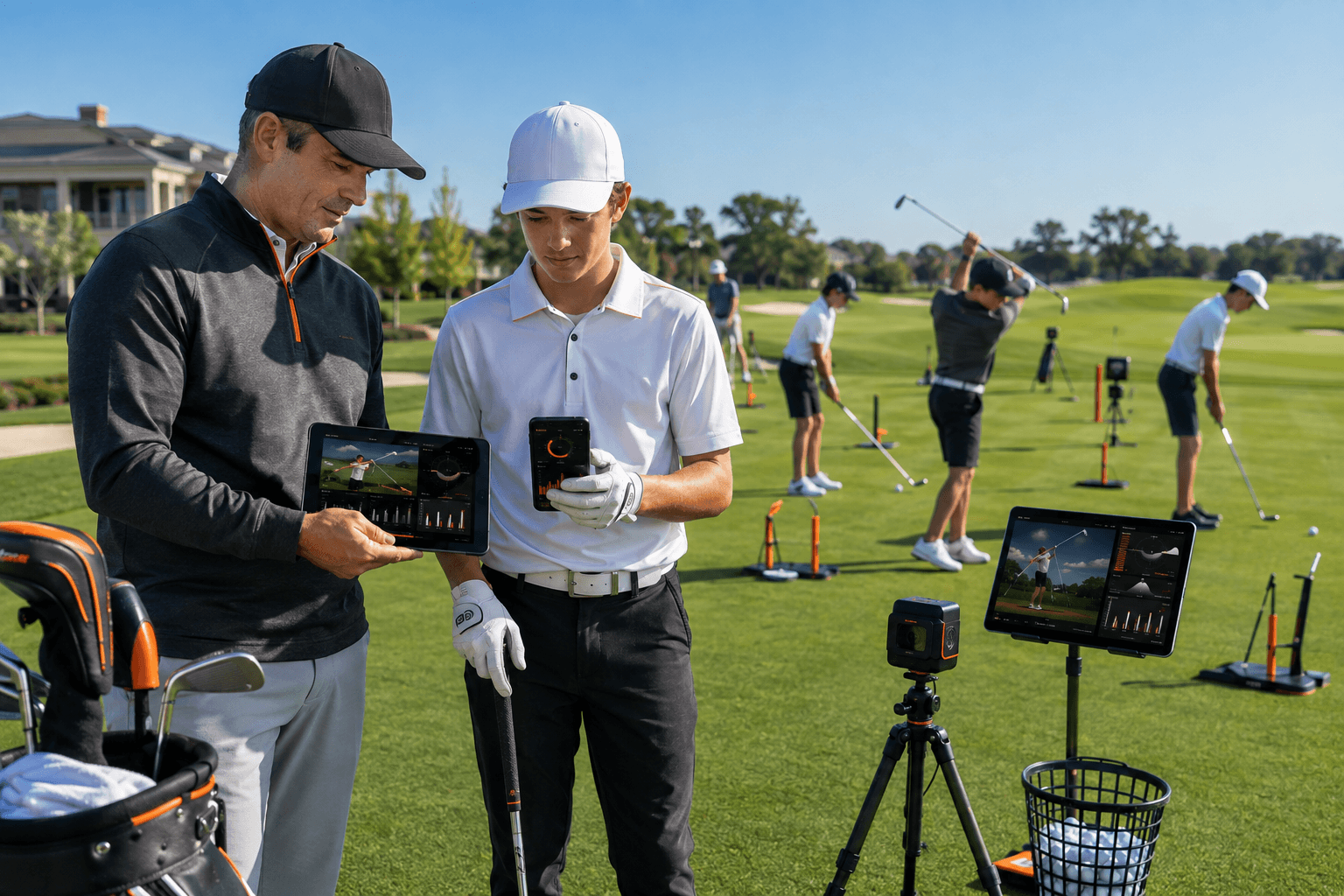
Junior golfers don't improve during lessons alone. Most development happens between coaching sessions—during practice, tournament rounds, workouts, and the countless repetitions required to turn instruction into reliable performance. The challenge is keeping all of that work connected. A junior golf training app can help organize the development process by giving players, families, and coaches a central place to manage training priorities, track performance, monitor goals, and review progress over time. Technology isn't a substitute for good coaching or actual golf. Used correctly, however, it can make both more effective by creating greater consistency and accountability. For families interested in a structured approach to player development, Campus Golf Academy provides resources designed around the complete junior golf journey.
TLDR – Quick Guide
- A junior golf training app can connect coaching, practice, performance tracking, and long-term goals.
- Players can use training plans to know exactly what to practice between lessons.
- Performance tracking helps coaches identify patterns rather than relying on one tournament result.
- Personalized plans can evolve as a junior golfer grows and improves.
- Digital tools can help players maintain consistency during busy school and tournament schedules.
- Recruiting-focused players can organize development milestones well before college outreach begins.
- The app should support coaching—not turn junior golf into a nonstop numbers exercise.
Detailed Breakdown
What Is a Junior Golf Training App?
A junior golf training app is a digital tool designed to help organize and support player development. Depending on the platform, features may include:
- Practice plans
- Training goals
- Performance statistics
- Swing videos
- Coach feedback
- Progress reports
- Tournament results
- Development milestones
Instead of keeping practice notes in one place, tournament statistics somewhere else, and coaching priorities in a parent's text messages, an app can create a more centralized development record. That organization becomes increasingly valuable as junior golfers become more competitive.
It Creates Continuity Between Golf Lessons
A productive lesson should give a golfer something specific to improve. But remembering every detail days later can be difficult. A junior golf training app can help preserve the priorities established during coaching so players know what to work on before the next session. For example, a coach might assign:
- Two putting drills
- A wedge-distance exercise
- A specific full-swing drill
- One on-course strategy objective
The player can then follow that plan instead of arriving at the practice facility and wondering, "What should I work on today?" That simple shift makes independent practice more purposeful.
Training Becomes Part of a Larger Journey
Competitive development isn't a collection of unrelated lessons. A junior may begin with fundamentals, progress into tournament golf, develop more sophisticated performance skills, and eventually prepare for collegiate competition. The Junior Golf Development Journey illustrates how those stages can connect over time. A training app can support that progression by documenting where the player has been, what they're currently developing, and what comes next. That long-term context is particularly useful when short-term results fluctuate.
Performance Tracking Becomes More Meaningful
One bad tournament doesn't necessarily mean a player has a major problem. Likewise, one great round doesn't prove that every weakness has disappeared. Long-term data provides better context. A junior golf training app can help players record metrics such as:
- Fairways hit
- Greens in regulation
- Putts
- Up-and-down percentage
- Penalty shots
- Scoring averages
- Practice results
Tracking these metrics over time can reveal patterns that individual scorecards miss. For example, a golfer might believe putting is costing them the most strokes when several weeks of data show that approach accuracy is creating the real scoring problem. For a deeper look at measurement, read Golf Performance Tracking for Junior Golfers.
Personalized Training Becomes Easier
Junior golfers don't develop at identical speeds. One player might need more work on putting. Another might need driver consistency, physical development, or better tournament decision-making. A junior golf training app can support individualized development by keeping each player's goals, drills, and progress connected. Instead of following a generic practice schedule, training can be organized around:
- Current strengths
- Performance weaknesses
- Age
- Tournament schedule
- Competitive goals
- Coach recommendations
The Personalized Golf Development Plans guide explains why individual development priorities matter for competitive players.
Personalization helps answer one crucial question: What should this golfer work on next?
Players Can See Their Progress
Golf improvement can be difficult to notice from day to day. A junior may feel stuck because scoring hasn't changed dramatically, even though other indicators are moving in the right direction. An app can help document improvements such as:
- Better shot dispersion
- Increased carry distance
- More consistent practice
- Improved short-game testing
- Fewer penalty shots
- Better tournament scoring trends
Seeing those changes can give players a more realistic view of development. Progress isn't always a dramatic drop in scoring average. Sometimes it's a collection of smaller improvements that eventually produce the breakthrough.
It Can Build Accountability Without Constant Parent Reminders
Parents often face an awkward challenge: supporting practice without becoming the practice manager. A digital training plan can shift some responsibility toward the golfer. Instead of a parent repeatedly asking whether putting practice has been completed, the player can see the assigned work and track it independently. As juniors mature, they can gradually take greater responsibility for:
- Scheduling practice
- Completing drills
- Recording results
- Reviewing goals
- Preparing questions for coaches
That independence is especially important for golfers who hope to compete at the college level.
Year-Round Training Becomes Easier to Organize
Junior golf schedules change throughout the year. Tournament season may require more emphasis on scoring and competitive preparation, while other periods may provide opportunities for technical development, fitness, or rebuilding fundamentals. A junior golf training app can help organize these changing priorities. Players can maintain continuity even when dealing with:
- School schedules
- Travel
- Weather
- Tournament blocks
- Holidays
- Offseason periods
The goal isn't to train at maximum intensity every week of the year. It's to make sure training remains intentional. Families can learn more about seasonal planning through Year-Round Junior Golf Training.
Coaches Can Make Better Decisions With Better Information
A coach doesn't see every practice session or tournament shot. An app can help fill some of those gaps. If players consistently record useful information, coaches can review trends and ask better questions. For example:
- Are penalty shots increasing?
- Is putting improving?
- Are assigned drills being completed?
- Is scoring improving despite unchanged swing speed?
- Are certain tournament conditions creating problems?
Better information doesn't automatically produce better coaching, but it gives coaches additional evidence when determining what deserves attention.
Avoid Tracking Everything Just Because You Can
More data isn't always better. A junior golfer does not need 47 statistics after every nine holes. Too much tracking can:
- Create unnecessary pressure
- Distract from playing
- Encourage overanalysis
- Make practice feel like homework
The best junior golf training app experience focuses on information that leads to useful action. If a metric won't influence training or decision-making, ask whether it needs to be tracked at all. The purpose is clarity, not a spreadsheet disguised as a golf game.
Training Apps Can Support College Golf Preparation
Players pursuing college golf eventually need to demonstrate more than potential. They need a history of competitive development. Organized records can help golfers understand trends in:
- Tournament scoring
- Rankings
- Performance
- Development goals
- Training consistency
This information can help families recognize when a player is approaching the competitive level needed to begin more serious recruiting preparation. The College Golf Development page provides additional resources for players considering collegiate golf.
Recruiting Preparation Starts Before Recruiting
College exposure shouldn't begin with a frantic attempt to assemble everything once coaches start showing interest. Players can prepare gradually. A development system can help juniors maintain useful information and identify when they're ready to begin presenting their competitive profile more intentionally. For more on early preparation, see Building College Golf Exposure Before Recruiting. Strong recruiting preparation is usually the result of years of meaningful development—not a last-minute marketing campaign.
What Should Parents Look for in a Junior Golf Training App?
Not every training platform is equally useful. Parents and players should look for features that support actual development, including:
- Coach-created practice plans
- Simple progress tracking
- Individual goals
- Performance history
- Easy coach-player communication
- Training reminders
- Video capabilities when useful
- Tournament and scoring records
Ease of use matters too. If entering practice data takes longer than practicing, something has gone sideways. The best platform should make the development process clearer rather than creating additional work.
Key Takeaways
- A junior golf training app can help connect lessons, independent practice, tournament performance, and long-term development into one organized process.
- For players, that can mean clearer practice priorities and greater ownership. For coaches, it can mean better information about what happens between lessons. For parents, it can provide visibility into development without requiring constant involvement in every practice session.
- Technology alone won't create a competitive golfer. Players still need quality coaching, purposeful practice, tournament experience, physical development, and plenty of time on the course.
- But when an app helps all of those pieces work together, it becomes more than another screen.
- It becomes a tool for turning today's practice into tomorrow's progress.
Frequently Asked Questions
What is a junior golf training app?
A junior golf training app is a digital platform that can organize practice plans, goals, performance information, and coaching feedback. It helps connect what a player learns during lessons with what they practice independently. Features vary by platform, so families should prioritize tools that directly support development.
Can a junior golf training app help players improve faster?
It can make development more efficient by giving players clearer priorities and helping coaches track progress over time. The app itself doesn't improve a golf swing or lower scores without purposeful practice and quality instruction. Its value comes from helping players consistently apply the right training.
What should junior golfers track in a training app?
Players should focus on measurements that help coaches make useful development decisions, such as scoring trends, greens in regulation, penalties, putting, and specific practice results. The exact metrics should depend on the golfer's age and competitive level. Tracking too many statistics can create unnecessary distraction.
Can a golf training app help with college recruiting?
A training app can help organize performance history and development information that may become useful during recruiting preparation. College coaches will still care about competitive results, academics, tournament experience, and overall fit. The app should support the development behind the recruiting profile rather than replace it.
Should parents monitor a junior golfer's training app?
Parents can use the platform to understand broad goals and support appropriate scheduling, especially with younger players. As golfers mature, they should gradually take greater responsibility for recording practice, reviewing progress, and communicating with coaches. Building that independence is an important part of long-term competitive development.