
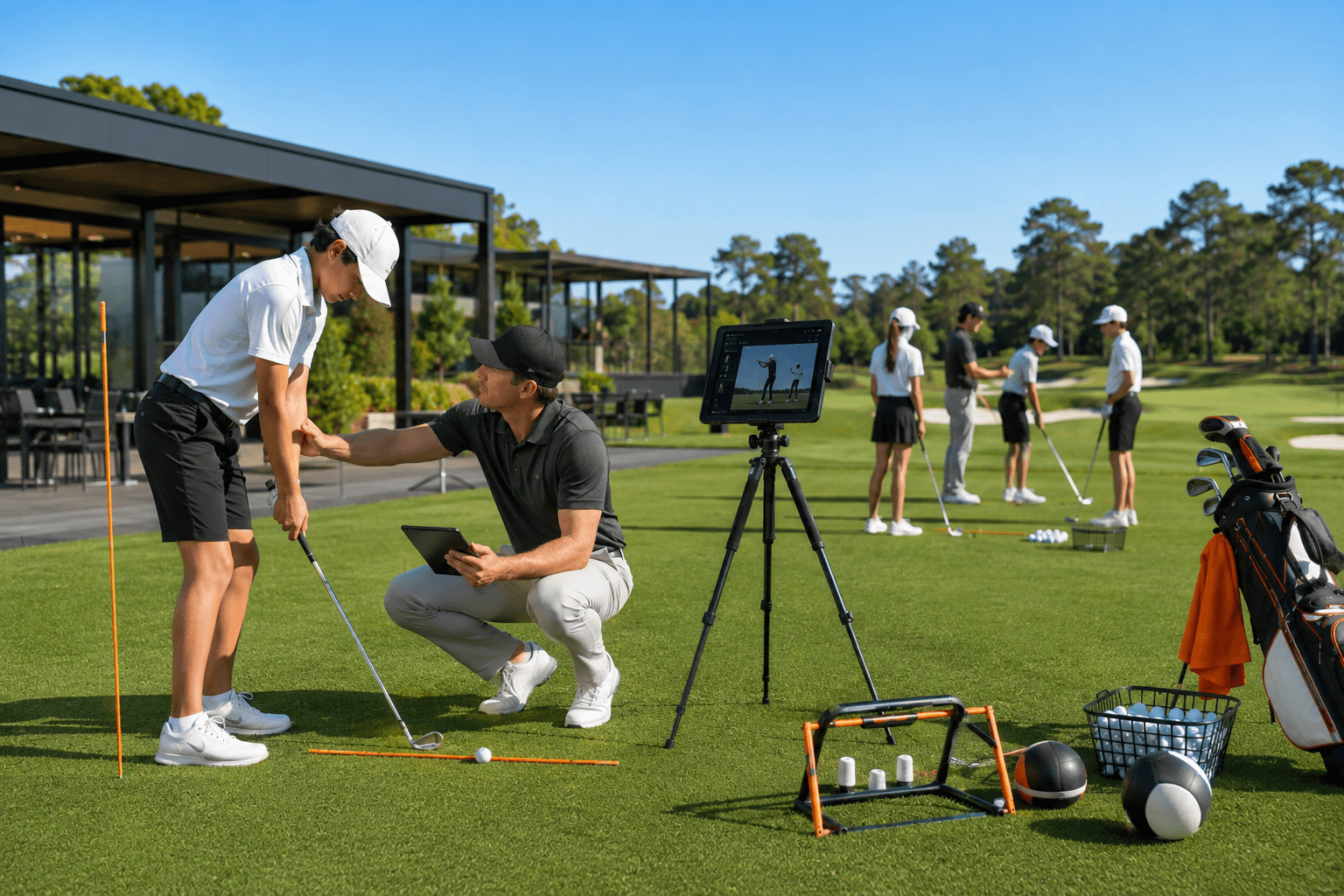
What Affects Junior Golf Lesson Cost for Competitive Players
Introduction
When families start investing seriously in competitive junior golf, one question comes up quickly: How much should quality instruction cost?
There isn't one universal answer.
Junior golf lesson cost can vary based on the coach's experience, location, lesson format, technology, training facility, session length, and the player's competitive goals. A beginner learning fundamentals may require a very different coaching setup from a tournament golfer preparing for higher-level events or college golf. That means comparing lessons purely by hourly price can be misleading. The better question is whether the coaching provides the instruction, structure, feedback, and development support a player actually needs. Families can explore coaching opportunities through Campus Golf Academy and Find Junior Golf Lessons.
TLDR – Quick Guide
- Junior golf lesson cost varies significantly based on coaching experience, location, and training format.
- Private instruction generally costs more per player than group coaching.
- Competitive juniors may require more comprehensive development than occasional swing lessons.
- Technology and specialized facilities can influence pricing.
- Lesson frequency should reflect the player's goals and ability to practice between sessions.
- The cheapest lesson isn't necessarily the best value—and neither is the most expensive.
- Parents should evaluate progress, coaching quality, and development structure alongside price.
Detailed Breakdown
Coaching Experience Can Affect Junior Golf Lesson Cost
One of the most significant pricing factors is the coach. An instructor with extensive experience developing competitive juniors may charge more than a newer coach or general golf instructor. Experience can be particularly valuable when a player needs help with more than basic mechanics. Competitive coaching may involve:
- Swing development
- Short-game improvement
- Putting
- Course management
- Tournament preparation
- Practice planning
- Performance reviews
Parents aren't simply paying for minutes on the lesson clock. They're paying for the coach's ability to identify what matters and determine what the player should work on next.
Private and Group Lessons Have Different Pricing Structures
Lesson format can significantly affect junior golf lesson cost. Private instruction gives one golfer the coach's concentrated attention. That can make it useful for assessments, technical changes, and individualized development. Group lessons distribute coaching time across multiple players and may therefore have a lower per-player price. But group coaching offers benefits of its own, including:
- Competitive drills
- Peer learning
- Social interaction
- Pressure-based practice
- Team-style training
For competitive players, the answer doesn't necessarily have to be private or group instruction. A combination can work well. Families considering individualized coaching can read Private Junior Golf Lessons for Competitive Players for additional guidance. Location Matters Golf instruction pricing can vary considerably between markets. Factors influencing local pricing include:
- Facility costs
- Regional demand
- Cost of living
- Course access
- Local competition
- Availability of specialized junior coaches
A lesson in one metropolitan area may cost considerably more or less than comparable instruction elsewhere. That makes national "average lesson cost" figures less useful than they initially appear. Families should compare realistic options within their market while also considering coaching quality and program structure. For example, Texas families can explore Houston Junior Golf Academy when researching local junior development options.
Lesson Length Changes the Price
A 30-minute lesson and a 90-minute performance session shouldn't cost the same. But longer isn't automatically better. Younger juniors may learn more effectively through shorter, highly focused sessions. Older competitive golfers may benefit from additional time when coaches are evaluating several areas of the game. Lesson length should match the objective. A technical check-in might require relatively little time. A comprehensive assessment involving full swing, short game, putting, and performance planning may require considerably more. Compare what happens during the session rather than looking only at the total price.
Technology Can Influence Pricing
Modern golf instruction can include sophisticated training tools. Depending on the facility and coach, players may have access to:
- Launch monitors
- Swing video analysis
- Putting analysis
- Pressure mats
- Simulator technology
- Performance-tracking systems
These tools can make feedback more objective. For example, launch data can help a coach measure ball speed, carry distance, launch conditions, and shot dispersion instead of relying exclusively on visual observation. Technology isn't automatically valuable, however. A room full of expensive equipment doesn't guarantee excellent coaching. The real value comes from an instructor knowing which information matters and how to turn it into a practical training decision.
Competitive Goals Can Change the Type of Coaching Required
A recreational junior and a nationally competitive junior may both take golf lessons, but their needs can be dramatically different. A competitive player's development may include:
- Technical coaching
- Tournament planning
- Statistical analysis
- Practice programming
- Mental-performance strategies
- Course management
- Long-term goal setting
That broader support can influence junior golf lesson cost because the coaching relationship may extend beyond a traditional range session. Parents should understand exactly what is included before comparing programs.
Lesson Frequency Affects the Total Investment
The price of one lesson is only part of the financial picture. A $100 lesson every week represents a different annual investment from the same lesson once per month. More frequent instruction isn't automatically better. Players need enough time between lessons to:
- Understand the change.
- Practice it.
- Test it on the course.
- Bring useful feedback to the next session.
Too much coaching can create dependence or encourage constant technical changes. Too little coaching can allow poor habits to become established. The guide How Often Should Junior Golfers Take Lessons? provides a deeper look at matching coaching frequency to player development.
Packages and Programs Can Change the Effective Cost
Some coaches charge by individual lesson, while others offer:
- Multi-lesson packages
- Monthly programs
- Academy memberships
- Seasonal training
- Group programs
Families should calculate what they're actually receiving. A program that initially appears more expensive might include assessments, group practice, progress tracking, or other services that would otherwise need to be purchased separately. Likewise, a package isn't automatically a bargain simply because the per-session price is lower. Value depends on whether the player will actually use and benefit from what's included.
Facility Access May Be Part of the Price
Always ask whether the advertised junior golf lesson cost includes everything needed for the session. Additional expenses can sometimes include:
- Range balls
- Simulator time
- Facility fees
- Green fees
- Practice areas
Knowing what's included makes comparing programs much easier. The Campus Golf Academy FAQs can help families explore common questions about junior golf programs and participation.
Tournament Coaching Can Be Different From Regular Lessons
Competitive players may occasionally work with coaches in tournament or on-course settings. These sessions can involve more than swing instruction. A coach might evaluate:
- Club selection
- Pre-shot routines
- Course strategy
- Emotional responses
- Decision-making
- Warm-up routines
Because on-course or tournament coaching can require significantly more time than a standard lesson, pricing may be structured differently. Families should ask coaches how these services work before assuming they're included in normal lesson rates.
Don't Judge Value by Price Alone
Suppose Coach A charges less but gives a junior a different swing thought every week. Coach B charges more but creates a clear development plan, measures progress, assigns targeted practice, and helps the player become increasingly independent.
Which is actually cheaper?
That's why junior golf lesson cost should be evaluated alongside results and development quality. Parents should look for evidence that the player is becoming:
- More consistent
- More knowledgeable
- More independent
- Better at practicing
- More capable under competition
The purpose of instruction isn't to accumulate lessons. It's to create improvement.
Choosing the Right Academy Is Part of the Cost Decision
A low price becomes expensive when the program isn't a good fit. Before committing to an academy, parents should evaluate:
- Coaching experience
- Player-to-coach ratios
- Training philosophy
- Communication
- Progress tracking
- Competitive development
- Practice expectations
The guide How to Choose the Best Junior Golf Academy provides additional criteria families can use when comparing programs. Finding the right fit early can prevent wasted time, unnecessary coaching changes, and duplicated expenses.
Key Takeaways
- Junior golf lesson cost depends on much more than the number of minutes a player spends with an instructor.
- Coaching experience, location, private versus group instruction, lesson length, technology, facility access, and competitive goals can all influence the price. The frequency of lessons also has a major impact on a family's total annual investment.
- Parents should therefore focus on value rather than automatically choosing the cheapest—or most expensive—option.
- Quality competitive coaching should provide direction. Players should understand what they're developing, why they're developing it, and what they need to practice next.
- When instruction creates that kind of clarity and increasingly helps a junior golfer take ownership of their game, families are getting something far more valuable than another hour on the range.
Frequently Asked Questions
How much does a junior golf lesson cost?
Junior golf lesson cost varies based on the instructor, location, session length, facility, and lesson format. Private instruction will often have a different price structure from group programs or academy memberships. Families should request current local pricing directly from the coach or academy they're considering.
Why are some junior golf lessons more expensive than others?
Higher prices can reflect coaching experience, specialized facilities, technology, longer sessions, or more comprehensive development services. Competitive coaches may also provide planning and performance support beyond swing instruction. Parents should compare what's included rather than assuming price alone indicates quality.
Are private junior golf lessons worth the higher cost?
Private lessons can provide strong value when a player needs individualized assessment, technical feedback, or specific development work. Group instruction may provide better value for competitive drills, peer interaction, and some forms of regular practice. Many competitive golfers benefit from combining both formats.
How often should parents pay for junior golf lessons?
The ideal frequency depends on the golfer's age, competitive level, goals, and ability to practice independently between sessions. More lessons aren't automatically better because players need time to implement what they've learned. A quality coach should recommend a frequency based on development needs rather than simply maximizing appointments.
What should be included in the cost of a competitive junior golf lesson?
That depends on the coach and program, so families should ask before enrolling. Instruction may include technical coaching, video or launch monitor analysis, practice recommendations, assessments, or performance reviews, while facility fees may sometimes be separate. Understanding exactly what's included makes comparing coaching options much easier.