
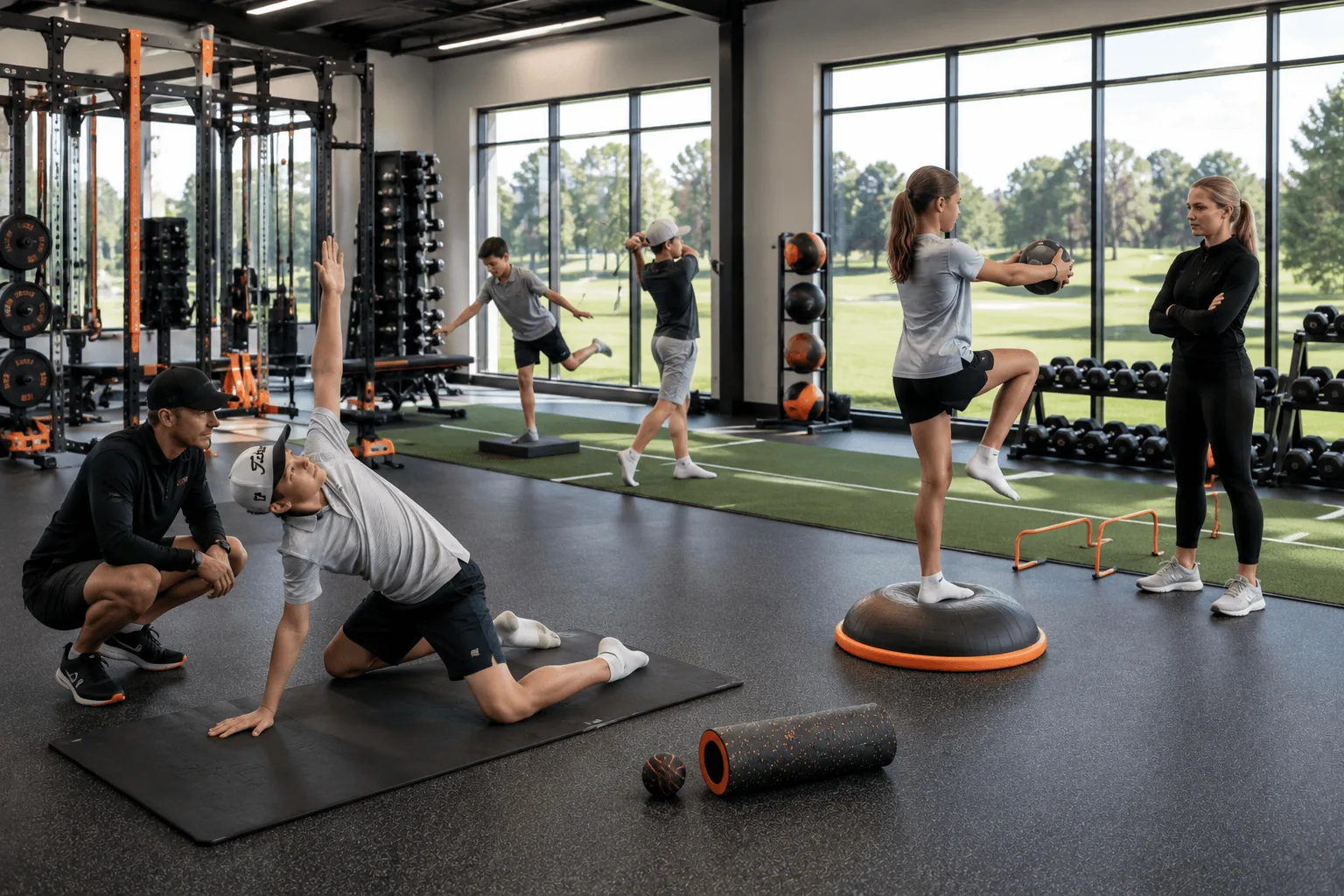
Golf Fitness for Junior Golfers: Exercises for Competitive Performance
Introduction
Modern junior golf is far more athletic than it used to be. Competitive players are no longer relying only on swing lessons and range sessions to improve. Today’s top junior golfers train like athletes because tournament golf demands strength, endurance, mobility, balance, and mental stamina. If you want to improve swing speed, maintain focus during long rounds, and reduce injury risk, golf fitness for junior golfers should become part of your development plan. The good news is that junior golf fitness does not require extreme workouts or heavy lifting. Smart training focused on mobility, coordination, rotational power, and stability can dramatically improve on-course performance. This guide breaks down the best golf fitness exercises for junior golfers and explains how physical training helps competitive players gain an edge.
TLDR – Quick Guide
Here’s how golf fitness for junior golfers improves competitive performance:
- Increases swing speed and power
- Improves mobility and flexibility
- Enhances balance and coordination
- Reduces fatigue during tournaments
- Helps prevent injuries
- Improves mental focus and endurance
- Builds athletic confidence
The best junior golfers train both their swing and their body.
Implementation Tactics
Why Fitness Matters in Junior Golf
Golf may not look physically demanding from the outside, but competitive tournament golf places serious stress on the body. Junior golfers repeat:
- rotational movements
- explosive swings
- walking endurance
- stabilization patterns
…for hours during tournaments and practice sessions. Without proper physical preparation, players often experience:
- loss of focus late in rounds
- reduced swing speed
- poor posture
- fatigue
- inconsistency
Fitness training helps junior golfers maintain performance under pressure. This is one reason many high-level development programs now integrate athletic training into player development. The coaches behind the CAMPUS Academy philosophy emphasize long-term athletic development alongside technical golf instruction.
Focus on Mobility Before Strength
One of the biggest mistakes junior golfers make is chasing strength too early. Mobility comes first. Golf requires:
- thoracic rotation
- hip mobility
- shoulder flexibility
- ankle stability
Without mobility, power becomes difficult to produce consistently. Important mobility exercises include:
- hip openers
- thoracic spine rotations
- shoulder mobility drills
- deep squat holds
- dynamic stretching
Improved mobility helps:
- create better swing positions
- improve consistency
- reduce injury risk
- increase rotational speed
Junior golfers who move better usually swing more efficiently.
Build Rotational Strength
Golf swings generate force through rotational sequencing. That means junior golfers should train:
- core strength
- rotational control
- balance
- force transfer
Not just general strength. Excellent rotational exercises include:
- medicine ball rotational throws
- cable rotations
- resistance band turns
- Russian twists
- plank variations
Strong rotational mechanics improve:
- swing speed
- stability
- posture
- control through impact
Power without control creates inconsistency. Rotational strength training teaches junior golfers how to create force efficiently.
Improve Balance and Stability
Balance is critical in golf. Junior golfers who struggle with balance often:
- lose posture
- overswing
- struggle with consistency
- lose power transfer
Single-leg training helps improve:
- body awareness
- swing stability
- lower-body control
Helpful exercises include:
- single-leg deadlifts
- balance board drills
- split squats
- lateral lunges
- stability holds
These movements train the body to stay athletic throughout the swing.
Train for Endurance During Tournaments
Tournament golf is mentally and physically exhausting. Junior golfers often underestimate how much endurance affects:
- concentration
- tempo
- decision-making
- emotional control
Fitness training should include cardiovascular conditioning such as:
- walking
- cycling
- interval training
- light jogging
- agility circuits
Endurance matters because tournament rounds can last:
- 4–6 hours
- multiple consecutive days
- in extreme heat conditions
Conditioned athletes recover faster and maintain performance longer.
Develop Explosive Power Safely
Junior golfers often want more distance. The key is building power safely and progressively. Explosive training should focus on:
- coordination
- sequencing
- speed production
Useful power exercises include:
- medicine ball slams
- jump squats
- box jumps
- sprint drills
- resistance band speed work
However, junior golfers should avoid:
- excessive heavy lifting
- poor movement mechanics
- overtraining
Power training should always match the athlete’s age and physical maturity. For junior players looking for individualized coaching and structured athletic development, private golf lessons and training programs can help create safer long-term performance plans.
Strengthen the Core Properly
The core is the engine of the golf swing. But golf-specific core training is different from traditional ab workouts. Competitive junior golfers need:
- anti-rotation strength
- stabilization
- controlled rotation
- posture support
The best core exercises include:
- planks
- dead bugs
- Pallof presses
- bird dogs
- cable holds
A stronger core helps:
- maintain posture
- improve consistency
- reduce back stress
- increase force transfer
Core training should support movement quality, not just aesthetics.
Recovery Is Part of Performance
Many junior golfers focus only on training hard. Competitive players also prioritize recovery. Recovery habits include:
- quality sleep
- hydration
- stretching
- mobility work
- nutrition
- active recovery days
Without recovery:
- fatigue accumulates
- swing mechanics suffer
- injury risk increases
Golf fitness for junior golfers is not just about harder training. It is about smarter training.
Avoid Common Junior Golf Fitness Mistakes
Not all training helps performance. Common mistakes include:
- copying adult workouts
- lifting too heavy too early
- ignoring mobility
- overtraining
- training without supervision
- neglecting recovery
Junior golfers develop best with:
- gradual progression
- movement quality
- age-appropriate programming
- consistency
The goal is long-term athletic development, not short-term burnout. Programs like the New Braunfels junior golf training location and the San Jose golf academy program increasingly combine golf coaching with athletic performance development because the modern game demands both.
Sample Weekly Golf Fitness Routine for Junior Golfers
Monday — Mobility + Core
- Dynamic stretching
- Hip mobility drills
- Planks
- Dead bugs
- Light cardio
Tuesday — Rotational Strength
- Medicine ball throws
- Resistance band rotations
- Single-leg stability work
- Mobility recovery
Wednesday — Active Recovery
- Walking
- Stretching
- Foam rolling
- Light movement work
Thursday — Power Development
- Jump squats
- Sprint intervals
- Medicine ball slams
- Core stability
Friday — Balance + Flexibility
- Single-leg exercises
- Shoulder mobility
- Yoga-style stretching
- Recovery work
Weekend — Tournament or Practice Integration
- Warm-up activation
- Mobility maintenance
- Hydration focus
- Recovery emphasis
Consistency matters more than intensity.
Key Takeaways
Golf fitness for junior golfers has become an essential part of competitive player development. The best junior golfers train:
- mobility
- balance
- endurance
- rotational strength
- recovery habits
- athletic coordination
Fitness improves:
- swing efficiency
- tournament endurance
- consistency
- injury prevention
- confidence
Junior golfers no longer compete only with technique. They compete athletically too. Players who develop strong physical foundations early often gain a major advantage as tournament competition becomes more demanding.
FAQs
At what age should junior golfers start fitness training?
Junior golfers can begin basic fitness and movement training at a young age with proper supervision. Early training should focus on mobility, coordination, balance, and body control instead of heavy strength work. Age-appropriate athletic development helps build healthy movement patterns safely.
Does golf fitness really improve swing speed?
Yes, proper golf fitness training can improve swing speed significantly over time. Rotational strength, mobility, balance, and explosive power all contribute to faster and more efficient movement through impact. However, training should prioritize mechanics and sequencing rather than brute force alone.
How often should junior golfers train physically?
Most junior golfers benefit from 2–4 structured fitness sessions per week depending on age, tournament schedule, and overall workload. Training should complement golf practice instead of creating excessive fatigue. Recovery and mobility work should also remain part of the weekly routine.
Can junior golfers lift weights safely?
Yes, junior golfers can safely perform strength training when supervised properly and using age-appropriate programming. The focus should remain on movement quality, coordination, and gradual progression instead of maximal lifting. Poor technique and excessive loading create the biggest injury risks.
What is the most important fitness area for junior golfers?
Mobility is one of the most important foundations for junior golfers because efficient movement improves swing mechanics and reduces injury risk. Rotational strength and balance also play major roles in performance. Without mobility and stability, power becomes much harder to control consistently.