
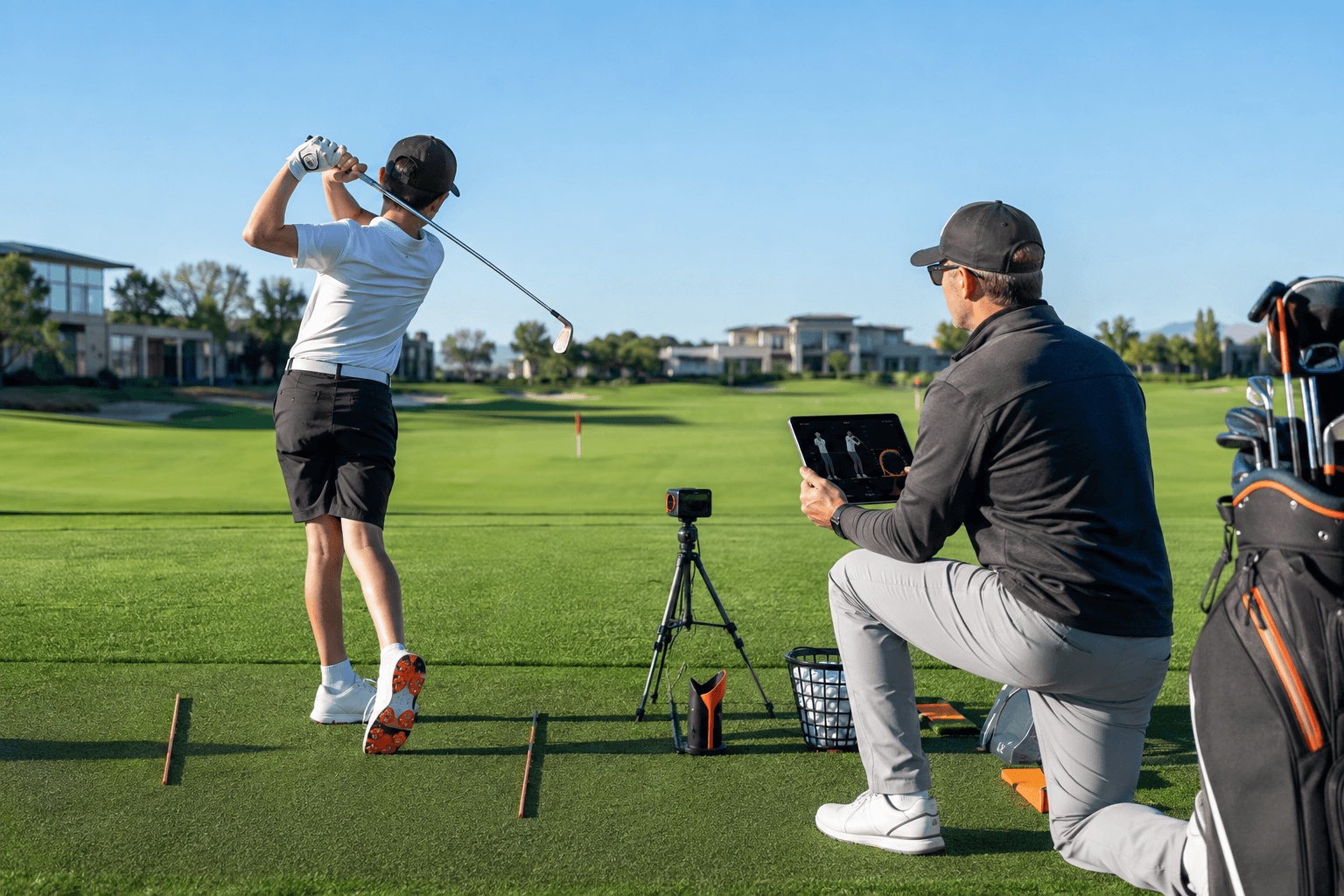
How Golf Swing Video Analysis Helps Junior Golfers Improve
Introduction
Golf can be frustrating because what a swing feels like and what actually happens can be two very different things. A junior golfer might feel perfectly balanced while drifting away from the ball. Another player may believe their backswing is too long when video shows the real issue happens during the transition. Without objective feedback, players can spend hours practicing the wrong solution. That's where golf swing video analysis becomes useful. By recording the swing from consistent angles, coaches can slow down movement, identify patterns, compare changes over time, and help players understand exactly what they're working on. For competitive juniors, that visual feedback can turn vague swing advice into a much clearer development process. Families exploring structured junior coaching can learn more at Campus Golf Academy or explore available options through Find Junior Golf Lessons.
TLDR – Quick Guide
- Golf swing video analysis gives junior golfers objective visual feedback.
- Slow-motion review can reveal movements that are difficult to see at full speed.
- Video helps coaches explain technical changes more clearly.
- Recording swings over time creates a useful record of development.
- Video works particularly well alongside performance data and launch monitor feedback.
- Juniors should focus on a few relevant swing priorities instead of analyzing every frame.
- Technology is most effective when an experienced coach provides context.
Detailed Breakdown
What Is Golf Swing Video Analysis?
Golf swing video analysis is the process of recording a player's swing and reviewing the footage to evaluate movement, positions, sequencing, and consistency. Coaches commonly record swings from:
- Face-on
- Down-the-line
- Occasionally other angles when needed
Video can then be slowed down or reviewed frame by frame. The objective isn't to make a junior golfer's swing look perfect on camera. It's to identify movements that influence ball striking and determine which changes may improve performance.
Video Shows What Feel Cannot
Golfers rely heavily on feel. Unfortunately, feel isn't always an accurate description of what's happening. Imagine a player working on shortening their backswing. They make a swing that feels dramatically shorter, yet video reveals only a small change. That feedback is valuable. Instead of guessing, golf swing video analysis gives the player a visual reference. Over time, the golfer can connect the correct movement on video with the sensation required to produce it. That connection between feel and reality can make technical changes easier to understand.
Slow Motion Reveals Important Swing Patterns
The golf swing happens quickly. Even an experienced coach may use video to examine details that are difficult to evaluate consistently at full speed. Slow-motion analysis can help review areas such as:
- Setup and posture
- Backswing movement
- Rotation
- Transition
- Impact
- Balance
- Finish position
However, seeing more doesn't mean changing more. Effective coaches use video to identify the movements that actually matter instead of handing a junior golfer a ten-item list of technical problems.
Visual Learners Can Benefit From Seeing the Swing
Some junior golfers understand verbal instruction immediately. Others need to see it. For visual learners, golf swing video analysis can make coaching much easier to understand. A coach can show the player's current movement, explain the desired change, and then record another swing to demonstrate progress. That creates a simple feedback loop:
- Record.
- Review.
- Make one targeted adjustment.
- Practice.
- Record again.
Instead of leaving a lesson wondering what "better rotation" was supposed to mean, the player has a visual reference.
Video Can Make Practice More Focused
One of the biggest problems in junior golf is unfocused practice. Players hit ball after ball, hoping repetition alone will produce improvement. Video can add structure. For example, if a coach identifies one specific setup issue, the player can record a small number of swings during practice to confirm whether that setup is becoming more consistent. The goal isn't to film every swing. It's to use golf swing video analysis at strategic moments to answer specific questions.
Video Creates a Record of Long-Term Development
Junior golfers can change significantly over a single year. They grow taller. They get stronger. Their coordination develops. Their swing speed may increase, and their technique evolves. Saving occasional swing videos gives coaches and players a visual history of that development. Comparisons over several months can reveal improvements that may otherwise go unnoticed. For competitive players, seeing genuine progress can also provide useful context during periods when scores temporarily stall. The Junior Golf Development Journey provides additional perspective on why player development should be viewed as a progression rather than a collection of isolated lessons.
Combine Video With Performance Tracking
A swing that looks better isn't automatically a swing that performs better. That's why video should be connected to actual outcomes. Coaches may compare technical changes with:
- Shot dispersion
- Greens in regulation
- Driving accuracy
- Carry distances
- Contact patterns
- Tournament scoring
This prevents golf swing video analysis from becoming an exercise in chasing attractive positions. For more on connecting training to measurable outcomes, see Golf Performance Tracking for Junior Golfers. Ultimately, competitive golfers need swings that produce reliable shots—not swings designed to win a screenshot contest.
Video Can Help Identify Why Progress Has Stalled
Competitive juniors sometimes reach periods where improvement slows. The instinct may be to practice more. But more repetitions of the same inefficient movement won't necessarily solve the problem. Video can help coaches investigate whether a technical pattern has changed or whether the golfer has drifted away from previously established fundamentals. It can also show when the swing isn't the problem. If mechanics remain stable, attention might be better directed toward putting, course management, mental performance, or another scoring skill. Players experiencing stalled progress can read Why Junior Golfers Plateau for a broader look at development plateaus.
Video and Launch Monitor Data Work Well Together
Video explains movement. Launch monitor data explains outcomes. Used together, they can provide coaches with a more complete picture. For example, video may reveal a change in club delivery while launch monitor measurements show how that change affects launch, spin, speed, or ball flight. This allows coaches to connect cause and effect rather than making assumptions based on appearance alone. The Golf Launch Monitor Guide for Junior Golfers explores how objective performance data can complement coaching.
Don't Let Juniors Become Obsessed With Positions
There is a downside to having a camera available for every swing. Players can become overly analytical. They may start:
- Checking every swing
- Comparing themselves with professional golfers
- Chasing textbook positions
- Making constant technical adjustments
- Losing trust in athletic instincts
That can turn a helpful tool into a distraction. For most juniors, golf swing video analysis works best when a coach determines what deserves attention and when video is necessary. The golfer still needs to learn how to play golf—not simply analyze golf swings.
Coaches Provide the Context Technology Cannot
A smartphone can record a swing. That doesn't mean the smartphone knows what should change. An experienced coach considers factors including:
- Age
- Physical development
- Ball flight
- Current ability
- Competitive goals
- Previous swing patterns
Two juniors can display similar movements on video yet need completely different coaching. Technology supplies information. Coaching determines what that information means.
Finding a Coaching Environment That Uses Video Effectively
When evaluating coaches, parents shouldn't simply ask whether they use video technology. Better questions include:
- Why do you use video?
- How often do you record swings?
- How do you explain footage to junior players?
- How do you connect video findings to ball flight?
- How do you measure whether a swing change actually improves performance?
Families in Northern California can explore Palo Alto Junior Golf Academy for local junior golf development and coaching opportunities. The best technology is the technology a coach can translate into practical action.
Common Golf Swing Video Analysis Mistakes
Using video effectively means avoiding a few common traps:
- Recording from inconsistent camera angles
- Analyzing every swing
- Changing multiple mechanics simultaneously
- Copying professional golfers without context
- Focusing on appearance instead of ball flight
- Ignoring physical development
- Making technical changes without coaching guidance
For competitive juniors, simplicity matters. One clear priority that a player understands and can practice is usually more useful than a screen covered in lines, angles, and technical terminology.
Key Takeaways
- Golf swing video analysis can be an extremely effective development tool for junior golfers because it turns an incredibly fast movement into something players and coaches can see, discuss, and measure.
- Video can reveal swing patterns, improve communication, connect feel with reality, and create a record of development over time. When combined with performance tracking and launch monitor data, it can also help coaches determine whether technical changes are actually improving results.
- But video isn't the coach.
- The greatest value comes from using technology selectively, focusing on the changes that matter, and allowing junior golfers enough time to practice without constantly analyzing themselves.
- Done correctly, golf swing video analysis doesn't make development more complicated. It makes the next step clearer.
Frequently Asked Questions
What is golf swing video analysis?
Golf swing video analysis involves recording a golfer's swing and reviewing the footage to evaluate movement and technique. Coaches can slow the swing down and identify patterns that are difficult to see at normal speed. The findings can then be used to create more focused practice priorities.
How often should junior golfers record their swings?
There is no need to record every practice swing. Video is most useful during coaching sessions, technical changes, or periodic progress reviews when there is a specific reason to analyze movement. Excessive recording can encourage juniors to become overly focused on swing positions.
Can golf swing video analysis help lower scores?
It can contribute to lower scores when video identifies a technical issue that affects ball striking or consistency. However, scoring also depends on putting, short game, course management, mental skills, and decision-making. Video should therefore be one part of a complete player development strategy.
Is a smartphone good enough for golf swing video analysis?
A modern smartphone can often capture useful swing footage when positioned correctly and kept stable. Consistent camera placement and a clear view of the golfer are more important than elaborate equipment for basic analysis. An experienced coach can help determine the most useful recording setup.
Should junior golfers analyze their own swing videos?
Older or more experienced juniors can gradually learn to recognize basic patterns, but technical interpretation should generally be guided by a qualified coach. Self-analysis without context can lead players to fix movements that aren't actually causing performance problems. The goal is to develop awareness without creating unnecessary swing thoughts.