Is Golf Simulator Training for Juniors Worth It?
Technology has transformed the way golfers practice, and golf simulators have become increasingly popular among junior players. From tracking swing data to playing virtual rounds on famous courses, simulators offer exciting training opportunities that weren't available just a few years ago.
But is golf simulator training for juniors actually worth the investment?
The short answer is yes—when it's used correctly. A golf simulator can provide valuable feedback, increase practice opportunities, and help junior golfers develop specific skills. However, it should complement on-course play, coaching, and structured practice rather than replace them.
Understanding the benefits and limitations of golf simulator training for juniors can help families decide whether it's the right addition to their player's development plan.
To learn more about junior golf coaching and development opportunities, visit the CAMPUS Academy.
TLDR – Quick Guide
- Golf simulator training for juniors provides valuable swing and ball-flight data.
- Simulators help golfers practice year-round, regardless of weather.
- Technology supports improvement but doesn't replace on-course experience.
- Combining simulator sessions with coaching produces better results.
- Simulators are excellent for skill development and performance tracking.
- The best results come from using simulators as part of a complete training plan.
Detailed Breakdown
What Is Golf Simulator Training?
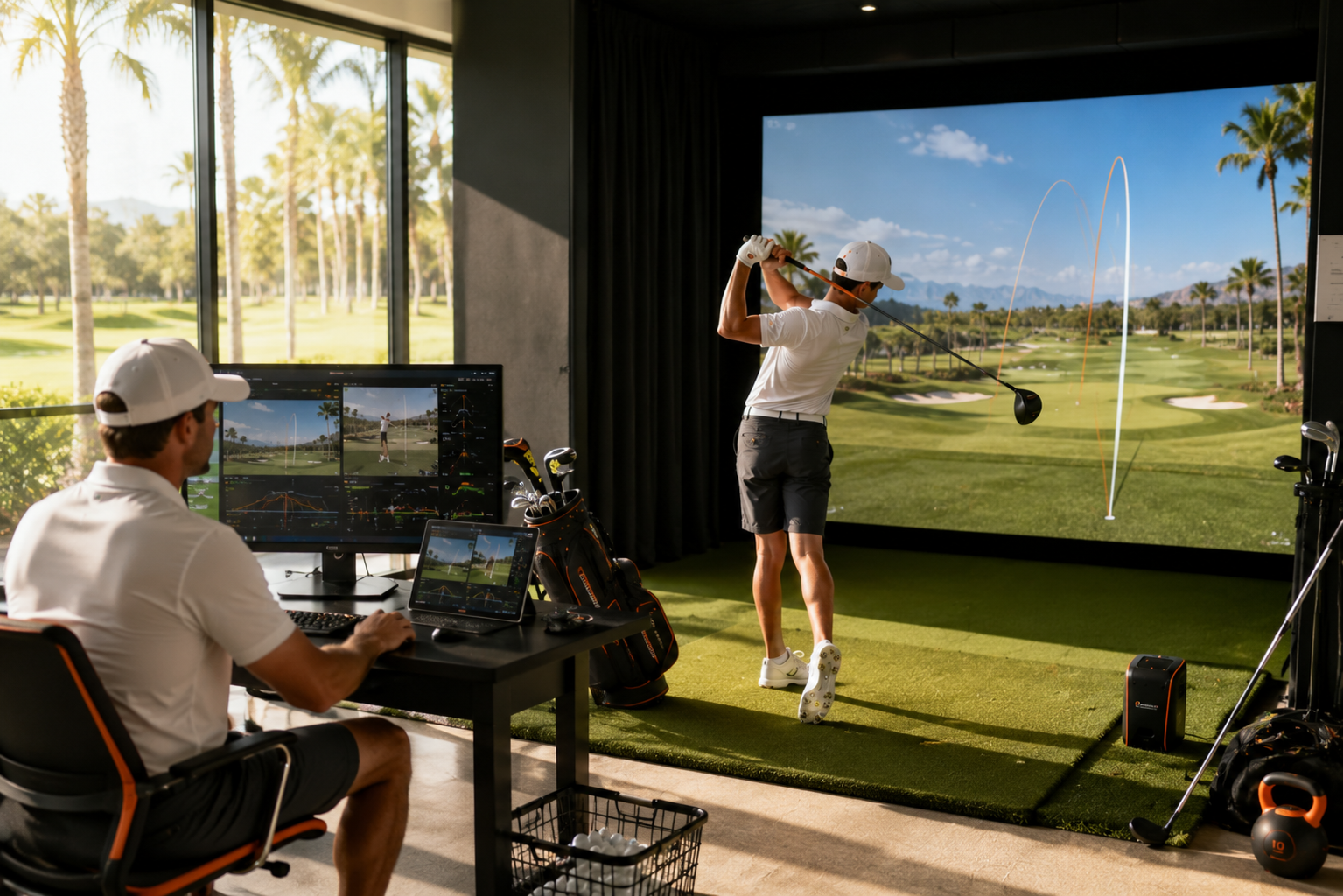
Golf simulator training for juniors uses technology to recreate golf shots and rounds in an indoor environment.
Modern simulators measure data such as:
- Ball speed
- Clubhead speed
- Launch angle
- Spin rate
- Carry distance
- Shot dispersion
This information allows players and coaches to analyze performance with far greater accuracy than visual observation alone.
Instead of guessing why a shot behaved a certain way, golfers can rely on measurable data to guide improvement.
The Biggest Benefits of Golf Simulators
One of the greatest advantages of golf simulator training for juniors is consistency.
Players can practice regardless of:
- Weather
- Daylight
- Course availability
- Seasonal conditions
This allows junior golfers to maintain training routines throughout the year.
Consistent practice often leads to more consistent performance on the golf course.
Data Creates Better Practice
Practice becomes much more effective when golfers understand exactly what's happening during each swing.
Simulators provide immediate feedback on important performance metrics, helping players identify:
- Contact quality
- Distance gaps
- Ball flight patterns
- Club consistency
Rather than relying on feel alone, golfers can make informed adjustments based on objective information.
Simulators Support Swing Development
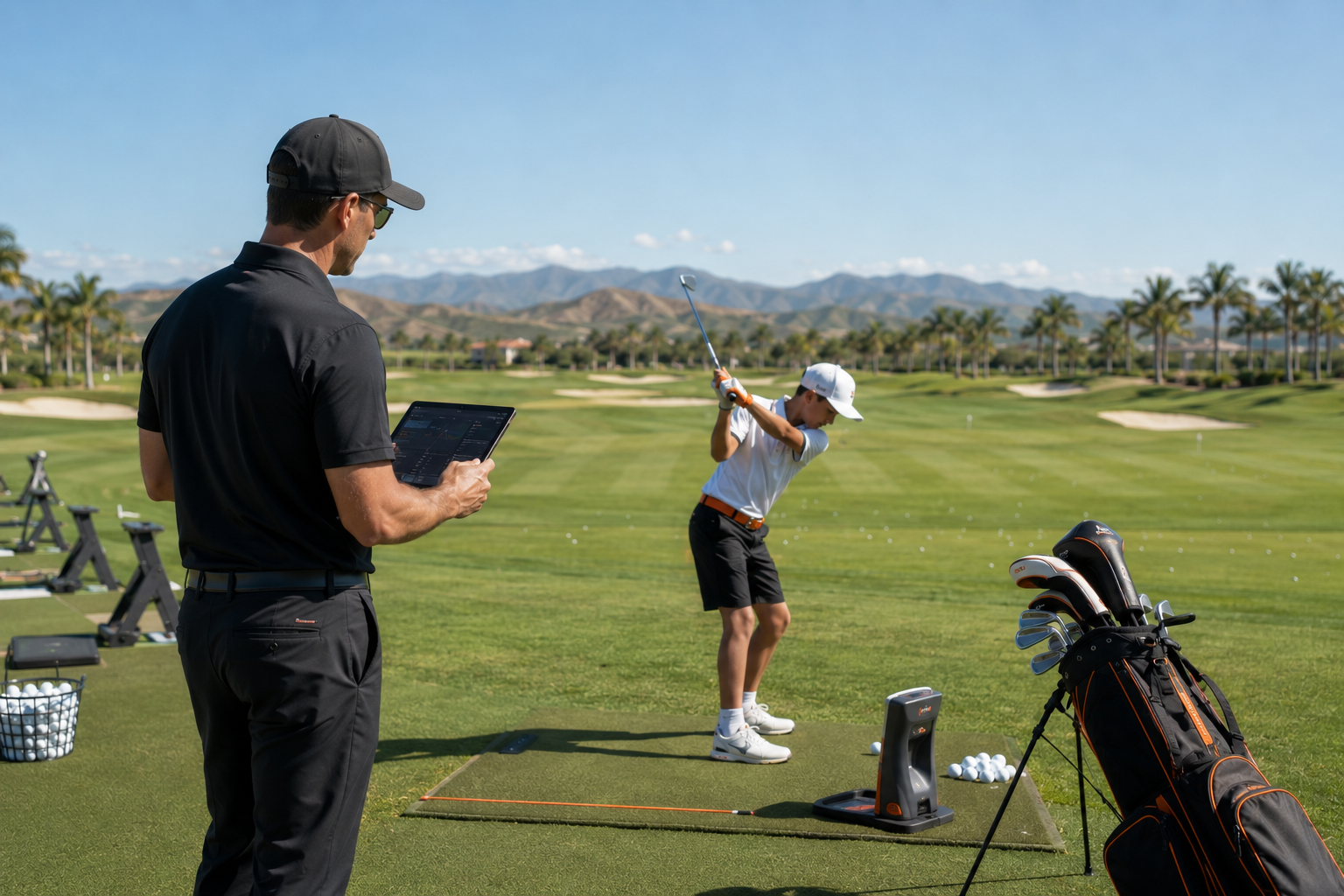
Many coaches use simulator technology to reinforce technical instruction.
Video analysis combined with launch data helps players better understand:
- Swing path
- Clubface position
- Impact conditions
- Ball flight relationships
This combination often accelerates learning because players receive instant visual and numerical feedback.
However, swing changes should still be guided by qualified coaches rather than data alone.
Practice With Purpose
One common misconception is that simply hitting balls into a simulator automatically leads to improvement.
The most productive golf simulator training for juniors includes:
- Specific goals
- Structured drills
- Performance tracking
- Coach feedback
- Regular evaluation
Purposeful practice produces far better results than randomly hitting shot after shot.
Simulators Don't Replace Real Golf
Despite their advantages, simulators have limitations.
They cannot fully replicate:
- Uneven lies
- Wind conditions
- Course strategy
- Green reading
- Pressure during tournament play
Junior golfers still need regular on-course practice to develop course management, decision-making, and competitive confidence.
Simulator training should support—not replace—real golf experiences.
Year-Round Development
One of the biggest benefits of simulator training is maintaining progress during the offseason.
Indoor practice allows players to continue working on:
- Swing mechanics
- Distance control
- Ball striking
- Consistency
Instead of losing momentum during poor weather, golfers can continue improving throughout the year.
Simulators and Elite Coaching
Technology is most effective when combined with experienced instruction.
Elite coaches use simulator data to:
- Identify priorities
- Measure improvement
- Adjust training plans
- Track long-term development
Families interested in understanding the difference between comprehensive coaching and occasional lessons can read Elite Junior Golf Coaching vs Traditional Lessons.
When simulator technology supports a structured coaching plan, players often make faster and more measurable progress.
Finding the Right Training Environment
The quality of coaching remains more important than the technology itself.
Families looking for personalized instruction can explore coaching opportunities through the Find Lessons page.
Working with a coach who understands how to interpret simulator data helps ensure every session contributes to long-term improvement.
Learning at Specialized Training Facilities
Many modern golf academies combine simulator technology with comprehensive player development.
For example, The Golf Garage (San Jose, CA) integrates technology, coaching, and structured practice to help junior golfers improve efficiently.
Similarly, Scott Hause Academy (Houston, TX) provides competitive players with coaching programs that incorporate modern training tools alongside traditional player development.
These environments demonstrate how technology can enhance—not replace—quality coaching.
Is Golf Simulator Training Worth the Investment?
For many competitive golfers, the answer is yes.
Simulator training is especially valuable for players who:
- Practice consistently
- Work with experienced coaches
- Want measurable feedback
- Need year-round training options
- Follow structured development plans
However, players should remember that technology is only one part of the development process.
Long-term improvement still depends on coaching, purposeful practice, physical development, and competitive experience.
Key Takeaways
Golf simulator training for juniors can be an excellent investment when it's used as part of a complete player development plan. Simulators provide accurate performance data, support year-round practice, and help golfers improve with measurable feedback.
While simulator technology offers many advantages, it works best alongside quality coaching, regular on-course play, and structured practice routines. Junior golfers who combine these elements often develop more efficiently and gain the confidence needed to perform during competition.
Frequently Asked Questions
Is golf simulator training for juniors effective?
Yes, golf simulator training can be highly effective when combined with coaching and structured practice. Simulators provide detailed performance data that helps players understand and improve their swings. They are especially useful for maintaining consistent practice throughout the year.
Can junior golfers improve without practicing on a golf course?
Simulator training supports skill development, but on-course practice is still essential. Playing real rounds helps golfers develop course management, decision-making, and competitive experience. The best results come from combining both types of training.
How often should junior golfers use a golf simulator?
The ideal frequency depends on the player's goals, schedule, and access to coaching. Many competitive golfers benefit from one or two simulator sessions each week alongside range practice and on-course play. Coaches can recommend a schedule based on individual development needs.
Are golf simulators accurate enough for serious training?
Modern golf simulators are highly accurate and provide valuable data on ball flight and club performance. While no simulator perfectly recreates every on-course condition, they offer reliable information for skill development and performance tracking. Quality coaching helps players interpret and apply that data effectively.
Should beginner junior golfers use golf simulators?
Yes, beginners can benefit from simulator training when sessions focus on learning fundamentals rather than chasing numbers. Simulators provide immediate feedback that helps reinforce proper technique. As skills improve, simulator practice can become an even more valuable part of long-term development.