
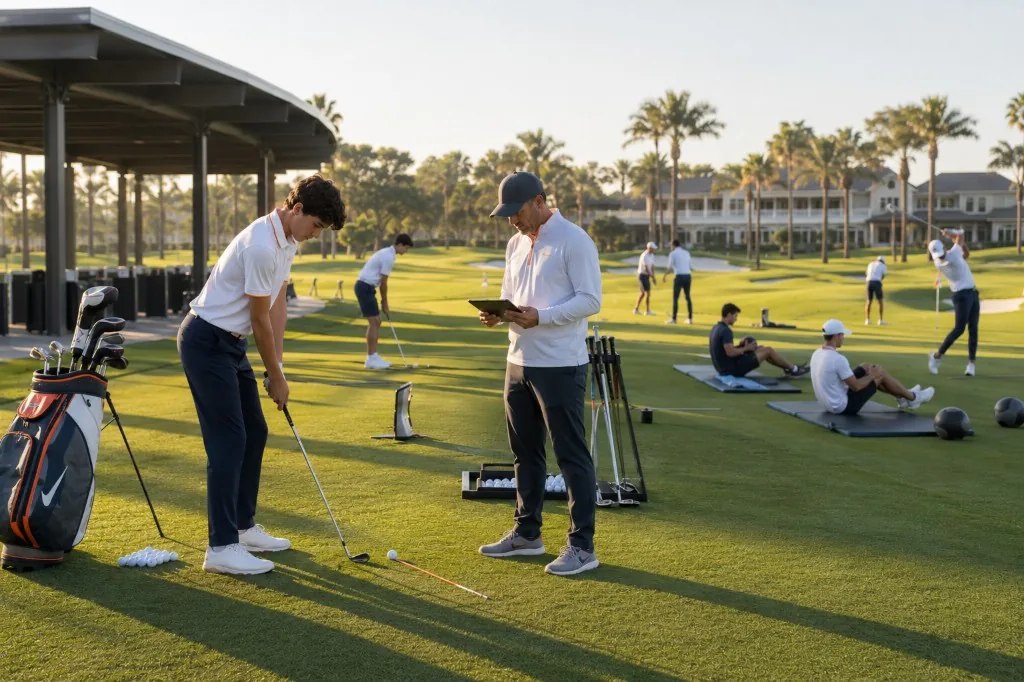
College Golf Practice Standards Every Junior Golfer Should Understand
Many junior golfers dream of playing at the collegiate level. They picture competing for a university team, traveling to tournaments, and continuing their golf careers after high school. What many players don't realize is that college golf requires a significantly higher level of preparation than junior golf alone. Understanding college golf practice standards is essential for players who want to compete successfully at the next level. College coaches expect recruits to arrive with strong practice habits, self-discipline, and the ability to improve independently. The transition from junior golf to college golf can be challenging, but players who develop college-level training habits early often adapt much faster. Learning these standards now can help junior golfers maximize their development and improve their recruiting opportunities. Families interested in learning more about the recruiting process can explore the CAMPUS Academy College Page.
TLDR – Quick Guide
- College golf practice standards extend far beyond simply hitting golf balls.
- College players are expected to practice with purpose and structure.
- Coaches value consistency, discipline, and accountability.
- Short game and scoring skills often receive more attention than driving distance.
- Tournament performance remains a key measure of readiness.
- Developing college-level habits early can improve recruiting opportunities.
Detailed Breakdown
Why College Golf Practice Standards Matter
One of the biggest misconceptions among junior golfers is that college golf simply involves practicing more. In reality, successful collegiate players practice differently. College coaches expect athletes to:
- Train with purpose
- Track performance
- Follow structured practice plans
- Develop independently
- Manage their own improvement
Strong practice habits often separate players who succeed at the collegiate level from those who struggle to adapt. Developing these habits before entering college creates a smoother transition and increases long-term success.
Practice Is About Performance, Not Repetition
Many junior golfers spend hours hitting balls without a clear objective. College coaches generally prefer players who understand how to practice efficiently. Effective college golf practice standards include:
- Goal-oriented practice sessions
- Performance tracking
- Competitive drills
- Target-based training
- Reflection and evaluation
Simply spending time on the range does not guarantee improvement. Quality and structure matter far more than volume alone.
Short Game Receives Significant Attention
One area where many junior golfers underestimate college expectations is short-game practice. At the collegiate level, coaches understand that scoring is often determined by:
- Chipping
- Pitching
- Putting
- Wedge play
- Distance control
As a result, many college programs dedicate substantial practice time to scoring skills rather than full-swing mechanics. Players who develop strong short-game habits early often gain a competitive advantage during recruiting and competition.
Accountability Is a Core Expectation
A major component of college golf practice standards is personal accountability. College coaches expect athletes to:
- Show up prepared
- Manage their schedules
- Complete practice assignments
- Track performance metrics
- Take ownership of development
Unlike junior golf, where parents often play a large role in scheduling and organization, college athletes are expected to operate independently. This level of responsibility can be a significant adjustment for new recruits.
Practice Must Replicate Competitive Pressure
College golf is highly competitive. As a result, practice sessions often include:
- Pressure drills
- Scoring challenges
- Competitive games
- Performance benchmarks
- Simulated tournament situations
The objective is to prepare players for the mental demands of competition. Golfers who only practice in comfortable environments often struggle when pressure increases during tournaments.
Physical Preparation Is Part of the Process
Modern college golfers are athletes. Successful players typically incorporate:
- Strength training
- Mobility work
- Flexibility programs
- Recovery protocols
- Nutrition habits
Physical preparation supports both performance and durability throughout long competitive seasons. Coaches increasingly evaluate athletic development alongside golf-specific skills.
College Coaches Look Beyond Swing Mechanics
Many recruits focus heavily on swing technique. While technical skills remain important, coaches often prioritize broader performance indicators. The qualities that frequently stand out include:
- Work ethic
- Consistency
- Coachability
- Mental toughness
- Competitive attitude
Families can learn more about these evaluation criteria in What College Golf Coaches Look For. Understanding what coaches truly value helps players focus on the factors that matter most.
Tournament Performance Validates Practice Habits
Practice creates opportunities, but tournament results provide evidence. College coaches often evaluate:
- Scoring averages
- Tournament consistency
- Performance trends
- Strength of competition
- Mental resilience
Strong tournament performance demonstrates that practice habits are producing meaningful results. Players interested in understanding scoring expectations can review Tournament Scores for D1 Golf Coaches Expect. Knowing the benchmarks can help junior golfers establish realistic goals and development plans.
Time Management Becomes Essential
One of the most overlooked college golf practice standards is time management. College golfers balance:
- Classes
- Travel
- Team practices
- Individual training
- Recovery
- Academic responsibilities
Players who develop organizational skills during junior golf often transition more successfully to collegiate environments. Learning how to balance multiple responsibilities is just as important as developing technical golf skills.
Developing College-Level Habits Before College
The best recruits don't wait until college to adopt college-level standards. Junior golfers can begin preparing today by:
- Following structured practice plans
- Tracking practice results
- Prioritizing short-game training
- Creating performance goals
- Practicing independently
- Building consistent routines
These habits create a foundation for long-term success and demonstrate maturity throughout the recruiting process.
Learning From Proven Development Programs
Many successful college golfers develop through programs that emphasize accountability, structure, and long-term growth. For example, Roger Pineda Golf (Palo Alto, CA) focuses on helping junior golfers develop the skills, habits, and competitive mindset necessary for advancement to higher levels of competition. Programs that mirror collegiate expectations often prepare players more effectively for future success.
Common Mistakes Junior Golfers Make
When preparing for college golf, many players fall into similar traps:
- Practicing without structure
- Focusing only on swing mechanics
- Neglecting short-game development
- Avoiding pressure situations
- Failing to track progress
- Relying too heavily on parents for accountability
Recognizing these mistakes early allows players to build stronger habits before entering the recruiting process.
Key Takeaways
Understanding college golf practice standards is one of the best ways junior golfers can prepare for collegiate competition. College coaches expect players to practice with purpose, manage their development independently, and demonstrate accountability both on and off the golf course. Success requires more than talent alone. It demands consistent habits, strong work ethic, and a commitment to continuous improvement. The junior golfers who thrive in college are often those who begin developing collegiate practice habits long before they arrive on campus.
FAQs
What are college golf practice standards?
College golf practice standards refer to the habits, expectations, and training methods commonly used by collegiate golf programs. These standards emphasize accountability, structured practice, performance tracking, and continuous improvement. Players are expected to take ownership of their development.
How many hours do college golfers practice?
Practice schedules vary by program and season, but many collegiate golfers spend several hours each day training. This often includes range work, short-game practice, fitness training, and tournament preparation. Quality practice remains more important than simply accumulating hours.
Do college coaches care more about scores or practice habits?
Both matter, but practice habits often influence long-term success. Coaches want players who consistently improve and demonstrate strong work ethic. Strong practice habits frequently lead to better tournament performance over time.
How can junior golfers prepare for college golf?
Junior golfers can begin by following structured practice plans and developing accountability. Tracking performance, improving short-game skills, and practicing under pressure are all valuable steps. Building these habits early creates a smoother transition into collegiate golf.
What skills do college golf coaches value most?
Coaches typically value a combination of technical ability, consistency, work ethic, and mental toughness. They also look for coachability and a willingness to improve. Players who demonstrate maturity and accountability often stand out during recruiting.